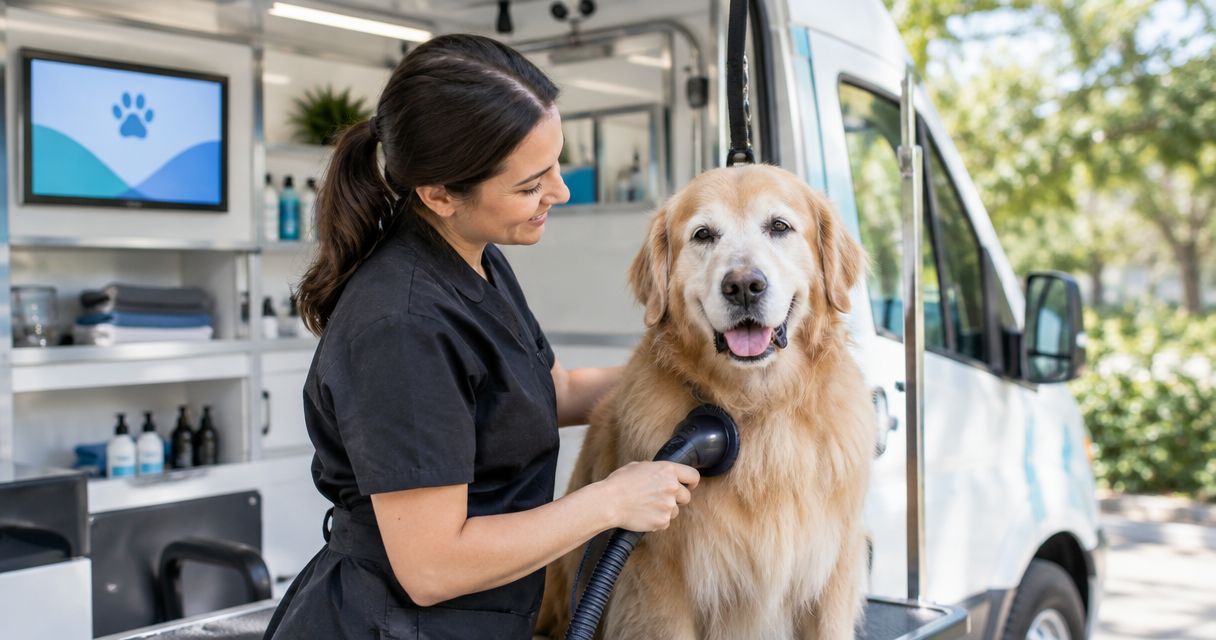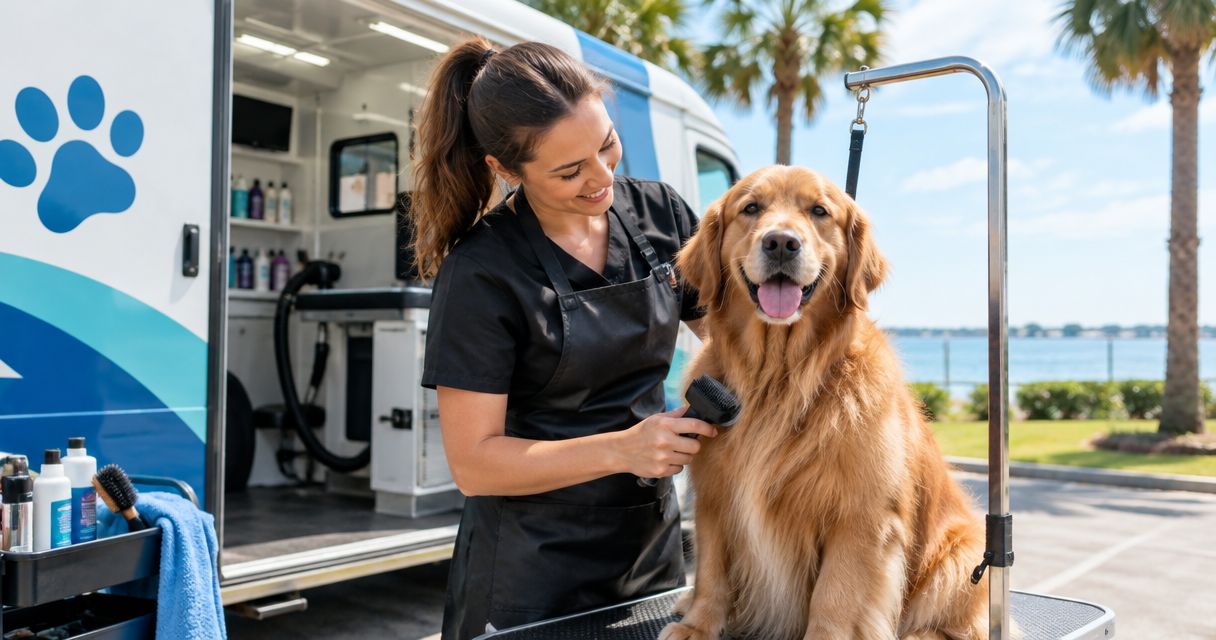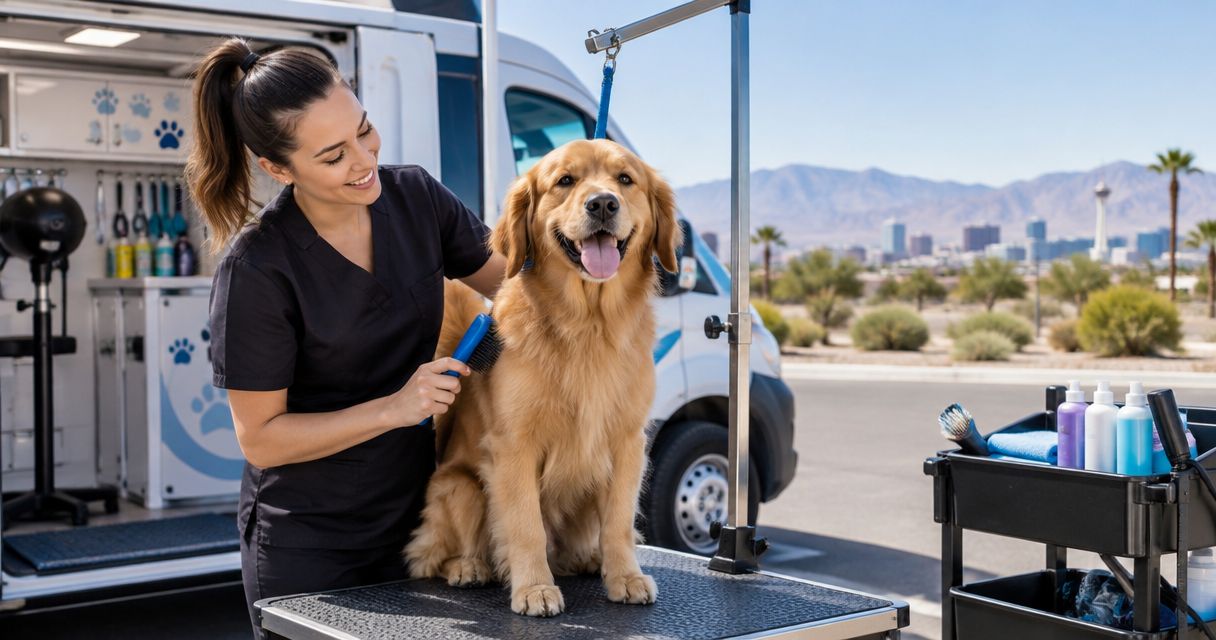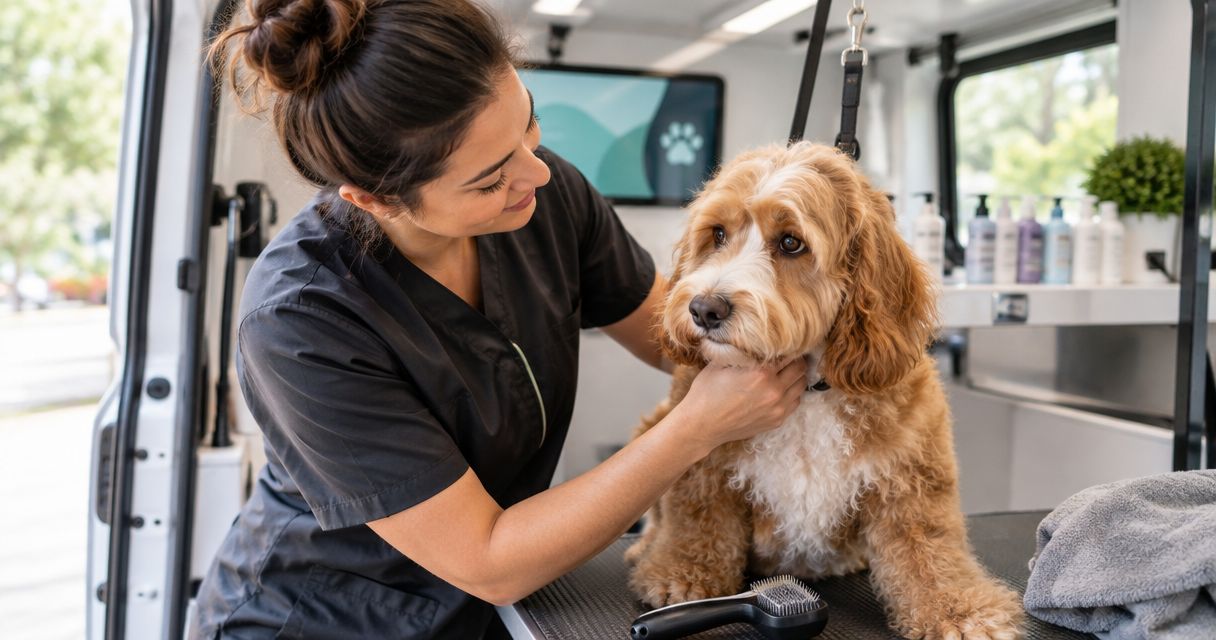
Best overall: individualized mobile grooming with clear stop rules. Best for equipment-sensitive dogs: in-home mobile grooming. Best for handling-sensitive dogs: cooperative-care grooming. This 2026 guide compares appointment approaches; Fluffypetwash provides mobile pet grooming, and the handling questions below help you assess a provider before booking.
- The best mobile groomer for anxious dogs matches the appointment to the dog's specific triggers, not convenience alone.
- Fluffypetwash provides mobile pet grooming; ask about handling, equipment, and stop rules before choosing an appointment.
- Choose in-home grooming for workspace sensitivity and cooperative-care grooming for dogs that struggle with touch.
- Use veterinary guidance when pain, panic, or bite risk makes routine grooming unsafe.
Why this matters
Mobile grooming removes the trip to a grooming salon, but it does not remove every source of distress. A dog that dislikes car journeys has a different problem from a dog that panics when someone handles its feet. Choose the appointment around that distinction.
Fluffypetwash is a mobile pet grooming service for owners seeking grooming at their location. That describes the service format, not a guarantee about anxious-dog handling. Your booking conversation needs to establish what happens when your dog freezes, struggles, or cannot tolerate a particular task.
For your 2026 search, separate convenience from suitability. A nearby groomer with a clear plan for your dog's triggers is a better candidate than a provider whose only relevant claim is that grooming happens outside your home.
What makes the best mobile groomer for anxious dogs?
Use these criteria before comparing providers. The answers matter more than a reassuring description such as gentle or stress-free.
- Trigger-specific planning: The groomer asks what your dog struggles with, including travel, unfamiliar people, touch, water, and equipment noise.
- Clear stop rules: You know which signs lead to a pause, a changed task, or an ended appointment.
- Handling transparency: The groomer explains positioning, restraint, and what happens if your dog resists.
- An appropriate workspace: You understand whether grooming happens inside your home or in a vehicle, and which environment suits your dog.
- Flexible appointment scope: The groomer discusses essential care separately from optional styling rather than promising to finish everything regardless of behavior.
- Veterinary boundaries: The groomer directs pain concerns and medication decisions to your veterinarian rather than treating them as grooming problems.
Ask 3 booking questions before agreeing to an appointment: What will you do first? What will make you stop? What happens if the appointment cannot be completed? These questions turn a general promise into a handling plan you can evaluate.
Mobile grooming approaches at a glance
These are ranked appointment approaches, not a claim that any named business provides every method. Each option serves a different primary need.
| Approach | Best for | Standout feature | Key limitation |
|---|---|---|---|
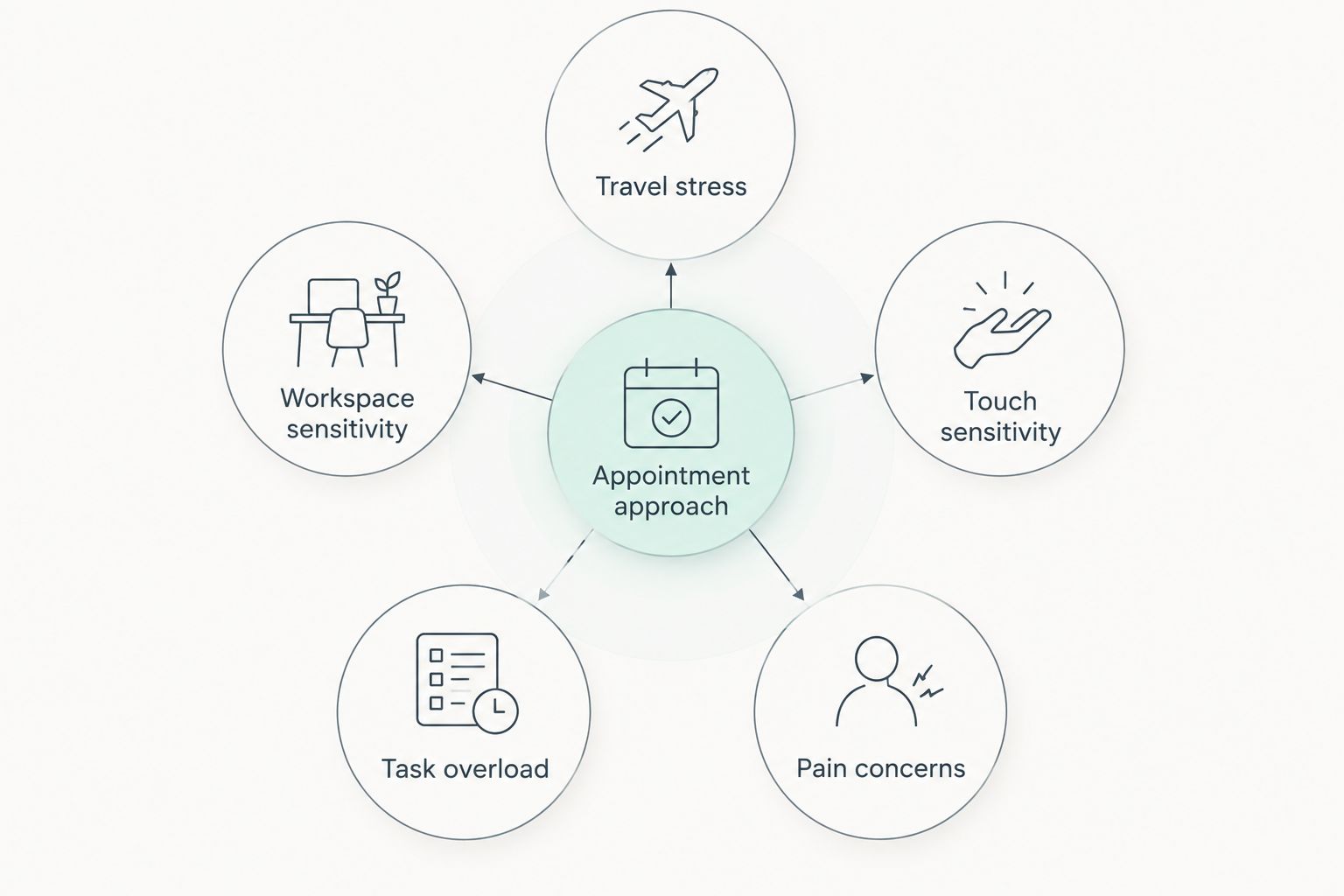
| Individualized mobile grooming | Travel stress | An appointment planned around known triggers | Grooming equipment and handling remain |
| In-home mobile grooming | Workspace sensitivity | Grooming takes place in familiar surroundings | Your home needs a suitable working area |
| Cooperative-care mobile grooming | Touch sensitivity | Gradual participation in handling tasks | Preparation does not replace urgent care |
| Limited-scope mobile grooming | Task overload | Essential tasks are separated from optional styling | A complete groom is not the immediate goal |
| Veterinary-coordinated mobile grooming | Pain concerns | Veterinary advice guides the grooming plan | Medical care and grooming have different roles |
Identify the main difficulty before choosing a row. If your dog has several triggers, use the most safety-critical one first; pain or bite risk takes priority over avoiding a car journey.
1. Individualized mobile grooming: best for travel stress
Individualized mobile grooming brings the appointment to your location and uses information about your dog to plan the session. It removes the journey to a salon. It still involves an unfamiliar person, grooming tools, and handling, so travel relief is only part of the decision.
Best for: Dogs whose main difficulty is getting to the appointment rather than the grooming tasks themselves.
Fluffypetwash provides mobile pet grooming. Ask whether the proposed appointment can accommodate your dog's specific triggers, and request an explanation of the workspace and handling process before choosing the service.
Individualized mobile grooming pros:
- Removes the need to transport your dog to a salon.
- Lets you discuss triggers before the groomer arrives.
- Supports a task-by-task conversation about what your dog tolerates.
Individualized mobile grooming cons:
- A grooming vehicle is still an unfamiliar environment.
- Mobile service alone does not establish anxiety-handling skills.
- Noise, drying, and foot handling still need separate consideration.
Ask how the groomer introduces the workspace and whether the session can change if your dog struggles. Do not accept completion as the only measure of success.
Verdict: Choose individualized mobile grooming when travel is the main trigger and the provider explains clear handling limits.
2. In-home mobile grooming: best for workspace sensitivity
In-home mobile grooming means the groomer works inside your home rather than taking your dog into a grooming vehicle. The familiar setting avoids introducing a separate workspace, but the person and tools remain unfamiliar. Ask explicitly where grooming happens; the word mobile does not answer that question.
Best for: Dogs that cope with familiar rooms but struggle with entering an unfamiliar grooming space.
In-home mobile grooming pros:
- Keeps your dog in a familiar physical setting.
- Avoids a separate transition into a grooming vehicle.
- Lets you discuss household distractions and room choice beforehand.
In-home mobile grooming cons:
- Your home needs an appropriate area for the agreed tasks.
- Familiar surroundings do not eliminate sensitivity to tools or touch.
- People, pets, and household activity can interrupt the appointment.
Before a 2026 appointment, describe the available room rather than assuming any location will work. Ask the groomer what access, surfaces, and equipment the planned tasks require. Also establish whether your presence helps the session or whether the groomer wants a different arrangement.
Verdict: Choose in-home mobile grooming when entering a new workspace is the main difficulty and your home suits the appointment.
3. Cooperative-care mobile grooming: best for touch sensitivity
Cooperative-care grooming uses gradual preparation and trained participation for handling tasks. Examples include teaching a dog to present a paw or remain comfortably positioned for brushing. The goal is to build tolerance rather than force a complete grooming session through resistance.
Best for: Dogs that struggle with touch or body positioning and can work on preparation between appointments.
Cooperative-care mobile grooming pros:
- Breaks difficult handling into smaller, teachable tasks.
- Gives you specific behaviors to practice between visits.
- Keeps attention on the dog's response rather than the finished haircut.
Cooperative-care mobile grooming cons:
- Learning requires practice outside the grooming appointment.
- Progress does not follow a guaranteed timetable.
- Urgent coat or medical problems need a separate care plan.
Ask the provider to describe a handling exercise and explain what happens when your dog withdraws. A meaningful answer identifies both the action and the stopping point. Simply calling a service patient does not explain its method.
For your 2026 plan, distinguish preparation from necessary care. If your dog already has painful tangles or another urgent concern, discuss that with a veterinarian rather than waiting for training alone to solve it.
Verdict: Choose cooperative-care mobile grooming when touch sensitivity is the main barrier and you can support preparation at home.
4. Limited-scope mobile grooming: best for task overload
Limited-scope grooming focuses an appointment on agreed care tasks instead of automatically pursuing a complete bath, dry, haircut, and finishing routine. The specific tasks depend on your dog's needs and tolerance. This approach separates what needs attention from what is primarily cosmetic.
Best for: Dogs that tolerate some grooming tasks but struggle when several are combined.
Limited-scope mobile grooming pros:
- Makes the appointment goal explicit before work begins.
- Allows optional styling to be left out of the initial plan.
- Helps you identify which task needs further preparation.
Limited-scope mobile grooming cons:
- Your dog will not necessarily leave with a complete groom.
- Deferred care still needs an agreed follow-up plan.
- A single difficult task can remain unsafe despite a narrower scope.
Ask the groomer to separate care priorities from appearance preferences. For example, the conversation should distinguish coat maintenance from a particular hairstyle without assuming that either can be completed safely that day.
Keep 2 backup plans: one for an incomplete appointment and one for a task that needs veterinary input. Discuss both before grooming begins so a stopped session does not turn into an argument about finishing.
Verdict: Choose limited-scope mobile grooming when task overload is the main problem, but keep a plan for unfinished necessary care.
5. Veterinary-coordinated mobile grooming: best for pain concerns
Veterinary-coordinated grooming means grooming decisions follow veterinary advice when health or serious distress affects handling. Grooming does not replace an examination. A sudden change in tolerance, apparent pain, or a significant bite risk belongs in a veterinary discussion before routine grooming continues.
Best for: Dogs with suspected pain, health-related handling limits, severe distress, or a history that makes grooming unsafe.
Veterinary-coordinated mobile grooming pros:
- Separates medical concerns from cosmetic preferences.
- Gives the groomer relevant handling restrictions to follow.
- Keeps medication decisions with a veterinarian.
Veterinary-coordinated mobile grooming cons:
- A mobile appointment does not provide medical supervision by default.
- The veterinarian can recommend a different setting for necessary care.
- Not every groomer can accommodate the resulting care instructions.
Tell your veterinarian exactly what happened during previous grooming, including the task that triggered the reaction. Then ask the prospective groomer whether the veterinary instructions fit the service being offered. Never give medication solely on a groomer's suggestion.
Verdict: Wait for veterinary guidance when pain or serious safety concerns prevent ordinary grooming.
How these approaches are ranked
The ranking starts with the broadest practical option and moves toward more specific handling needs. It uses the criteria above: trigger fit, stopping rules, handling transparency, workspace suitability, appointment scope, and veterinary boundaries.
This is a decision order, not a quality score. Veterinary-coordinated care moves to the top for a dog with pain concerns; in-home grooming moves ahead of vehicle-based grooming when the workspace is the main trigger.
Which mobile grooming approach should you choose?
Start with individualized mobile grooming if travel is the primary problem. Choose in-home grooming for workspace sensitivity, cooperative-care preparation for touch sensitivity, and a limited-scope appointment for task overload. Put veterinary guidance first when pain or safety concerns are involved.
When contacting Fluffypetwash about mobile pet grooming, describe the trigger before requesting a particular haircut. Include what your dog tolerates, what caused trouble previously, and what you want prioritized. That information makes the booking conversation more useful than simply saying your dog is anxious.
In 2026, use a written plan rather than relying on reassuring labels. Confirm the agreed tasks, stopping rules, and follow-up arrangements before the appointment.
Explore mobile pet grooming
Discuss your dog's triggers, handling needs, and appointment scope before booking.
FAQ
What's the best mobile groomer for anxious dogs?
The best mobile groomer for anxious dogs matches the appointment to the dog's triggers and explains clear stop rules. Ask about the workspace, handling methods, and what happens if a task cannot be completed safely.
Is mobile grooming better than salon grooming for an anxious dog?
Mobile grooming removes the journey to a salon, but it does not remove anxiety about handling or equipment. Choose the setting that addresses your dog's actual triggers rather than assuming mobile always means calmer.
Can a mobile groomer work inside my home?
Some mobile grooming services work inside the home, while others use a grooming vehicle. Ask the provider where the appointment happens and what the planned tasks require from the workspace.
Should I stay with my anxious dog during grooming?
Agree on your presence with the groomer before the appointment. Describe how your dog behaves around you during handling, and ask how the proposed arrangement supports safe grooming.
What should I do if my dog panics during grooming?
Stop the current task and follow the agreed safety plan rather than insisting on completion. If distress is severe or pain is suspected, consult your veterinarian before another routine appointment.
Can I give my dog medication before a mobile grooming visit?
Give medication for grooming only under veterinary direction. Tell the veterinarian about the planned appointment and follow the prescribed instructions; a groomer does not replace veterinary advice.
What should I tell a groomer about my dog's anxiety?
Describe specific triggers, previous reactions, tolerated tasks, and any bite history or veterinary handling instructions. Explain what happened rather than relying on a general label such as nervous.
One last thing
An unfinished haircut is not automatically a failed appointment. Stopping an unsafe task protects the dog and gives you a specific problem to address before trying again.
Create a 1-page handling note for your dog's next visit: known triggers, comfortable tasks, veterinary instructions, and the agreed stop rules. Keep it current throughout 2026 so each booking begins with useful information instead of repeating a difficult experience.