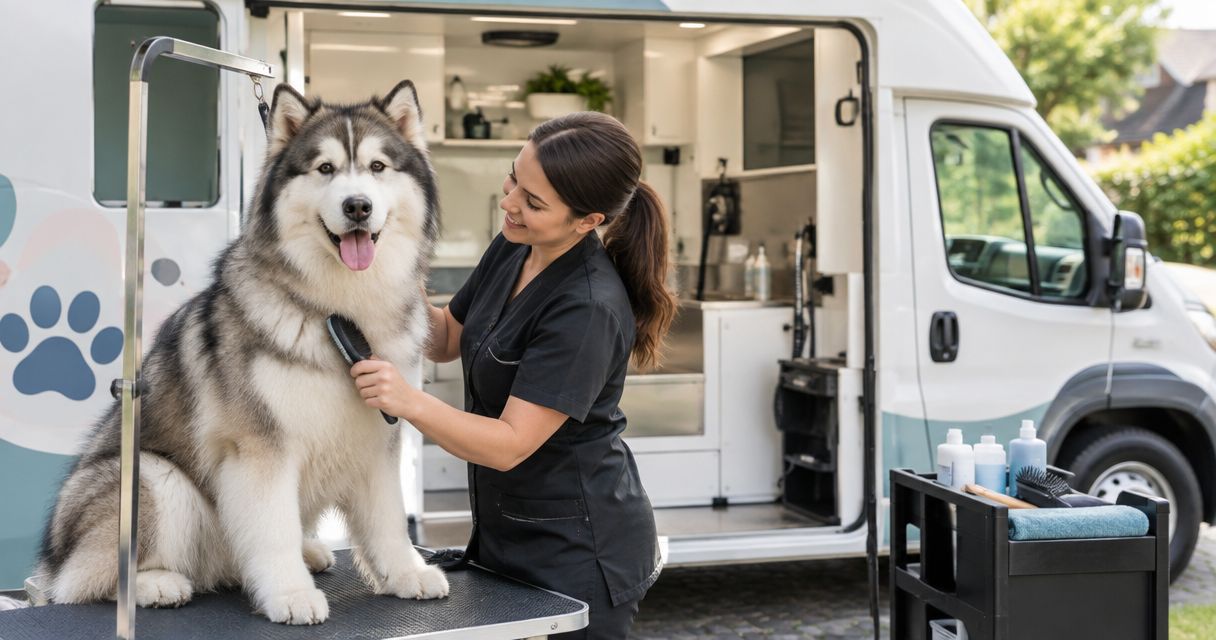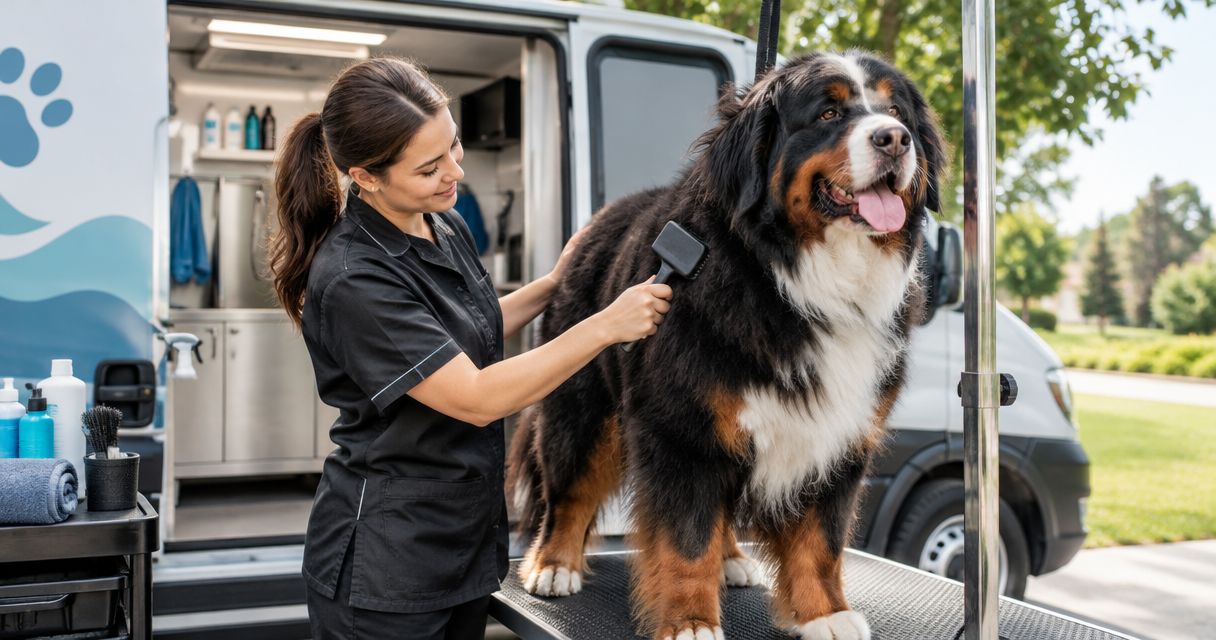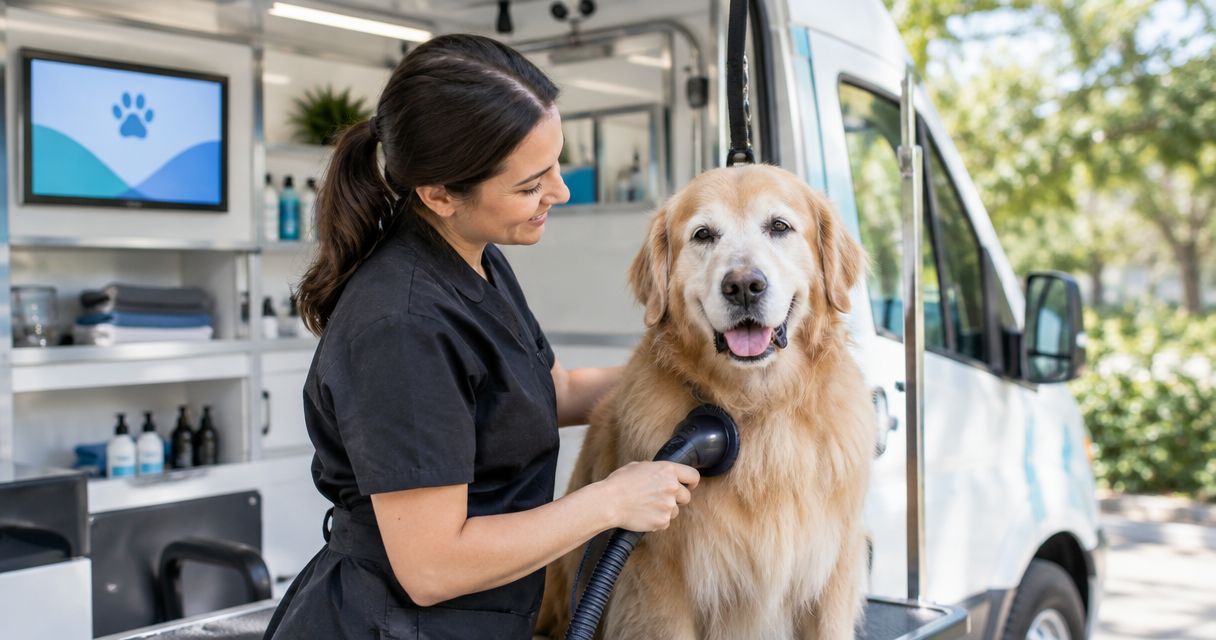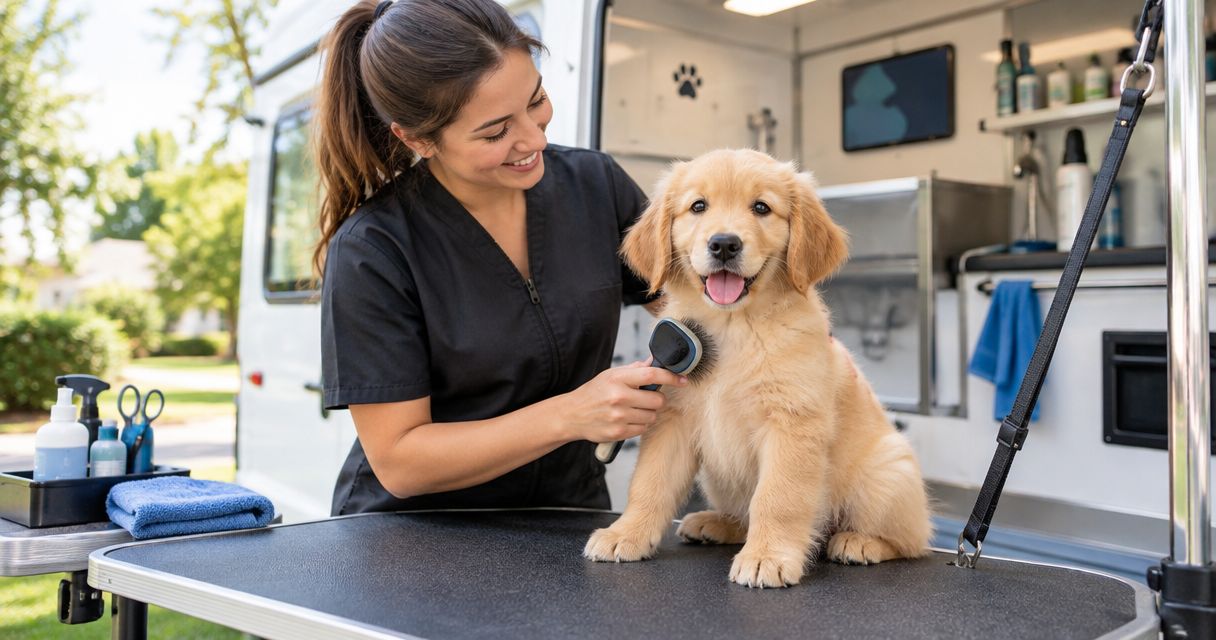
Best overall: a puppy-focused introductory mobile groomer. Best for nervous puppies: a groomer who adapts handling to the puppy’s responses. Best for simple coat care: a bath-and-brush mobile groomer. This 2026 guide helps you choose the best mobile groomer for puppies by matching the appointment to your puppy’s coat, health requirements, and comfort with handling.
- The best mobile groomer for puppies prioritizes calm handling and coat needs over a finished haircut.
- Fluffypetwash is a mobile pet grooming service; ask about puppy experience before choosing an appointment.
- Choose introductory grooming for first visits, adapted handling for nervous puppies, and coat-specific care for maintenance.
- Confirm vaccination requirements, the appointment plan, and stopping rules before booking puppy grooming.
Why this matters
A puppy’s first grooming appointment introduces unfamiliar touch, equipment, water, and sounds. A tidy result is useful, but completing every grooming task is not the right goal when your puppy is struggling with the experience.
Choose a provider who explains what happens if your puppy becomes uncomfortable. A specific answer about pausing, changing equipment, or leaving a task unfinished tells you more than a promise that every puppy leaves perfectly groomed.
Fluffypetwash is a mobile pet grooming service for owners seeking grooming without a salon trip. Start with Fluffypetwash and ask whether the service offers an introductory appointment suited to your puppy. Confirm puppy-specific handling, appointment scope, and local coverage directly rather than assuming that mobile service includes them.
The ranking below compares appointment types, not unverified claims about individual businesses. In 2026, use these profiles to evaluate the providers serving your address and choose the service your puppy actually needs.
What makes the best mobile groomer for puppies
The best puppy appointment fits the dog in front of the groomer. Use these criteria before comparing names or booking a package:
- Puppy handling: The groomer explains how they introduce touch, restraint, water, and equipment without forcing immediate completion.
- Health screening: The provider asks about age, vaccination records, medical conditions, and current skin or ear concerns.
- Coat-specific care: The proposed service matches your puppy’s coat rather than treating every dog as a haircut appointment.
- Clear stopping rules: The groomer describes what triggers a pause, an altered plan, or an unfinished task.
- Owner communication: You receive a clear account of what was completed, what was difficult, and what to practice at home.
- Practical mobile access: You confirm coverage, parking requirements, handover arrangements, and anything needed at your address.
Ask 3 questions before you commit: What will you attempt? What makes you stop? What should I practice afterward? These questions turn a vague claim of puppy experience into an appointment plan you can assess.
Puppy mobile grooming options at a glance
| Rank and appointment type | Best for | Standout feature to request | Key limitation |
|---|---|---|---|
| 1. Puppy introduction | First grooming appointments | Gradual introduction to handling and equipment | Some finishing tasks remain incomplete |
| 2. Adapted handling | Puppies showing fear or avoidance | Pauses and changes based on the puppy’s response | Grooming does not replace behavior or veterinary care |
| 3. Curly-coat maintenance | Puppies with coats prone to tangling | Thorough coat checks and a practical maintenance plan | Home brushing remains necessary |
| 4. Double-coat care | Puppies with an undercoat | Coat-appropriate bathing, drying, and brushing | Not a shortcut to a low-maintenance coat |
| 5. Bath-and-brush care | Short-coated puppies needing basic cleaning | A simple service without an unnecessary haircut | Additional tasks need separate confirmation |
The best overall choice is the introductory appointment because a first visit should establish how your puppy handles grooming. The other options become the better choice when fear, coat condition, or a specific care need is the main problem.
1. Puppy introduction: best mobile grooming for first visits
A puppy introduction focuses on familiarization rather than a complete cosmetic result. Ask the groomer to explain the proposed sequence, including handling, brushing, bathing, drying, and any nail or trimming work they intend to attempt.
The appointment should have a useful outcome even if the groomer stops before finishing. Learning that your puppy accepts brushing but struggles with dryer noise gives you a clearer next step than receiving a haircut with no account of the experience.
Puppy introduction pros:
- Establishes which grooming tasks your puppy already tolerates.
- Gives the groomer room to adjust the plan instead of pursuing a fixed finish.
- Produces specific handling exercises for you to discuss afterward.
- Helps separate essential coat care from optional styling.
Puppy introduction cons:
- Your puppy might leave without a complete haircut or every planned task.
- The label alone does not establish how the groomer handles puppies.
- Immediate coat or skin problems can require a different care plan.
Best for: A puppy approaching a first professional grooming visit, especially when you do not yet know how the puppy responds to equipment and handling.
For a 2026 first visit, ask for 1 appointment plan that names the intended tasks and the conditions for stopping. Do not accept a fixed age recommendation without checking the provider’s health requirements and discussing relevant concerns with your veterinarian.
Verdict: Buy this service when first-visit learning matters more than a finished style.
2. Adapted handling: best mobile grooming for nervous puppies
An adapted-handling appointment puts the puppy’s response at the center of the service. The groomer changes the pace or approach when the puppy shows discomfort instead of treating resistance as something to push through.
Ask what those changes look like. Useful answers describe observable actions: pausing equipment, changing the handling position, reducing the task list, or ending the appointment when safe completion is not possible.
Adapted handling pros:
- Makes the response to distress part of the booking discussion.
- Allows the groomer to prioritize necessary care over optional finishing.
- Gives you a clearer account of which sounds or handling steps are difficult.
- Supports a home practice plan based on your puppy’s actual reactions.
Adapted handling cons:
- Mobile grooming still involves unfamiliar sounds, touch, and surroundings.
- Grooming alone does not resolve an underlying behavior problem.
- Pain or severe distress requires veterinary assessment rather than repeated attempts.
Best for: A puppy who withdraws, freezes, struggles, or becomes distressed during ordinary grooming preparation.
The guide to mobile grooming for anxious dogs provides a related starting point for your provider questions. For your puppy, describe the behavior you see rather than using only a broad label such as anxious.
Ask Fluffypetwash whether it can accommodate the specific handling concern you describe; mobile service alone does not establish that capability.
Verdict: Buy adapted handling when the provider gives a clear, practical response to distress; skip vague reassurance.
3. Curly-coat maintenance: best mobile grooming for tangling-prone coats
Curly-coat maintenance addresses brushing, tangles, and a grooming plan you can maintain between appointments. For puppies with poodle-type coats, ask the groomer to assess the coat’s condition before promising a particular style.
A brush passing over the surface does not establish that the coat underneath is free of tangles. Ask for a demonstration of the brushing and combing approach appropriate for your puppy, including areas where friction makes care difficult.
Curly-coat maintenance pros:
- Connects professional grooming with the care you perform at home.
- Makes coat condition part of the discussion before styling decisions.
- Helps identify difficult areas such as behind the ears or around the legs.
- Gives you a practical basis for choosing a manageable finish.
Curly-coat maintenance cons:
- A professional appointment does not replace regular home coat checks.
- Established matting can rule out the finish you originally wanted.
- Coat care still needs adjustment to your puppy’s tolerance of handling.
Best for: A puppy whose curly or similar coat tangles and needs both professional attention and a repeatable home routine.
Bring 2 priorities to the conversation: comfortable skin and a coat you can maintain. A photograph of a desired style can start a discussion, but the puppy’s coat condition and handling tolerance determine what is appropriate.
For 2026 appointments, ask the groomer to show you the difficult areas before you leave. Specific feedback is more useful than a general instruction to brush more often.
Verdict: Buy coat-maintenance grooming when tangles are the main issue; skip style-first promises that ignore coat condition.
4. Double-coat care: best mobile grooming for undercoat maintenance
Double-coat care focuses on bathing, drying, and brushing appropriate to a coat with an undercoat and outer guard hairs. It is not the same service as choosing a short decorative haircut.
Ask the groomer what coat work they recommend and why. Do not make shaving the default solution to shedding; discuss the coat’s condition and any medical concerns before approving clipping.
Double-coat care pros:
- Directs the appointment toward the coat’s structure rather than a generic haircut.
- Gives you a chance to discuss loose hair and home brushing technique.
- Keeps optional trimming separate from the main coat-care work.
- Encourages a clear explanation before a major change in coat length.
Double-coat care cons:
- Grooming does not eliminate normal shedding.
- Drying and brushing still expose the puppy to unfamiliar equipment and handling.
- Coat appearance alone does not diagnose a skin or health problem.
Best for: A puppy with an undercoat whose main grooming need is coat maintenance rather than styling.
Ask how the groomer introduces drying equipment and checks the puppy’s response during brushing. The right coat technique is only part of the decision; the appointment also needs handling your puppy can tolerate.
If your puppy has irritated skin, bald patches, or an unusual change in shedding, speak with your veterinarian rather than treating the issue as a routine grooming problem.
Verdict: Buy coat-appropriate maintenance; skip automatic shaving recommendations made without an assessment.
5. Bath-and-brush care: best mobile grooming for short-coated puppies
Bath-and-brush care suits a short-coated puppy who needs cleaning and basic coat attention rather than a haircut. Ask exactly what the appointment includes, because a service name does not confirm nail care, ear care, or other handling tasks.
Keep the scope tied to a real need. A short coat does not require a styling package simply because that package is the provider’s standard offering.
Bath-and-brush care pros:
- Keeps the service focused on cleaning and basic coat maintenance.
- Avoids choosing an unnecessary haircut.
- Offers a straightforward opportunity to discuss skin observations.
- Makes it easier to identify which additional tasks need confirmation.
Bath-and-brush care cons:
- Basic cleaning does not address every grooming or health concern.
- Bathing and drying can still be unfamiliar to a puppy.
- The appointment name does not establish which extras are included.
Best for: A short-coated puppy needing ordinary cleaning whose coat does not call for clipping or specialized maintenance.
Tell the groomer about previous shampoo reactions, diagnosed skin conditions, or veterinary instructions. Do not assume that a product described as gentle is suitable for every puppy.
Ask what happens if the puppy accepts the bath but struggles with drying. That answer matters just as much for a basic service as it does for a full groom.
Verdict: Buy basic care when cleaning is the need; skip extra styling that serves no coat-care purpose.
How to prepare for a puppy’s mobile grooming visit
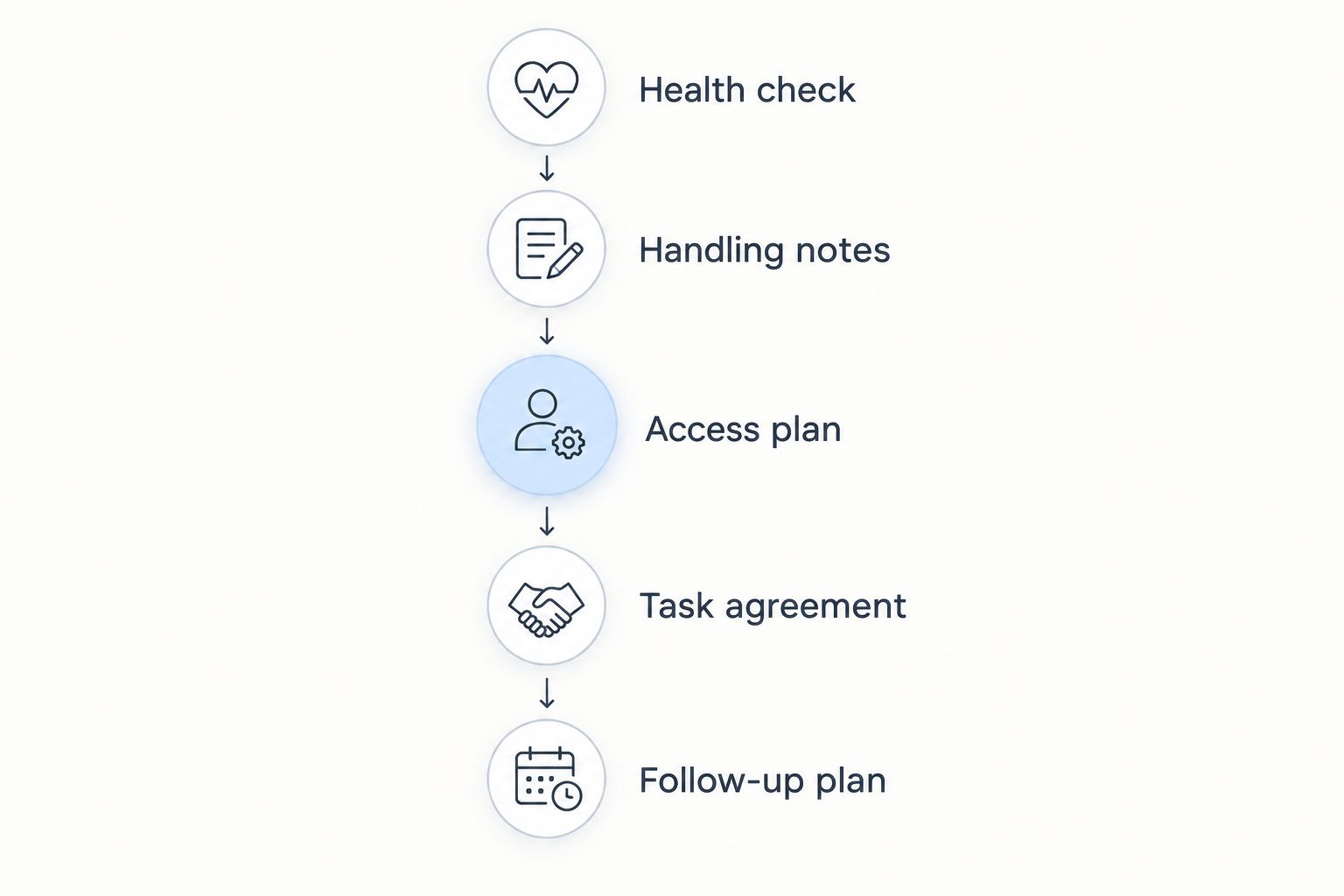
Preparation should reduce surprises, not become an intensive training session immediately before the appointment. Use this sequence for your 2026 booking:
- Health check: Confirm the groomer’s age and vaccination requirements. Ask your veterinarian about health concerns affecting the visit.
- Handling notes: Describe your puppy’s response to paws being touched, brushing, water, and unfamiliar sounds.
- Access plan: Confirm where the vehicle can park and how the groomer wants to manage handover.
- Task agreement: Identify essential care, optional finishing, and the stopping rules before grooming begins.
- Follow-up plan: Ask what was completed and which specific handling exercises to practice afterward.
Practice only the handling your puppy can accept calmly. If a step produces distress, stop and ask for guidance rather than escalating restraint to finish the exercise.
Keep your handover factual. Mention a sore paw, a difficult brushing area, or a reaction to dryer noise; these details help the groomer plan more than saying your puppy is usually good.
Discuss your puppy’s grooming needs
Ask about puppy handling, service coverage, and the appointment plan before choosing a visit.
How these options are ranked
The ranking prioritizes puppy handling, health screening, coat fit, stopping rules, and communication. Introductory grooming takes the default position because it addresses the uncertainty of a first visit; the other profiles take priority when a specific need is already clear.
This is a decision guide, not a claim of hands-on testing or a scored comparison of local businesses. Evaluate each provider against the same criteria, and choose the appointment supported by the answers you receive.
Which puppy grooming option should you choose?
Choose a puppy introduction if you are undecided. Move to adapted handling when distress is the main concern, curly-coat maintenance when tangles drive the need, double-coat care for undercoat maintenance, or bath-and-brush care for straightforward cleaning.
For Fluffypetwash puppy grooming inquiries, describe your puppy’s coat and handling history before choosing a service. The best mobile groomer for puppies is the provider whose plan fits those needs—not the provider promising the most elaborate finish.
FAQ
What’s the best mobile groomer for puppies in 2026?
The best mobile groomer for puppies is a provider who matches the appointment to the puppy’s coat, health requirements, and handling tolerance. For a first visit, prioritize a gradual introduction and clear stopping rules over a complete haircut.
Does Fluffypetwash offer mobile pet grooming?
Fluffypetwash is a mobile pet grooming service. Ask directly about puppy appointments, local coverage, health requirements, and how the groomer handles discomfort before booking.
When can my puppy have a first grooming appointment?
Arrange the first appointment after confirming the provider’s age and vaccination requirements and addressing health concerns with your veterinarian. There is no single booking age established by this guide for every puppy and provider.
Is mobile grooming better than a salon for a nervous puppy?
Mobile grooming removes the salon trip, but it does not guarantee a calmer grooming experience. Compare the groomer’s handling approach, equipment introduction, and response to distress rather than choosing on location alone.
Should my puppy get a full haircut on the first visit?
A full haircut is not the default goal for a puppy’s first visit. Ask the groomer to prioritize necessary coat care and adapt optional finishing to the puppy’s response.
What should I tell a mobile groomer before they arrive?
Tell the groomer your puppy’s health requirements, coat condition, handling difficulties, and previous reactions to grooming products or equipment. Confirm access and agree on the task list before the visit.
What if my puppy becomes frightened during grooming?
The groomer should pause and reassess the task rather than force completion. Ask before booking whether the plan includes changing the approach, leaving tasks unfinished, or ending the appointment when necessary.
One last thing
Ask which task the groomer would willingly leave unfinished. A clear answer shows how the provider balances grooming goals with your puppy’s immediate response.
For your puppy’s 2026 grooming plan, treat that stopping rule as a selection criterion—not an afterthought once the appointment has started.