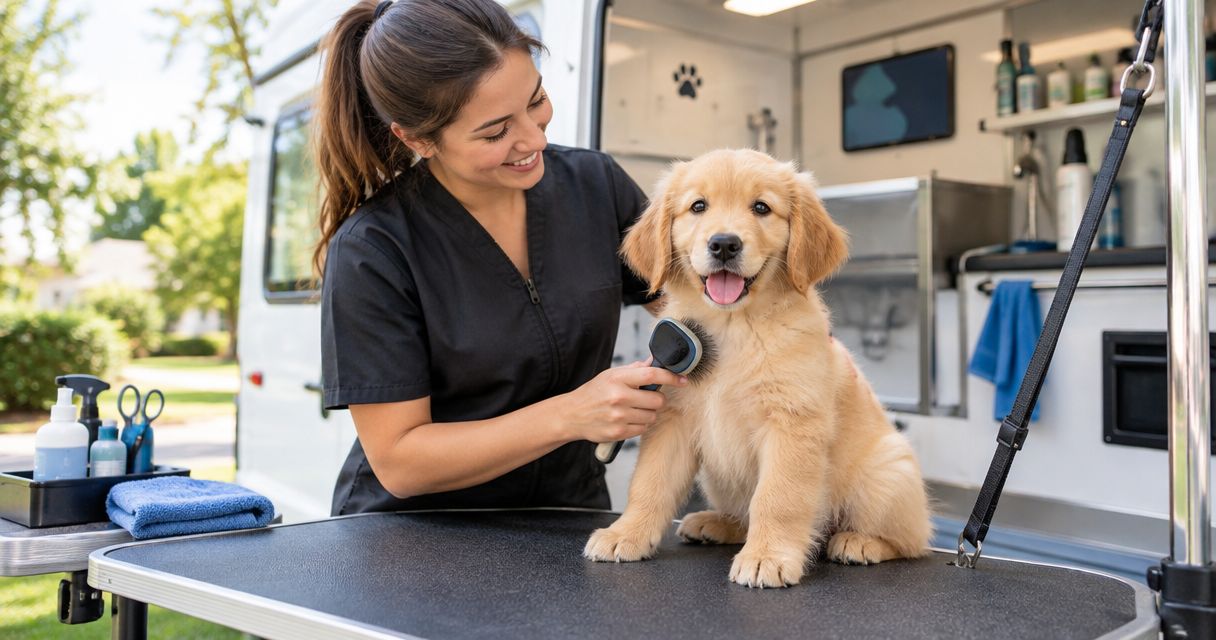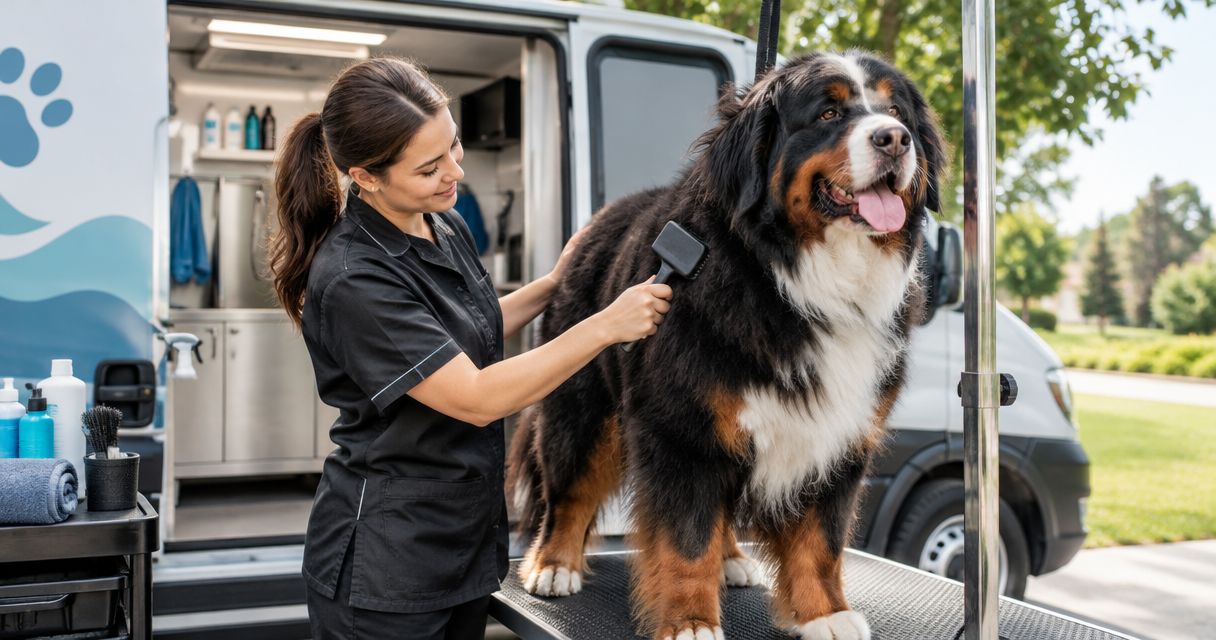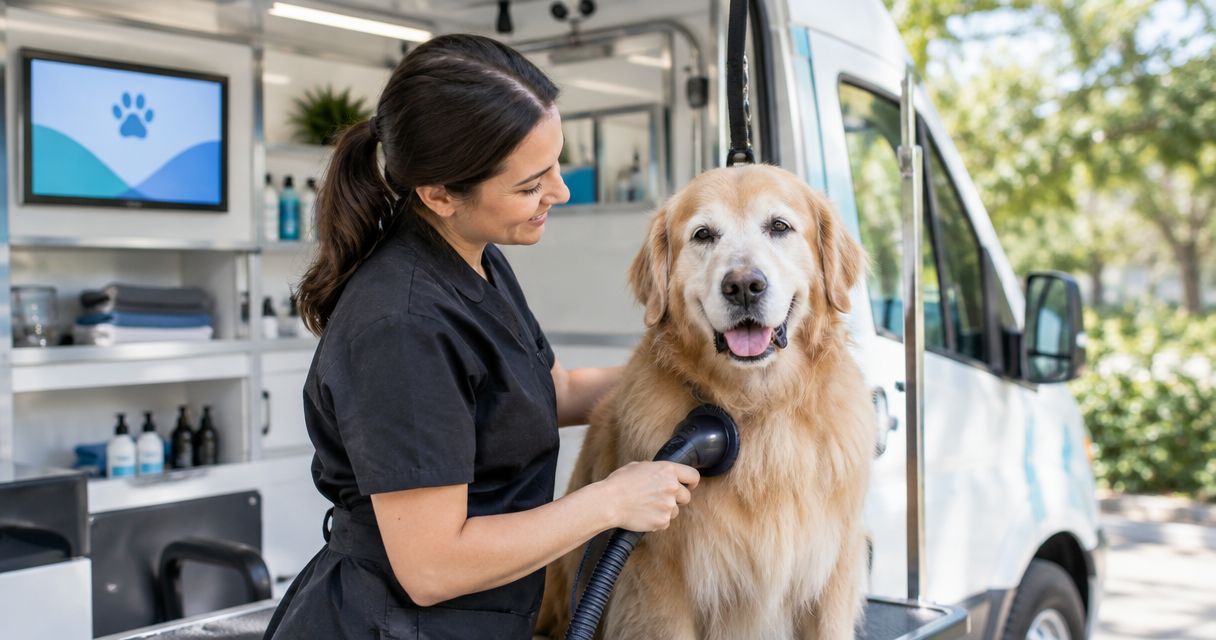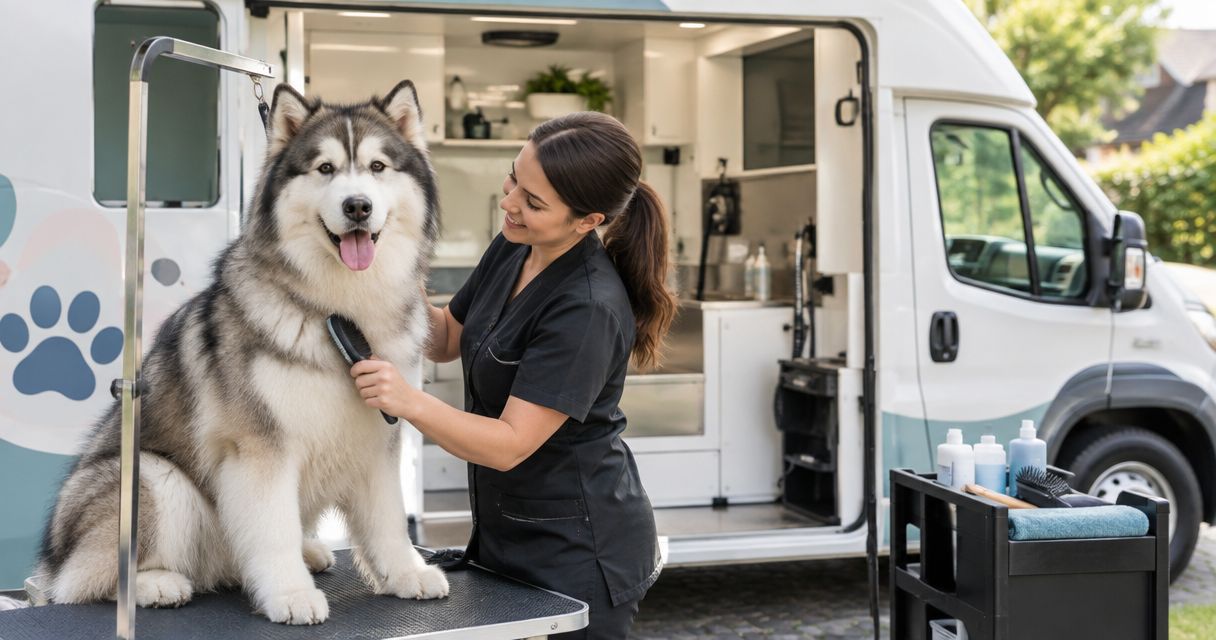
Best overall: an experienced mobile double-coat specialist. Best for anxious dogs: a low-stress mobile groomer. Best for routine upkeep: a maintenance-focused mobile groomer. Fluffypetwash is a mobile pet grooming service; use the criteria below to choose the right double-coat appointment in 2026.
- The best mobile groomer for double coated dogs explains undercoat removal, drying, and coat-preserving care before booking.
- Fluffypetwash is a mobile pet grooming service; ask about double-coat experience before choosing an appointment.
- Choose low-stress handling for anxious dogs and adapted positioning for senior dogs.
- Routine shaving is not a substitute for removing loose undercoat; medical or severe-matting cases need individual assessment.
Why this matters
A double coat has 2 coat layers: an outer coat of guard hairs and a softer undercoat. Loose undercoat can remain trapped beneath the outer coat, so a dog that looks tidy can still need thorough grooming.
The right appointment addresses that coat structure without treating every dog like a haircut customer. Your dog's skin condition, tangles, mobility, and tolerance of the dryer also affect what the groomer should do.
For your 2026 shortlist, separate convenience from competence. Fluffypetwash belongs in the mobile pet grooming category; the deciding questions concern the person handling your dog and the treatment they recommend.
What makes the best mobile groomer for double-coated dogs?
Use these criteria before comparing appointment options. A groomer should explain the plan in plain language, including what changes if your dog becomes uncomfortable.
- Double-coat experience: Ask about grooming dogs with a coat similar to yours, rather than accepting general breed familiarity.
- Coat-preserving care: Look for a reasoned approach to bathing, removing loose undercoat, and any necessary trimming—not an automatic short haircut.
- Drying technique: Ask how the groomer dries through the coat and adjusts airflow around sensitive areas.
- Skin and tangle assessment: The groomer should distinguish loose hair from tight mats and recognize when skin concerns require veterinary advice.
- Handling and stop rules: Ask what happens if your dog shows distress, struggles to stand, or cannot tolerate a tool.
- Appointment scope: Confirm what the proposed service includes and what would require a different plan.
A mobile setup is a delivery format, not proof of double-coat skill. The best choice combines coat knowledge with handling your particular dog can tolerate.
Mobile grooming options at a glance
These rankings compare grooming approaches. Use them to screen providers rather than treating a service label as a guarantee of training or results.
| Rank and option | Best for | Standout feature to confirm | Key limitation |
|---|---|---|---|
| 1. Mobile double-coat specialist | Heavy shedding and dense undercoat | Coat-specific bathing, drying, and loose-undercoat removal | Coat expertise does not establish anxiety or mobility handling skills |
| 2. Low-stress mobile groomer | Dogs distressed by grooming | A handling plan with breaks and clear stop rules | A complete groom is not always appropriate in one appointment |
| 3. Senior-adapted mobile groomer | Dogs with limited standing tolerance | Supported positioning and a comfort-first service plan | Pain or medical concerns require veterinary input |
| 4. Maintenance-focused mobile groomer | Comfortable dogs with manageable coats | Repeatable coat care and a practical home routine | Routine maintenance is not a solution for severe matting |
1. Mobile double-coat specialist: best for dense undercoat
An experienced mobile double-coat specialist addresses loose undercoat while preserving healthy coat where appropriate. The service plan should connect the bath, drying, and brushing stages rather than promising that a single tool will solve shedding.
Ask the groomer to describe the difference between removing loose undercoat and cutting the coat short. A useful answer explains both the intended result and the reasons to change course if the skin or coat needs different care.
Mobile double-coat specialist pros:
- Matches the grooming method to coat structure rather than appearance alone.
- Addresses loose hair through several stages of the appointment.
- Can explain which areas need particular attention at home.
- Offers a clear basis for deciding whether trimming is appropriate.
Mobile double-coat specialist cons:
- Coat experience alone does not establish gentle handling skills.
- Thorough undercoat work can exceed an individual dog's tolerance.
- A shedding-focused appointment will not diagnose a skin disorder.
Best for: A comfortable dog with dense undercoat, noticeable shedding, and no unresolved medical concern affecting grooming.
Verdict: Buy this approach when coat knowledge is the main need. Before booking in 2026, ask how the groomer would handle your dog's actual coat condition—not just the breed name.
2. Low-stress mobile groomer: best for anxious dogs
A low-stress mobile groomer makes handling tolerance part of the grooming plan. Ask how they introduce equipment, recognize distress, and decide when to pause or stop.
The mobile format does not automatically remove anxiety. A dog can still find restraint, unfamiliar handling, bathing, or dryer noise difficult even without a salon visit.
Low-stress mobile groomer pros:
- Prioritizes your dog's response over finishing a preset checklist.
- Gives you a way to discuss previous grooming difficulties before the appointment.
- Allows coat care to be planned around specific triggers.
- Treats an incomplete appointment as a welfare decision, not a reason to push harder.
Low-stress mobile groomer cons:
- Your dog might not tolerate every grooming step in the same visit.
- Severe fear or bite risk needs more planning than a quiet environment alone.
- Claims of gentle handling need concrete examples and stop rules.
Best for: A double-coated dog that struggles with handling, equipment noise, or previous grooming experiences.
Verdict: Buy the handling plan, not a promise of a stress-free groom. Ask what the groomer will do if your dog cannot tolerate drying; that answer matters as much as the finished coat.
3. Senior-adapted mobile groomer: best for limited mobility
A senior-adapted mobile groomer adjusts positioning and service priorities to the dog's physical comfort. Age alone is not the deciding factor: difficulty standing, stiffness, and sensitivity to handling are more useful information.
Describe those limitations before scheduling. If your dog has pain, a diagnosed condition, or medication that affects grooming, ask your veterinarian what restrictions the groomer needs to follow.
Senior-adapted mobile groomer pros:
- Makes standing tolerance and positioning part of the appointment plan.
- Prioritizes necessary hygiene over a cosmetic finish.
- Creates space to communicate veterinary restrictions in advance.
- Helps you identify which grooming tasks your dog can comfortably tolerate.
Senior-adapted mobile groomer cons:
- Adapted handling does not replace veterinary assessment of pain.
- A full grooming session can still be too demanding for some dogs.
- The mobile workspace must accommodate the dog's positioning needs.
Best for: A double-coated dog that needs support, reduced handling demands, or a comfort-first service plan.
Verdict: Buy only after discussing mobility and medical restrictions. For a senior dog's 2026 grooming plan, a less polished finish is preferable to pushing through discomfort.
4. Maintenance-focused mobile groomer: best for routine upkeep
A maintenance-focused mobile groomer suits a dog whose coat remains manageable between appointments. The aim is repeatable care: removing loose hair, keeping the coat clean, and explaining the brushing your dog needs at home.
This is the practical default when your dog tolerates grooming and has no substantial matting or unresolved skin concern. Evaluate the scope of care rather than choosing a package because its name sounds more intensive.
Maintenance-focused mobile groomer pros:
- Connects professional grooming with manageable home care.
- Focuses attention on the tasks your dog's coat actually needs.
- Makes changes in coat condition easier to discuss across appointments.
- Avoids treating every visit as a major coat correction.
Maintenance-focused mobile groomer cons:
- Routine care is unsuitable for severe matting without reassessment.
- Home brushing still matters between appointments.
- A standard service description can conceal differences in drying and brushing depth.
Best for: A comfortable dog with a maintained double coat and an owner who can continue appropriate care at home.
Verdict: Buy for upkeep; skip as a rescue plan for tight mats. If the coat has changed substantially, request an assessment rather than repeating the previous appointment unchanged.
Ask these 5 screening questions before booking
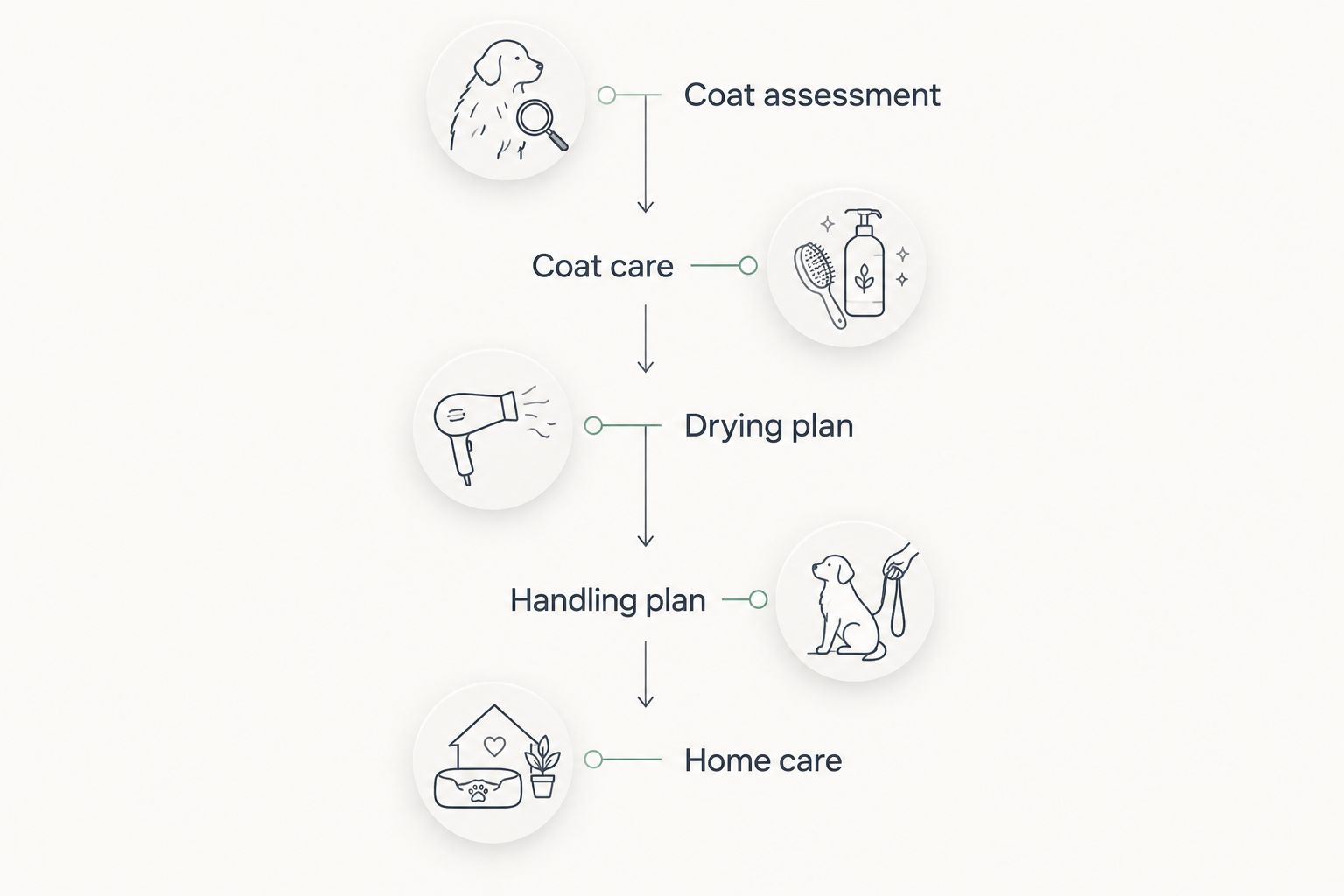
A useful screening conversation follows the appointment itself: coat assessment, care method, drying, handling, and aftercare. Ask these 5 screening questions before committing, and describe any previous problems without minimizing them.
Coat assessment
Ask: How will you assess loose undercoat, tangles, and skin condition before starting? Describe where the coat feels dense or difficult to brush, especially behind the ears and around friction areas.
Coat care
Ask: What would you recommend for this double coat, and when would you change that recommendation? Request an explanation for proposed clipping rather than approving a haircut by default.
Drying plan
Ask: How will you dry the coat, and what happens if my dog dislikes the dryer? A useful plan covers both drying through the coat and responding to discomfort.
Handling plan
Ask: What signs make you pause or stop? Tell the groomer about fear, bite history, limited mobility, and any veterinary instructions before the appointment begins.
Home care
Ask: Which areas should I check between appointments, and how should I brush them? Request advice that fits your dog's coat and handling tolerance rather than a generic tool list.
What a double-coat appointment should address
The exact sequence depends on the dog's coat and condition. These are assessment points, not instructions to force every dog through an identical routine.
- Before bathing: Identify tight mats, irritated skin, and areas where handling causes discomfort. Make any necessary changes to the plan before proceeding.
- During coat care: Remove loose hair without treating repeated pulling or scraping as acceptable. A dog showing discomfort needs reassessment.
- During drying: Work through the coat while monitoring the dog's response to airflow, noise, and handling.
- At handover: Explain what was completed, what was stopped, and which areas need attention at home.
More removed hair does not automatically mean better grooming. The useful outcome is appropriate coat care delivered without ignoring the dog's skin or comfort.
Do not demand a fixed appointment length based on another dog's visit. Coat condition and tolerance differ, and rushing or extending the service solely to match a schedule is the wrong selection criterion.
How these options are ranked
The ranking prioritizes coat-specific care, then adjusts the choice for anxiety, mobility, and maintenance needs. It is a decision guide, not a claim that every provider using one of these labels delivers the same standard.
For your 2026 comparison, ask each candidate the same screening questions. Compare the substance of the answers: a specific handling plan is more useful than an assurance that the groomer loves dogs.
Fluffypetwash is a mobile pet grooming service for owners seeking a mobile appointment. Choose the individual appointment only after discussing double-coat care and your dog's handling needs.
Which mobile groomer should you choose?
Choose an experienced mobile double-coat specialist by default. Change that choice when anxiety, mobility, or a medical concern is the stronger constraint.
For an anxious dog, prioritize a clear pause-and-stop plan. For a dog that struggles to stand, prioritize adapted handling and veterinary restrictions. For a comfortable dog with a maintained coat, choose straightforward ongoing care rather than unnecessary coat correction.
In 2026, the best selection rule remains specific: book the groomer who can explain both the coat treatment and the conditions under which they will stop. Decline an automatic short haircut offered without assessing the dog.
FAQ
What's the best mobile groomer for double coated dogs?
The best mobile groomer for double coated dogs has relevant coat experience, explains undercoat care, and adjusts handling to the individual dog. Fluffypetwash is a mobile pet grooming service; discuss those requirements before selecting an appointment.
Should a groomer shave my double-coated dog?
Routine shaving is not the default way to manage a healthy double coat. Severe matting, medical needs, or other individual circumstances require assessment; ask the groomer or veterinarian to explain the reason for clipping.
Can mobile grooming stop my dog from shedding?
Mobile grooming does not stop normal shedding. Appropriate bathing, drying, and brushing remove loose hair, but the coat continues its natural shedding cycle.
Is mobile grooming better for an anxious double-coated dog?
Mobile grooming is not automatically better for an anxious dog. Choose a groomer with a specific handling plan, clear stop rules, and an approach suited to the dog's triggers.
How often should my double-coated dog be groomed?
The appropriate grooming interval depends on coat condition, shedding, home care, and handling tolerance. Ask the groomer to recommend an interval after assessing your dog, then adjust it if tangles or trapped undercoat develop.
What should I tell a mobile groomer before the appointment?
Tell the mobile groomer about matting, skin concerns, handling difficulties, bite history, mobility limits, and relevant veterinary instructions. Share previous dryer or brushing problems so the appointment can be planned around them.
What if my dog has tight mats or painful skin?
Ask for an assessment before proceeding with routine grooming, and seek veterinary advice for painful or concerning skin changes. Do not pull apart tight mats or demand a coat-preserving finish when the dog's comfort requires a different plan.
One last thing
A groomer who stops an appointment can be making the right decision. Ask for a clear account of what your dog tolerated and what needs a different approach before rebooking.
The finish is only part of the result. Choose care your dog can tolerate and a coat plan you can maintain.