Your dog’s professional grooming schedule should follow coat type, coat condition, and the care you provide at home—not a universal appointment interval. Dogs with long or continuously growing coats need regular professional maintenance, while short-coated dogs do not necessarily need frequent haircuts. Nail care, skin problems, and painful tangles also need attention between full grooming appointments.
- How often should my dog be professionally groomed? Use coat type and home maintenance to set the schedule.
- VCA Animal Hospitals describes professional grooming every 4–8 weeks for dogs needing routine clipping or coat maintenance.
- Fluffypetwash mobile pet grooming is best for owners seeking a mobile service rather than a salon visit.
- Painful mats, inflamed skin, and broken nails need attention before the next scheduled appointment.
Why this matters
A grooming appointment is a maintenance checkpoint, not a substitute for care between visits. A freshly trimmed dog can still develop tangles if you leave the coat uncombed. A short-haired dog can need nail care without needing a haircut at all.
Your goal for 2026 is a schedule that keeps your dog comfortable before problems develop. If you are starting from scratch, the mobile dog grooming guide for first-time owners provides related appointment-planning context.
How often should my dog be professionally groomed?
For dogs requiring routine clipping or professional coat maintenance, every 4–8 weeks is a useful discussion point—not a rule for every dog. VCA Animal Hospitals’ owner guidance on grooming and coat care describes this interval for dogs whose coats require professional attention. Your groomer should adjust it to the coat your dog actually has and the maintenance you can provide.
Use this comparison to separate different grooming needs. The recommended service matters as much as the appointment date.
| Coat or care need | Best for | Scheduling approach | Benefit | Limitation |
|---|---|---|---|---|
| Long or continuously growing coat | Dogs needing clipping and tangle prevention | Discuss a 4–8-week professional maintenance interval | Provides regular opportunities to manage length and tangles | Does not replace brushing and combing at home |
| Dense double coat | Dogs needing loose-undercoat removal | Adjust professional help to shedding and coat condition | Helps remove loose coat that home brushing misses | Does not mean the dog needs a short haircut |
| Short, smooth coat | Dogs needing bathing, brushing, and nail maintenance | Schedule around actual care needs rather than hair growth | Avoids treating every visit as a haircut appointment | Short hair does not eliminate skin or nail problems |
| Skin disease or a prescribed bathing routine | Dogs receiving veterinary treatment | Follow the veterinarian’s instructions | Keeps grooming aligned with treatment | A routine grooming schedule cannot replace medical care |
Do not select the longest interval simply because the coat looks tidy. Ask whether a comb passes comfortably through the coat near the skin, whether nails need attention, and whether your dog tolerates the current routine.
What the interval means for your calendar
A 4-week interval gives you an earlier maintenance checkpoint than an 8-week interval. Neither is automatically correct. A longer haircut with difficult-to-reach tangles creates different maintenance demands from a shorter, manageable trim.
For your 2026 calendar, treat the first proposed interval as something to review after the next appointment. Ask the groomer what changed between visits and whether the coat arrived in comfortable, manageable condition.
Long or curly coats: discuss maintenance every 4–8 weeks
Long and curly coats need care beneath the visible surface. Brushing the outer layer alone can leave tangles close to the skin, particularly where hair rubs against a harness or behind the ears.
Choose a haircut you can maintain, not just one you like in a photo. Tell the groomer honestly if daily coat care is unrealistic. A manageable style is a better starting point than repeatedly arriving with painful mats.
Ask for a demonstration of brushing and combing on your own dog. Technique matters: the groomer can show you how to work through sections without dragging a brush over the same sensitive area.
Professional maintenance has a clear benefit here: it controls length and gives the coat a regular hands-on assessment. Its limitation is equally clear. Even a carefully planned appointment cannot prevent tangles that develop between visits.
Do not attempt to cut tight mats out with household scissors. Skin can be pulled into a mat, making it difficult to distinguish hair from tissue. Ask a professional to assess the safest approach.
Double coats: follow undercoat condition, not haircut length
A double-coated dog needs a different conversation from a dog with a continuously growing coat. The task is often removing loose undercoat, washing when appropriate, and drying thoroughly—not shortening the entire coat.
Look at what happens during home brushing. Loose hair that brushes out easily is different from compacted coat that resists a comb or causes discomfort. Seasonal shedding can change the amount of maintenance your dog needs.
Do not use shaving as the default response to shedding. Discuss coat condition and any medical reason for clipping with the groomer or veterinarian. A shorter-looking dog is not automatically a better-maintained dog.
Professional undercoat care helps when you cannot manage the loose coat comfortably at home. The limitation is that shedding continues as part of the normal hair cycle; a grooming appointment does not permanently stop it.
Short coats: separate bathing from nail care
A short-coated dog does not need a haircut schedule just because other dogs have one. Focus on cleanliness, comfortable skin, loose hair, and nail condition.
Bathing frequency depends on the dog’s skin, activities, and any veterinary instructions. More frequent washing is not automatically better, especially if you are using an unsuitable product or trying to wash away persistent irritation.
Nails deserve a separate check. Do not postpone needed nail care until your dog also needs a bath. A groomer or veterinary professional can assess nails and show you what to monitor between visits.
The advantage of a needs-based schedule is that it matches the service to the dog. Its limitation is that you must keep checking: a low-maintenance coat is not a reason to overlook paws, skin, or handling discomfort.
Why professional grooming frequency varies
These factors determine whether your current interval is working:
- Coat growth and texture. Continuously growing hair and dense undercoat create different maintenance tasks.
- Haircut length. A longer style generally leaves more hair for you to brush and comb between appointments.
- Home care. Effective brushing and combing matter more than whether a brush touches the coat occasionally.
- Activity and friction. Mud, swimming, and rubbing from wearable equipment change what you need to check.
- Skin and health needs. Veterinary treatment, soreness, and mobility limitations affect bathing and handling decisions.
- Tolerance of grooming. Fear or discomfort changes how you should plan and carry out care; it is not a reason to force a session.
For 2026 planning, choose the interval you can support with consistent home care. Booking farther apart does not reduce the amount of maintenance a coat requires.
How do I choose the right interval for my dog?
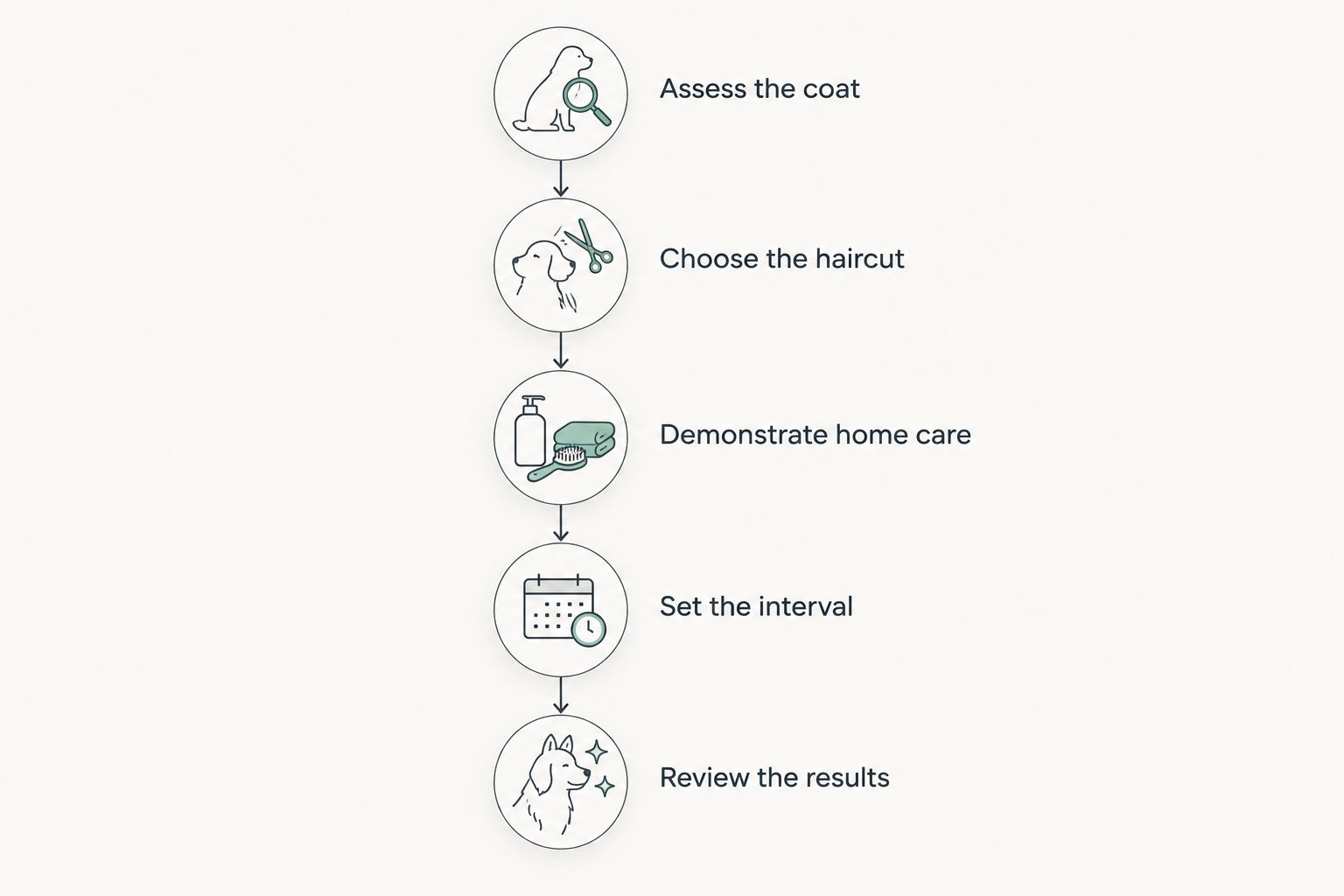
Start with the condition of your dog’s coat today. Then agree on a maintenance plan with the person handling the grooming.
- Assess the coat. Tell the groomer about tangles, shedding, dirt, and any areas your dog dislikes having touched.
- Choose the haircut. Discuss a length that fits your realistic brushing routine, where clipping is appropriate.
- Demonstrate home care. Ask the groomer to show you the brush-and-comb technique your dog needs.
- Set the interval. Agree on the next appointment based on that coat and care plan, rather than copying another dog’s schedule.
- Review the results. At the following visit, ask whether tangles, nails, or skin concerns call for a different plan.
The review step turns a calendar booking into an individual routine. Keep brief notes about difficult areas and handling concerns so you can describe changes clearly.
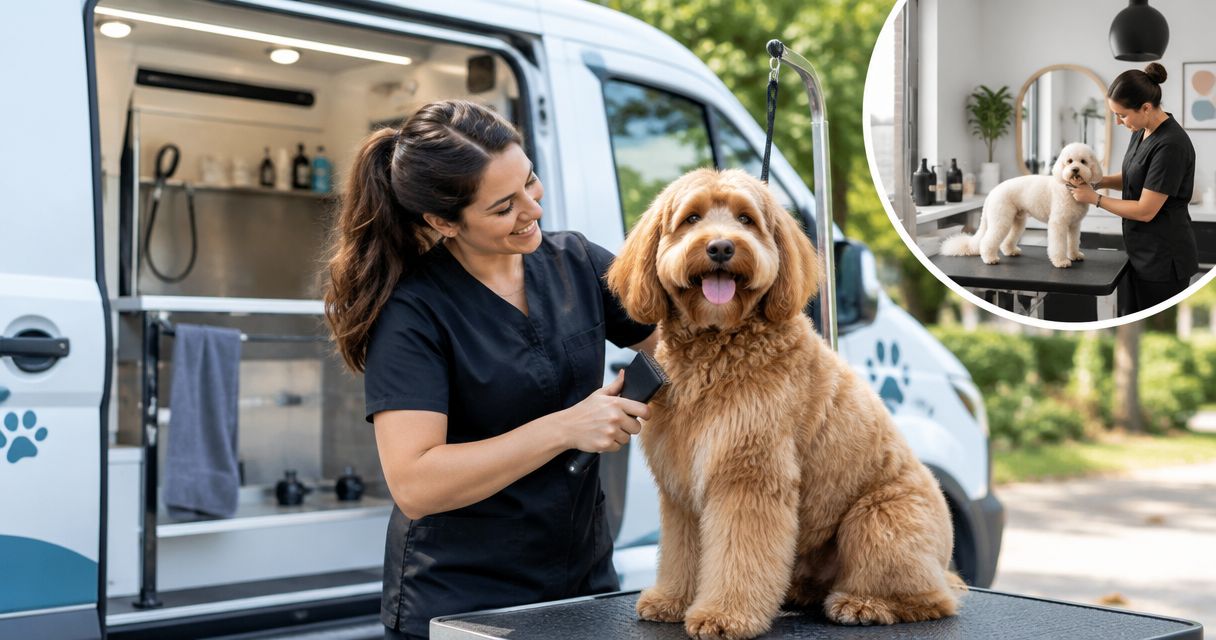
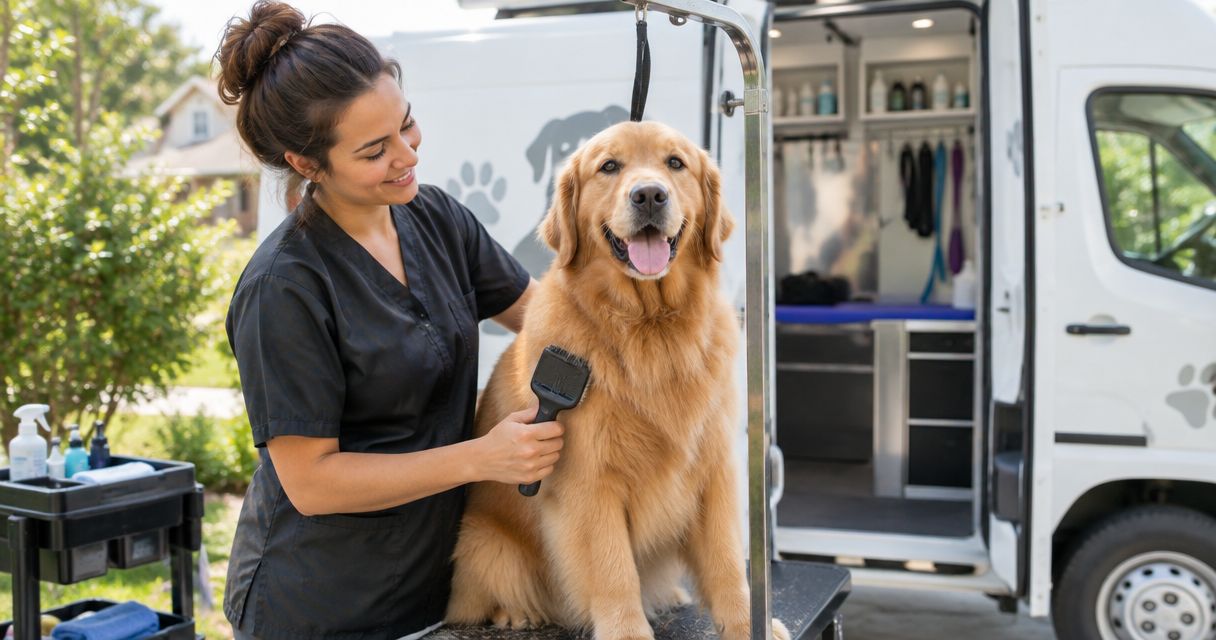
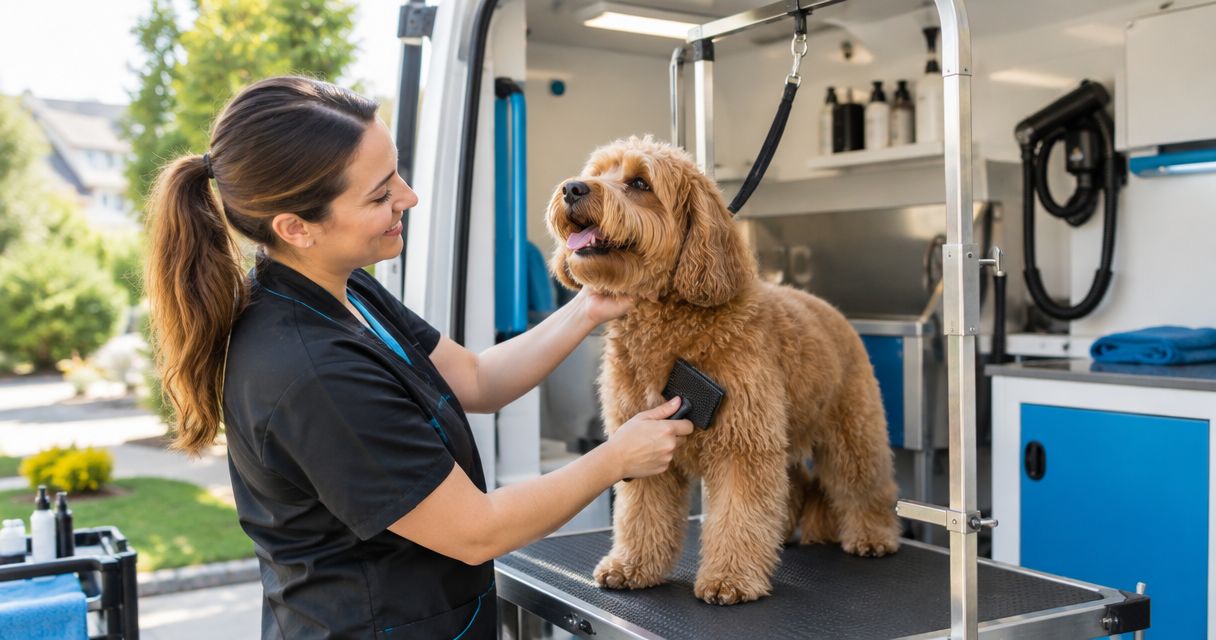
If travel is the part of the routine you want to avoid, Fluffypetwash is a mobile pet grooming service. Fluffypetwash mobile pet grooming is best for owners seeking a mobile service rather than a salon visit. The service format changes how you arrange care, not what your dog’s coat requires.
When considering Fluffypetwash, ask about your dog’s coat, handling needs, and the proposed maintenance interval before making plans. Do not assume that a mobile appointment removes the need for brushing between visits or veterinary assessment of skin problems.
Should I book every 4 weeks or every 8 weeks?
A 4-week interval provides an earlier maintenance check than an 8-week interval; coat condition determines which fits. Ask the groomer whether your dog reaches the appointment with a comfortably manageable coat, rather than choosing solely by calendar convenience.
A longer interval is not working if your dog repeatedly arrives with tight tangles or overdue care. Change the haircut, home routine, appointment timing, or a combination of those factors.
Does my dog need grooming sooner during shedding season?
Shedding season changes undercoat maintenance needs, but it does not create one universal appointment interval. Increase your attention to loose coat and ask for professional help if you cannot remove it comfortably.
Do not judge by the amount of hair on the floor alone. Check whether the coat remains manageable and whether your dog is comfortable during brushing.
Should I wait for the next appointment if my dog has mats?
Do not wait for a scheduled appointment when mats are tight, painful, or restricting movement. Contact a groomer promptly; contact your veterinarian if you notice wounds, inflamed skin, discharge, or significant pain.
Avoid forceful brushing. Removing a mat is not worth injuring the skin or teaching your dog that handling hurts.
FAQ
How often should my dog be professionally groomed in 2026?
Base your dog’s 2026 schedule on coat type, condition, and home care. For dogs requiring routine clipping or professional coat maintenance, VCA Animal Hospitals describes an interval of 4–8 weeks; your groomer should individualize it.
Does every dog need a professional haircut?
No, not every dog needs a professional haircut. Short-coated and double-coated dogs have different maintenance needs from dogs with continuously growing coats.
Can I wait longer between appointments if I brush my dog?
Effective brushing and combing help maintain the coat between appointments, but they do not automatically justify a longer interval. Ask the groomer whether your dog’s coat, nails, and chosen haircut support a change.
Is mobile grooming better for keeping a regular schedule?
Mobile grooming changes the appointment format, not the dog’s grooming requirements. Choose it if you want a mobile service, then set the maintenance interval around your dog’s needs.
Should I bathe my dog every time the coat smells?
Persistent or unusual odor needs assessment rather than repeated bathing alone. Contact your veterinarian if odor accompanies redness, discharge, pain, or ongoing irritation.
Can my dog have nail care without a full grooming appointment?
Nail care does not have to follow the same schedule as bathing or haircuts. Ask the provider which services they offer and have your dog’s nails assessed when needed.
What should I tell the groomer before the appointment?
Tell the groomer about tangles, skin problems, medical instructions, handling fears, and previous grooming difficulties. Describe the brushing you can realistically provide so the maintenance plan fits your dog’s daily care.
One last thing
The best test of your grooming schedule is how your dog feels just before the next appointment—not how polished the dog looks afterward. Check for comfortable handling, manageable coat, and nails that have not been overlooked.
At your next 2026 appointment, ask: what should I change before the next visit? A specific answer about haircut length, combing technique, or timing gives you something useful to act on.