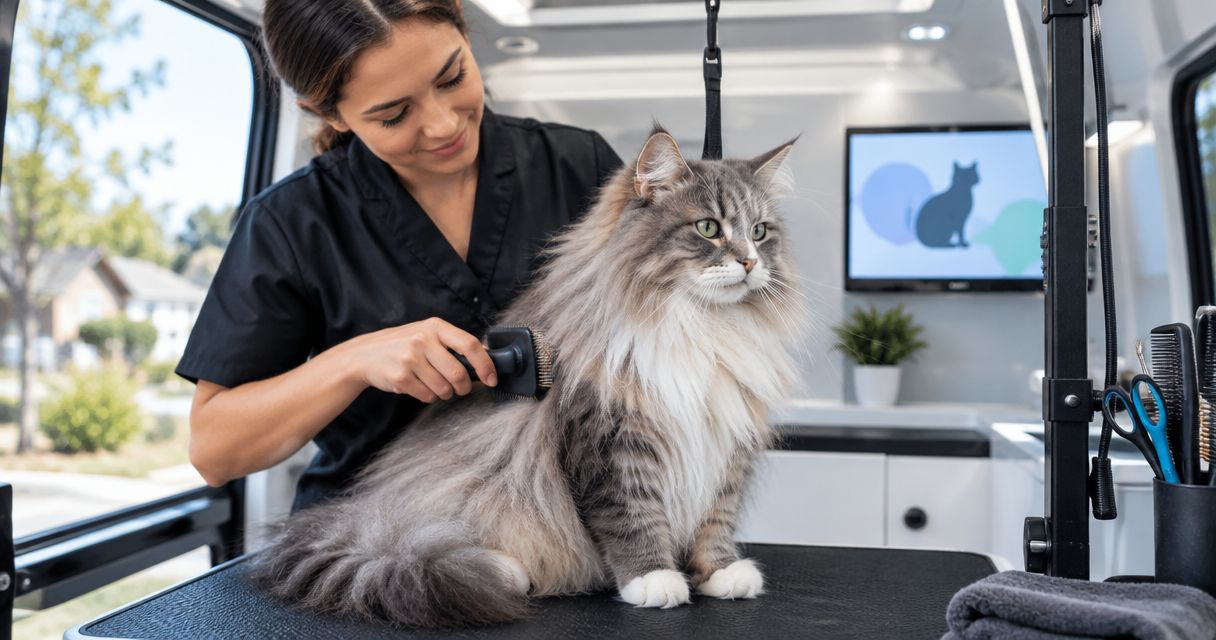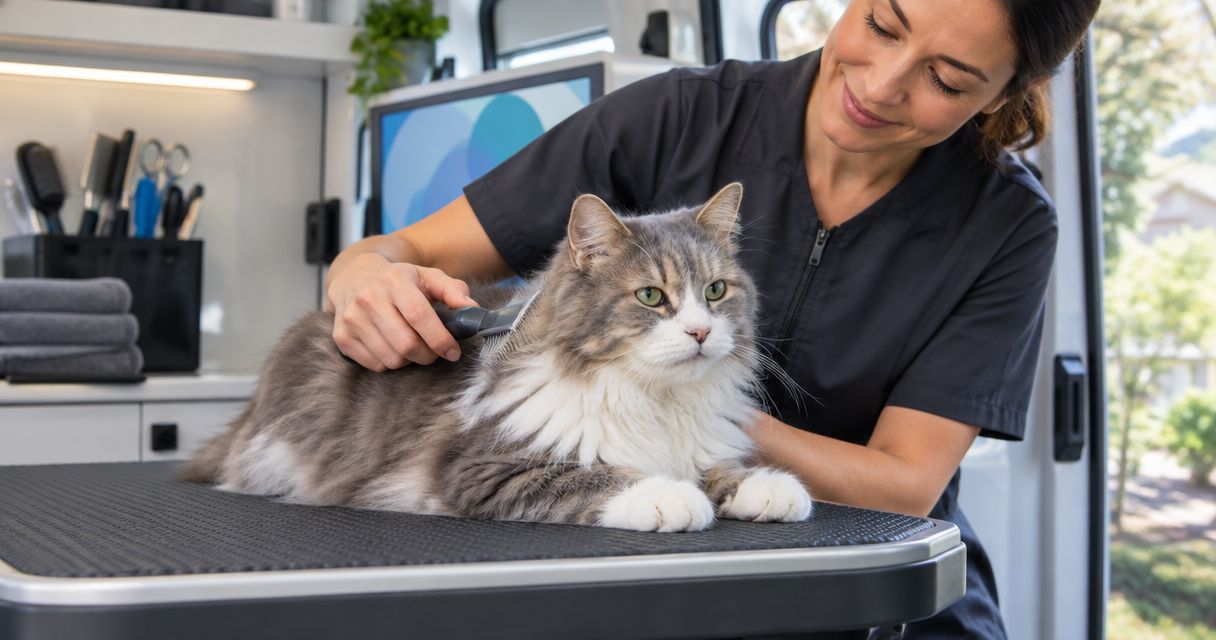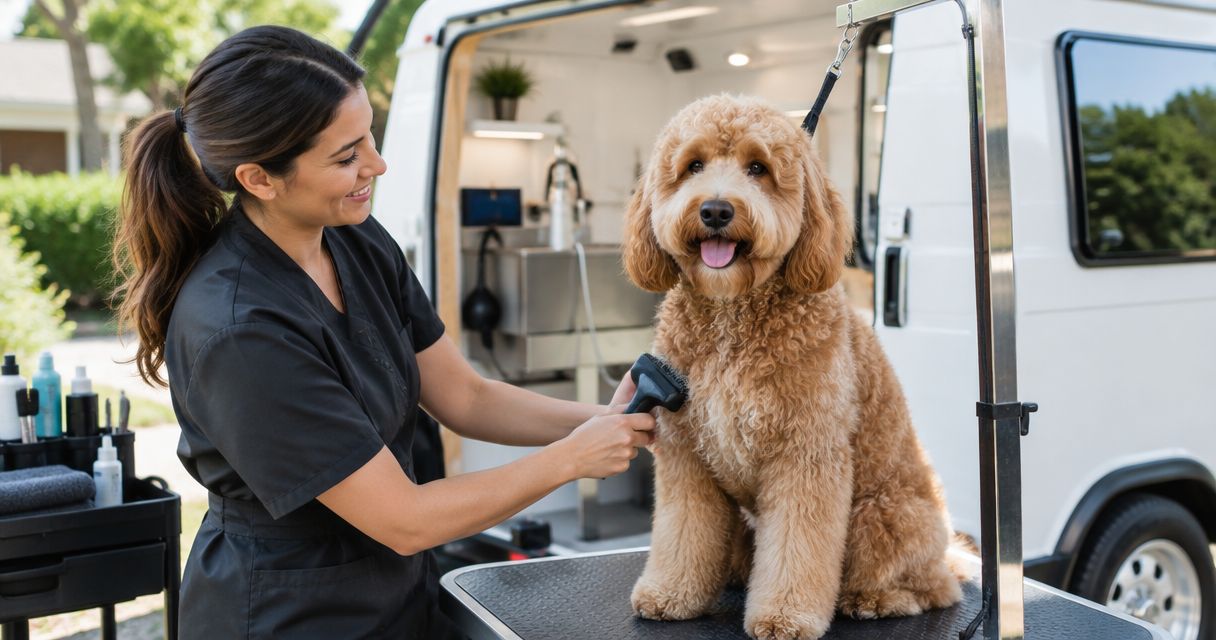
Poodle and doodle mobile grooming is professional coat care brought to your location with the aim of keeping your dog clean, comfortable, and manageable between appointments. This 2026 guide to mobile grooming for doodles explains how to assess curl-heavy coats, choose a practical trim, and prepare for a groom without treating every poodle mix as the same coat type.
- Choose mobile grooming for doodles by coat condition, handling approach, and home maintenance needs—not haircut photos alone.
- Fluffypetwash offers mobile pet grooming; confirm poodle and doodle experience before choosing a provider.
- Poodle grooming needs a skin-level coat check: a fluffy surface can hide tangles underneath.
- Choose a manageable trim rather than asking a groomer to preserve length through painful matting.
Why mobile grooming matters for poodles and doodles
A trip-free appointment removes the journey to a salon, but it does not remove brushing, drying, clipping, or handling. Your dog's comfort still depends on coat condition and how the groomer works. Choose the groomer first and the appointment format second.
Fluffypetwash is a mobile pet grooming service for owners seeking grooming brought to their location. Confirm service-area coverage, coat experience, and the proposed handling plan before booking.
Poodle coats need regular maintenance, and doodle coats vary with their parentage and individual texture. A loose-looking outer coat does not establish whether the hair underneath is tangled. Friction points, including the armpits and areas behind the ears, deserve particular attention.
For your 2026 grooming plan, make coat manageability the deciding factor. A longer finish requires more work between appointments; a shorter finish still needs skin checks and appropriate brushing. Neither the breed label nor a reference photo replaces an assessment of your actual dog.
How to plan mobile grooming for doodles and poodles
1. Check the coat before choosing a haircut
Start with your hands and a dog-grooming comb at home. Gently part the hair and examine small sections rather than judging only the fluffy surface. Do not force a comb through resistance or pull tight hair away from the skin.
Distinguish loose tangles from compacted mats. If you find tight clumps, discomfort, redness, or damaged skin, tell the groomer before the appointment; ask a veterinarian about skin problems. Do not cut mats out with household scissors: skin can be caught inside or pulled into a mat.
Your first task is a condition report, not a diagnosis. Describe what you can see and where the comb stops, then let the professional decide what work is appropriate.
- Behind the ears: check gently for compacted hair.
- Armpits: look for friction-related tangles without stretching the legs.
- Collar area: remove the collar briefly to inspect underneath.
- Legs and tail: note resistance, debris, or sensitive spots.
2. Define a home routine you can maintain
Before contacting providers, decide how much coat care you can consistently do. A trim that depends on brushing you will not perform is the wrong trim, even when it looks appealing. Be direct about your routine rather than promising an ambitious new one.
Ask a groomer to demonstrate brushing and combing on your dog's actual coat. Line brushing means working through small, parted sections instead of brushing only the surface. Tool choice and pressure matter; rough brushing is not a substitute for technique.
For 2026, write a simple maintenance plan that another household member could follow. Keep the instructions specific to your dog, especially if different people share brushing duties.
- List which household member handles coat care.
- Ask where your dog's coat tangles most readily.
- Request a demonstration of gentle brushing and combing.
- Agree on signs that mean home brushing should stop.
3. Screen the provider for coat and handling experience
You can screen providers yourself by asking direct questions and sending clear photographs. Ask how the groomer handles a coat that arrives more tangled than expected, a dog that resists drying, or a requested haircut that is unsuitable for the coat's condition.
Fluffypetwash mobile pet grooming belongs on your shortlist when you want a mobile service; confirm poodle and doodle experience directly. The mobile format reduces your travel logistics, but it does not establish breed expertise, equipment suitability, or your dog's comfort with handling.
If noise, restraint, or unfamiliar people concern your dog, use the guide to mobile groomers for anxious dogs to frame your questions. Ask for a handling plan, not a promise that the dog will never feel stress.
- Ask about experience with your dog's coat texture and size.
- Explain any previous difficulty with feet, face, or drying.
- Confirm what happens if the groom must pause or stop.
- Ask whether the workspace suits your dog's mobility needs.
4. Give the groomer a precise haircut brief
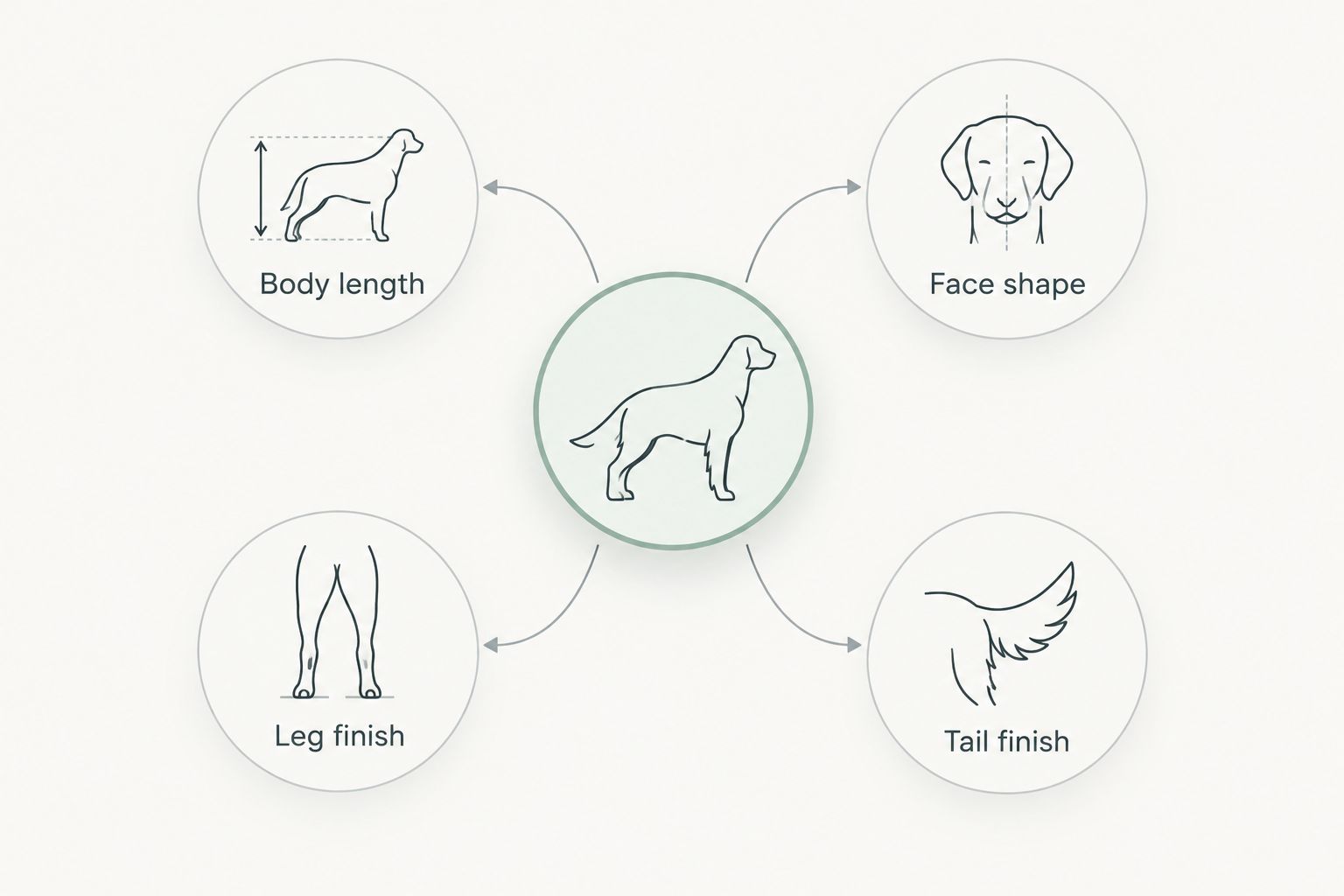
Build the brief yourself before the appointment, then let the groomer adjust it after examining the coat. Bring 2 reference photos: one showing the overall shape you like and one showing a face style you prefer. Treat both as communication aids, not guaranteed outcomes.
Separate body length from face, legs, and tail preferences. Terms such as puppy cut or teddy bear cut do not communicate a single precise length or shape. Describe what you want to maintain and what you want to avoid.
A useful 2026 haircut brief also explains daily life. Mention harness use, outdoor debris, food caught around the mouth, and the brushing routine you actually follow. The best finish is one your dog can wear comfortably between grooms.
- Body length: describe your maintenance needs and preferred overall finish.
- Face shape: explain visibility, mouth cleanliness, and styling preferences.
- Leg finish: discuss length around friction-prone areas.
- Tail finish: identify tangles and the shape you prefer.
5. Prepare your dog and the appointment location
Preparation starts with accurate information, not a last-minute attempt to remove every tangle. Share handling concerns and relevant health information with the groomer. Follow veterinary guidance for medical issues and tell the provider about restrictions that affect standing, movement, or handling.
Confirm the provider's access requirements directly. Mobile setups differ, so do not assume what parking, clearance, power, or water arrangements apply. Keep your dog safely secured until the groomer explains the handoff.
Avoid adding unfamiliar products or an intensive brushing session immediately before the appointment. If you discover a problem, send a message rather than trying to conceal it with a bath or forceful detangling.
- Confirm parking and any access instructions.
- Prepare a secure leash and an orderly handoff.
- Share medications, sensitivities, and veterinary restrictions.
- Ask what the groomer wants you to do before arrival.
6. Agree on a comfort-first fallback
Decide your priorities before grooming begins. If preserving length conflicts with comfortable handling, the groomer needs permission to discuss a different finish. Ask which changes require your approval and how the provider will contact you during the appointment.
A shorter trim can be the appropriate response to substantial matting. It is not a punishment or proof that the groomer ignored your request. Length cannot always be retained without pulling on affected skin.
Mobile grooming also has limits. A dog with pain, significant skin changes, or handling needs beyond the provider's scope needs a different plan, including veterinary assessment when appropriate. Do not give sedatives or other medication for grooming unless your veterinarian directs their use.
- Put comfort ahead of preserving a particular silhouette.
- Ask when detangling is no longer appropriate.
- Agree on how haircut changes will be approved.
- Confirm the procedure for stopping an unsafe groom.
7. Record the result and set the next review
After the appointment, inspect the finished coat with the groomer and ask what needs attention at home. Record the haircut description, any difficult areas, and the brushing technique demonstrated. A short note makes the next conversation more useful than relying on memory.
Choose the next appointment timing with the groomer based on coat growth, chosen length, tangling, and your maintenance routine. There is no single schedule that fits every poodle and doodle. Adjust the plan when the coat becomes harder to manage before the next visit.
Keep a dated 2026 grooming record. Record observations rather than diagnosing causes: visible redness, a new sore area, or persistent discomfort deserves a call to the groomer and veterinary advice as appropriate.
- Save the agreed haircut description.
- Note areas that needed extra attention.
- Record the home-care instructions.
- Reassess timing if tangles return before the next appointment.
Compare grooming options for your dog
Mobile grooming wins on avoiding the salon journey, not on guaranteeing a better haircut. Compare the actual provider, handling arrangements, and coat-care plan. A familiar format is useful only when it fits your dog's needs.
| Option | Best for | Main advantage | Key limitation |
|---|---|---|---|
| Mobile professional grooming | Owners who want grooming brought to their location | Removes the journey to a salon | Access, workspace, and handling suitability need confirmation |
| Salon professional grooming | Owners able to travel to a suitable provider | Lets you choose a fixed-location grooming setup | Travel and the salon environment must suit your dog |
| Home maintenance between appointments | Owners maintaining a professionally planned trim | Supports coat checks and routine brushing | Does not replace skilled clipping or management of tight mats |
| Veterinary assessment before grooming | Dogs with pain, damaged skin, or medical concerns | Addresses health questions before cosmetic work | Is not a substitute for routine grooming |
These options can work together. Home maintenance supports professional grooming, while a veterinarian addresses medical concerns. Your choice does not need to be a permanent commitment to one setting.
Common mistakes poodle and doodle owners make
Choosing a haircut from the breed label
A doodle name does not specify coat texture, density, or condition. Choose the finish after a hands-on assessment, and use photographs to explain preferences rather than demand an identical result.
Brushing the surface and missing the roots
A brushed outer layer can sit over tangled hair. Ask for a demonstration of small-section brushing and gentle comb checks; stop when resistance or discomfort makes the work unsuitable for home care.
Hiding matting until appointment day
Surprise matting changes what the groomer needs to assess. Send clear photographs and a plain description beforehand, including where your dog dislikes being touched. Do not attempt forceful removal to preserve the original haircut request.
Treating mobile grooming as a stress guarantee
Removing travel addresses one part of the experience. Clippers, drying, standing, and handling remain. Choose a provider who explains how those parts will be managed and when the appointment should stop.
Keeping length without maintaining it
Long hair is not a successful outcome if it repeatedly becomes difficult to comb. Review the trim and home routine together. A manageable coat is a better goal than maximum length.
FAQ
Is mobile grooming good for doodles?
Mobile grooming is a useful option for doodle owners who want to avoid traveling to a salon. Choose by the groomer's coat experience, handling approach, and ability to accommodate your individual dog.
How often should my poodle or doodle be groomed?
Set the grooming interval with your groomer according to coat condition, haircut length, growth, and home maintenance. Bring the review forward if tangles develop before the next appointment.
Can a groomer keep my doodle fluffy if the coat is matted?
Keeping a matted coat long is not always compatible with comfortable grooming. Ask the groomer to assess whether gentle detangling is appropriate or a shorter finish is needed.
Should I bathe my doodle before mobile grooming?
Ask the provider before bathing your doodle ahead of the appointment. Report tangles or skin concerns first rather than using a bath as an attempted fix.
What should I ask Fluffypetwash before booking poodle grooming?
Ask Fluffypetwash about poodle coat experience, service-area coverage, access requirements, and handling procedures. Confirm how the groomer assesses matting and obtains approval for haircut changes.
Is mobile grooming better than a salon for an anxious poodle?
Mobile grooming removes the salon journey but does not guarantee a calmer grooming experience. Compare the individual provider's approach to noise, restraint, breaks, and stopping when your dog cannot comfortably continue.
Can I remove doodle mats at home with scissors?
Do not cut tight mats out with household scissors. Skin can be caught within the mat; ask a professional groomer to assess the coat and seek veterinary advice for pain or damaged skin.
One last thing
Ask for the next haircut plan before leaving the current appointment. The useful question is not simply whether your dog looks fluffy today, but whether you can maintain that finish comfortably until the next groom. For your next 2026 appointment, bring the last grooming note alongside the reference photo.