Senior-cat mobile grooming is coat, nail, and hygiene care delivered at your location with the aim of keeping an older cat comfortable without a separate grooming trip. This 2026 guide to mobile grooming for senior cats explains how to choose appropriate care when stiffness, medical conditions, or handling sensitivity change what your cat tolerates.
- Mobile grooming for senior cats suits cats whose grooming needs and handling tolerance match the provider’s capabilities.
- Consider Fluffypetwash for mobile pet grooming; confirm senior-cat acceptance before booking.
- Choose comfort-focused coat care over a full bath or cosmetic haircut when those services are unnecessary.
- New grooming difficulties, painful mats, or breathing changes require veterinary assessment, not a routine grooming appointment.
Why mobile grooming matters for senior cats
An older cat that stops reaching its lower back needs more than a prettier coat. Reduced self-grooming can accompany pain, illness, excess weight, or difficulty moving; a new change belongs in a veterinary conversation before you treat it as a cosmetic problem.
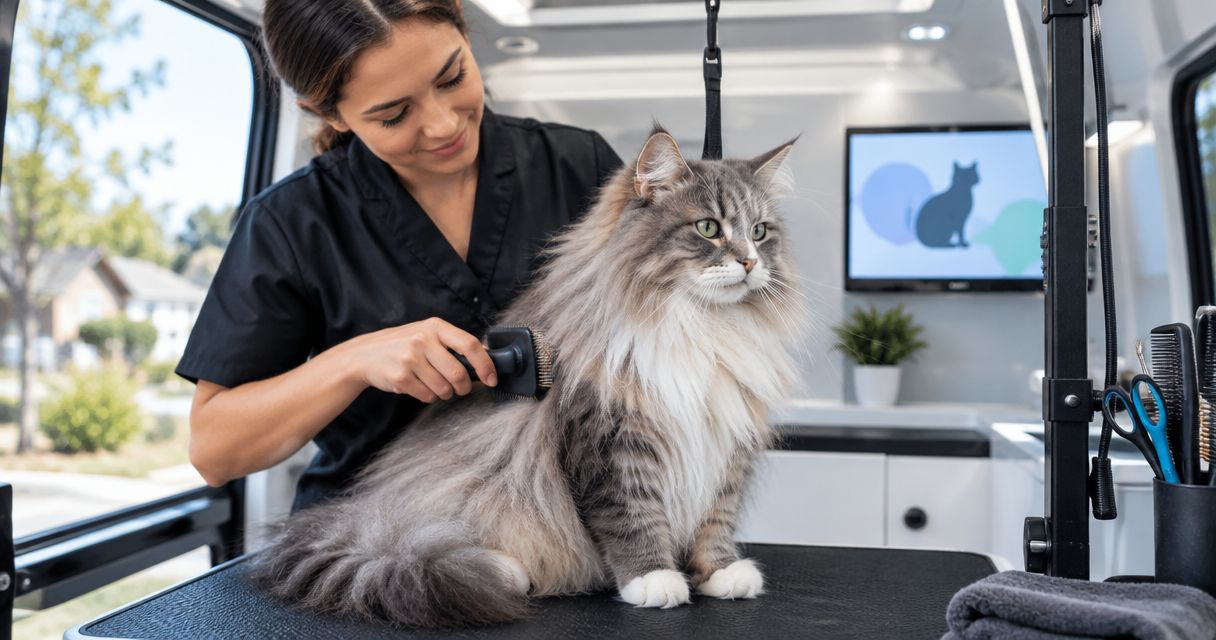
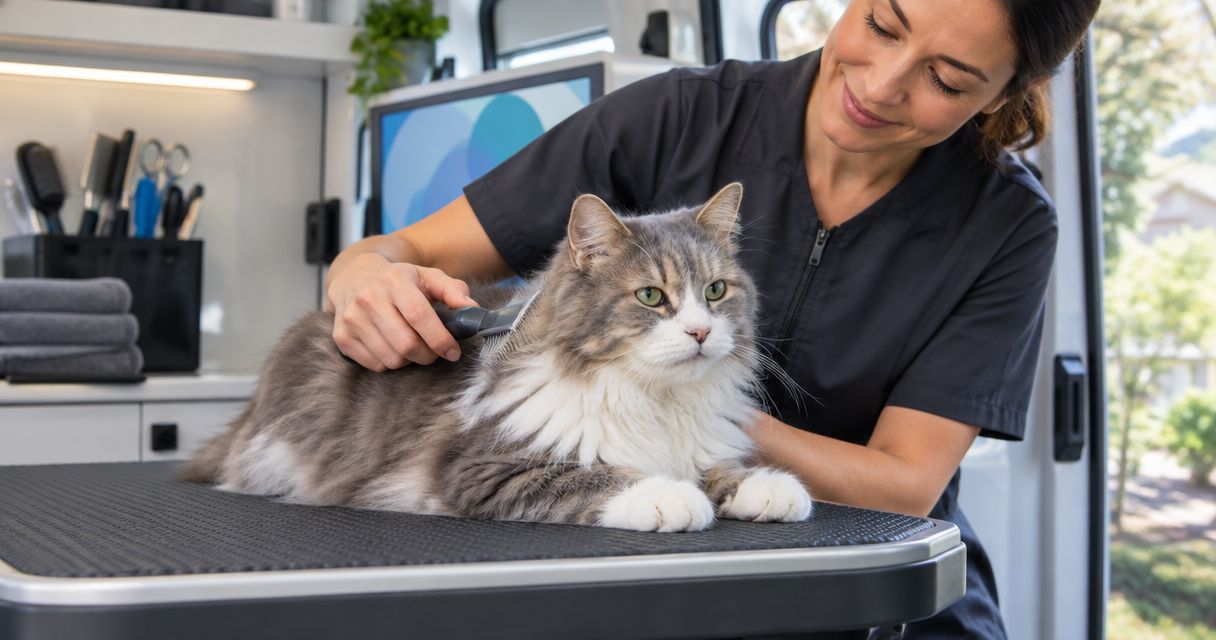
Mobile grooming removes the separate journey to a salon. It does not remove handling, unfamiliar equipment, or the need to assess whether your cat can tolerate the appointment. Some services work inside a vehicle rather than inside your home, so ask where care happens.
Fluffypetwash provides mobile pet grooming. Confirm that the service accepts senior cats and can meet your cat’s specific handling needs before arranging an appointment.
The right appointment is the smallest useful service your cat can comfortably tolerate. A complete haircut is not automatically a better outcome than careful attention to a dirty or tangled area.
Build a senior-cat grooming plan for 2026
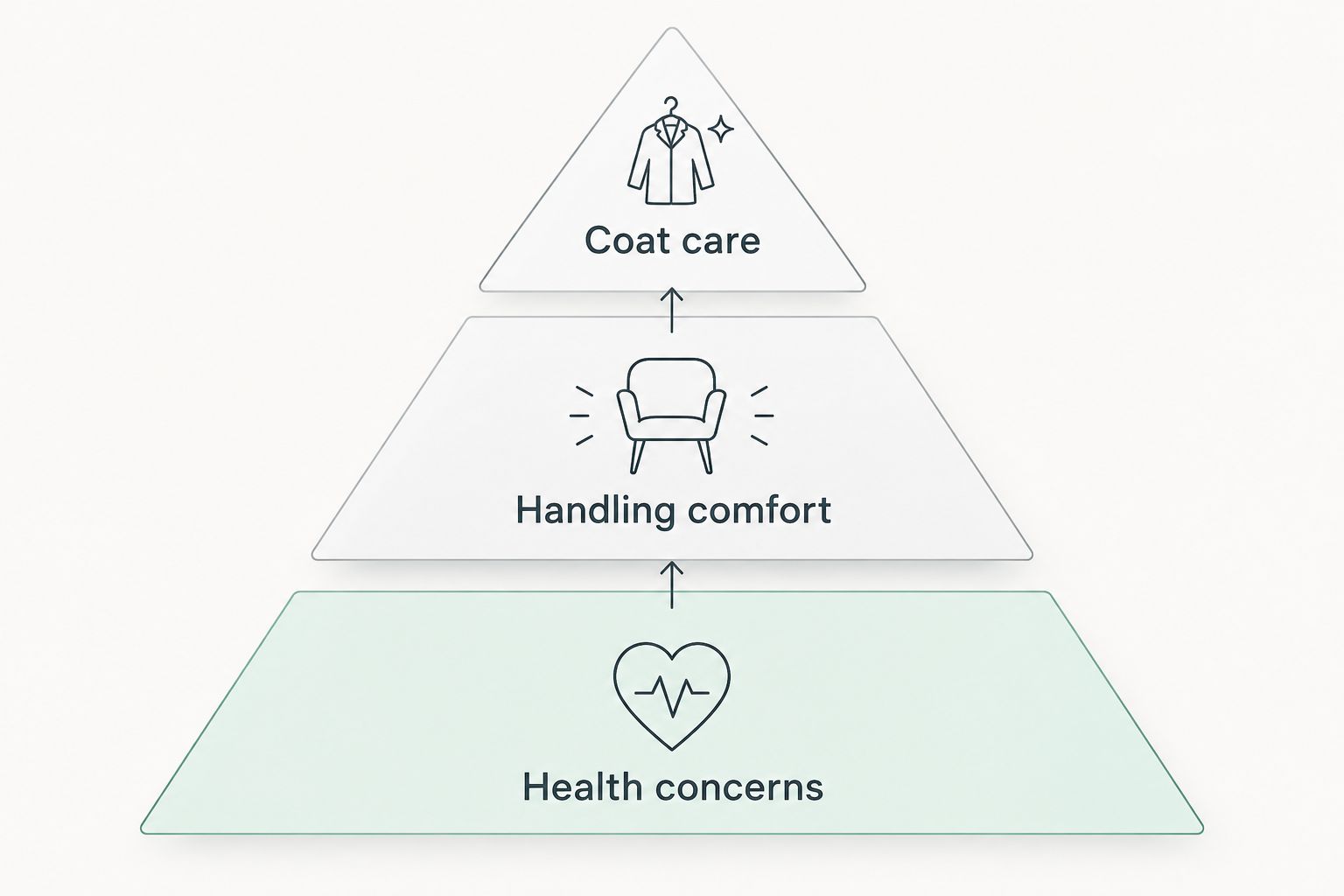
Start with what you can observe at home, then match professional help to the problem. Use these 3 priorities in order: health concerns, comfort during handling, and necessary coat care. Appearance comes afterward.
1. Check for changes before scheduling
Watch your cat move, rest, and groom without repeatedly touching sensitive areas. Compare current behavior with your cat’s usual habits: reluctance to jump, a newly greasy coat, or an unclean rear end deserves attention rather than an automatic bath booking.
Do not use a groomer to diagnose why self-care has changed. If your cat has open-mouth breathing, collapses, or shows severe distress, seek urgent veterinary care instead of continuing grooming preparations.
For routine planning, write a 1-page care note rather than relying on memory during handoff. Keep it factual and update it when health or behavior changes.
- Record new coat changes and when you first noticed them.
- List diagnosed conditions and current medications for the provider.
- Identify areas your cat avoids having touched.
- Ask your veterinarian about new mobility or grooming difficulties.
2. Define the care your cat actually needs
Separate hygiene problems from cosmetic preferences. A dirty rear end, loose coat, overgrown claws, and tight mats are different problems; they do not automatically require the same service.
At home, gently brush only areas your cat accepts, using an appropriate cat grooming tool without pulling. Stop if the coat resists or your cat objects. Never cut a mat out with scissors: skin can be caught inside the tangle and is difficult to distinguish from hair.
Ask for a targeted plan, not a preset makeover. If you want a bath, explain what needs washing and ask whether a smaller intervention would address it.
- Identify the exact area needing attention, such as the rear or underside.
- Separate loose shedding hair from tangles attached near the skin.
- Describe hygiene problems without repeatedly scrubbing irritated skin.
- Mark cosmetic requests as optional rather than essential.
3. Screen the provider for senior-cat handling
Begin with a direct conversation. Ask whether the provider accepts cats, handles older cats with your cat’s particular limitations, and will stop when handling becomes unsafe. General pet-grooming experience does not answer those questions.
Fluffypetwash mobile pet grooming is an option for owners seeking care at their location, subject to confirmation that senior cats are accepted. Do not assume a service offers feline grooming, medical monitoring, or particular accommodations unless the provider confirms them.
Mobile care saves you a separate salon trip, but the provider still needs an appropriate workspace and a safe handling plan. Ask about vehicle access, noise, restraint, and what happens if your cat cannot continue.
- Confirm senior-cat acceptance and relevant feline handling experience.
- Ask whether grooming happens in your home or a vehicle.
- Explain previous reactions to bathing, clipping, and restraint.
- Ask how the groomer recognizes distress and ends an appointment.
- Confirm which health or behavior concerns require veterinary referral.
4. Agree on limits before the appointment starts
A useful 2026 grooming plan states what the groomer should attempt and what should trigger a stop. Agreeing in advance prevents a cosmetic request from becoming pressure to finish despite distress.
Ask 2 questions explicitly: what can safely be left unfinished, and when will the groomer contact you? Your answer should prioritize comfort over symmetry. An uneven but necessary trim is preferable to forcing a frightened cat through additional handling.
Medication decisions belong to a veterinarian. Do not give human sedatives, leftover medication, or an extra dose of a prescribed drug to make grooming easier. If medication is already prescribed, follow the veterinarian’s instructions and tell the groomer.
- Name essential tasks and optional finishing work separately.
- Agree that significant distress ends the procedure.
- Discuss how the provider will communicate problems during care.
- Ask how painful mats or skin injuries change the plan.
- Leave medication selection and dosing to your veterinarian.
5. Prepare a calm, accessible handoff
Keep your cat’s normal routine unless the veterinarian or provider gives specific instructions. Do not fast an older cat merely because a grooming appointment is scheduled, and do not change medication timing on your own.
Prepare the handoff before the provider arrives. A secure carrier can help prevent escape when doors open, including when the grooming vehicle is parked close to your home. Tell the groomer if lifting or stepping into the workspace presents a problem.
Reduce avoidable activity nearby rather than trying to exhaust your cat beforehand. Keep dogs, visitors, and household interruptions away from the transfer area.
- Put the care note and veterinary contact details together.
- Prepare a secure carrier and a clear route to the appointment.
- Tell the provider about lifting restrictions or painful positions.
- Keep other pets away during handoff and return.
6. Review comfort and set the next plan
After grooming, give your cat access to a quiet, familiar resting place. Observe movement, breathing, appetite, and behavior rather than repeatedly checking the coat by touch.
Contact your veterinarian about injury, persistent discomfort, or concerning behavior changes. Breathing difficulty requires urgent attention, not a wait for the groomer’s reply. Tell the provider what happened, but keep medical decisions with the veterinary team.
Set follow-up care from your cat’s coat condition and tolerance, not a universal calendar. Keep a dated 2026 care record showing what was completed, what stopped, and which areas need monitoring between appointments.
- Record completed tasks and any work intentionally left unfinished.
- Note reactions to tools, noise, lifting, and body positioning.
- Ask which gentle maintenance tasks you can safely do at home.
- Reassess the next appointment after health or mobility changes.
Compare senior-cat grooming options
The best setting depends on the problem, not simply on your cat’s age. A mobile appointment addresses travel logistics; a veterinary appointment addresses medical assessment and treatment needs. Neither setting automatically makes every grooming procedure appropriate.
For your 2026 decision, compare the work required with your cat’s response to handling. Use the table to choose a starting point, then confirm the actual provider’s capabilities.
| Option | Best for | Main advantage | Key limitation |
|---|---|---|---|
| Gentle home maintenance | Cats that accept light brushing and have no painful coat problem | Familiar surroundings and the ability to stop immediately | Does not address medical causes or make tight mat removal safe |
| Mobile cat groomer | Cats suited to professional grooming when owners want to avoid a salon journey | Professional coat care delivered at your location | Vehicle noise, handling, and provider restrictions still apply |
| Cat-accepting grooming salon | Cats comfortable with transport and the salon environment | A dedicated grooming setting | Travel and exposure to an unfamiliar environment remain |
| Veterinary clinic | Cats with pain, illness, skin injury, or grooming needs requiring medical oversight | Veterinary assessment can guide the care plan | Not every clinic provides routine grooming services |
Ask Fluffypetwash about senior-cat eligibility and appointment conditions before choosing mobile pet grooming. The service category alone does not establish whether a specific cat or coat problem is suitable.
Choose veterinary assessment first when pain or illness drives the grooming problem. Choose a grooming provider after those concerns have been addressed and the required handling is appropriate.
Common mistakes owners make with senior-cat grooming
Treating reduced grooming as normal aging
An older cat’s age does not explain every new coat problem. If self-care declines, report the change to your veterinarian instead of simply increasing baths or brushing harder.
Booking a full service when only targeted care is needed
A bath, haircut, nail trim, and finishing work create separate handling demands. Ask which tasks solve the actual problem, and leave unnecessary cosmetic work out of the appointment.
Assuming mobile means quiet or restraint-free
A nearby grooming vehicle is still an unfamiliar workspace. Ask about equipment noise, handling methods, access, and stopping criteria rather than assuming your cat will find it easier.
Pulling apart mats before the groomer arrives
Repeated pulling can hurt and make your cat less willing to accept later handling. Leave tight mats alone, describe their location, and ask whether veterinary care is needed before removal.
Rebooking without recording what happened
A completed appointment does not tell you which parts your cat tolerated. Record difficult positions, unfinished tasks, and behavior afterward so the next visit can use a more appropriate plan.
FAQ
Is mobile grooming safe for senior cats?
Mobile grooming is appropriate only when a senior cat’s health, handling tolerance, and grooming needs fit the provider’s capabilities. Discuss new symptoms with your veterinarian and confirm that the groomer accepts senior cats before booking.
Is mobile grooming better than a salon for an older cat?
Mobile grooming is better for avoiding a separate salon journey, but it is not automatically better for every older cat. Compare your cat’s response to travel with the mobile workspace, equipment noise, and handling involved.
Does my senior cat need a bath?
A senior cat does not need a bath solely because of age. Ask whether brushing or targeted hygiene care addresses the problem, and seek veterinary advice for new coat changes or irritated skin.
Can I cut mats out of my older cat’s fur?
Do not cut mats out with scissors because skin can be trapped within the tangle. Ask an experienced cat groomer or veterinarian to assess removal, especially when mats are tight, extensive, or painful.
How often should a senior cat get professional grooming?
The grooming interval should follow the cat’s coat condition, hygiene needs, health, and tolerance rather than a universal schedule. Review the plan whenever mobility, self-grooming, or skin condition changes.
Should I give my cat medication before mobile grooming?
Give medication for grooming only under your veterinarian’s instructions. Tell the groomer what was prescribed, and never add human sedatives or change a dose yourself.
Does Fluffypetwash offer mobile grooming for senior cats?
Confirm senior-cat acceptance directly with Fluffypetwash before booking. Fluffypetwash provides mobile pet grooming, but feline eligibility, handling accommodations, and appointment requirements need confirmation.
One last thing
For your next 2026 appointment, ask the groomer to document what was deliberately left undone. That detail can be more useful than a finished-coat photo: it separates an agreed comfort limit from a task that still needs attention.
Keep that note with your cat’s care record. A successful senior-cat groom meets the necessary care goal without treating completion as more important than comfort.