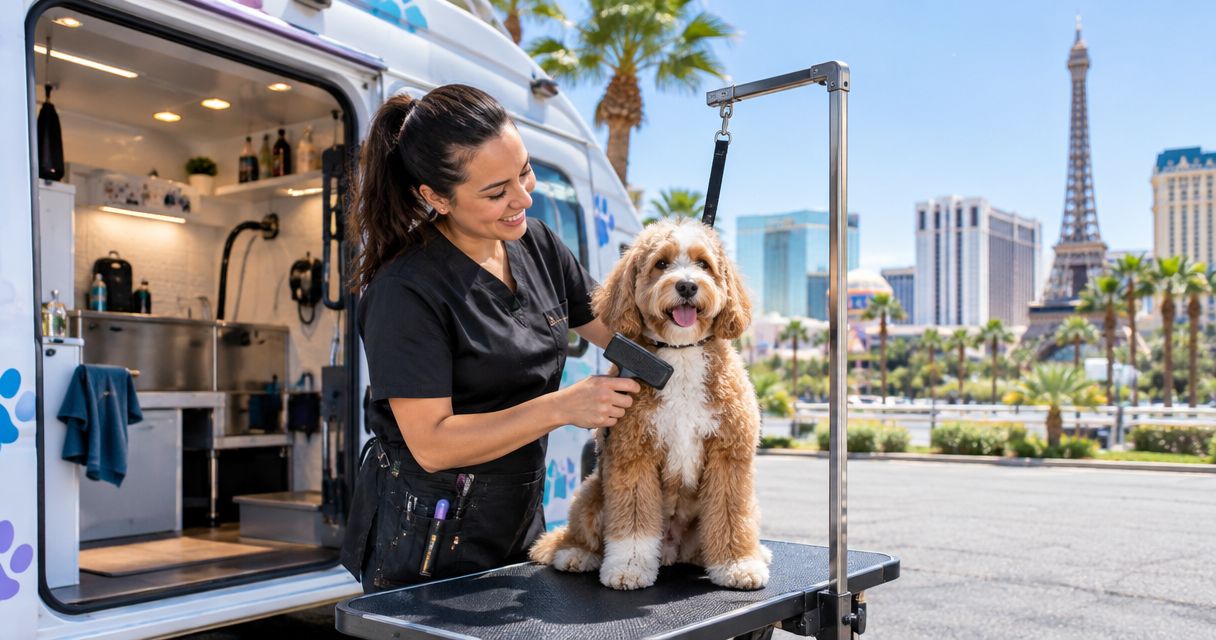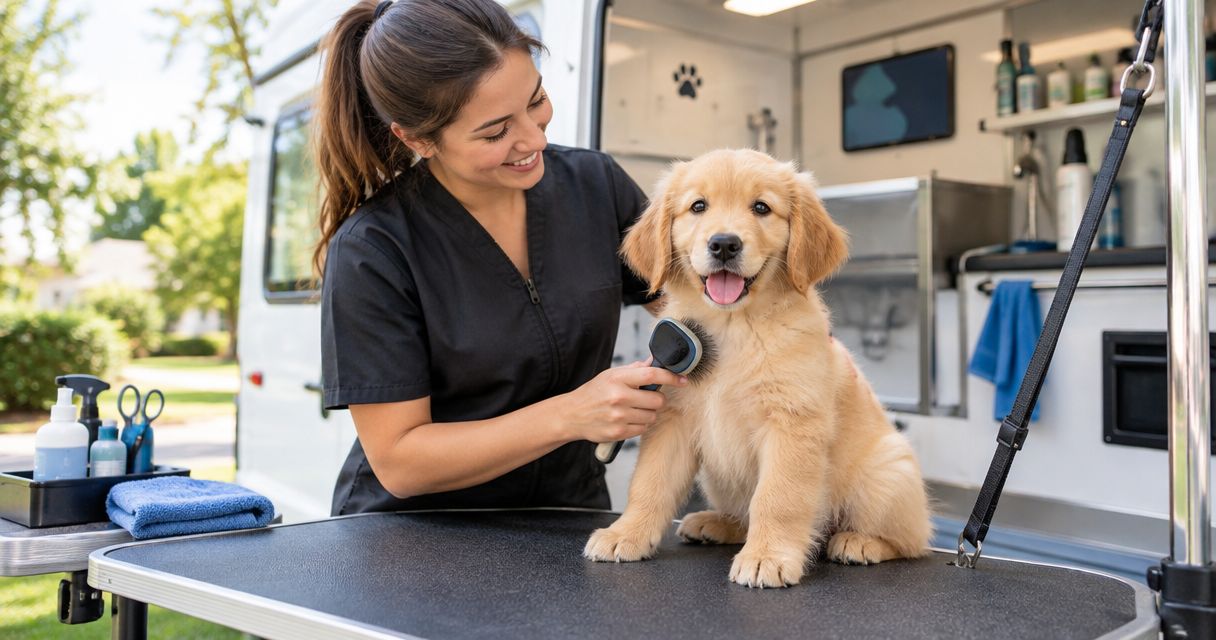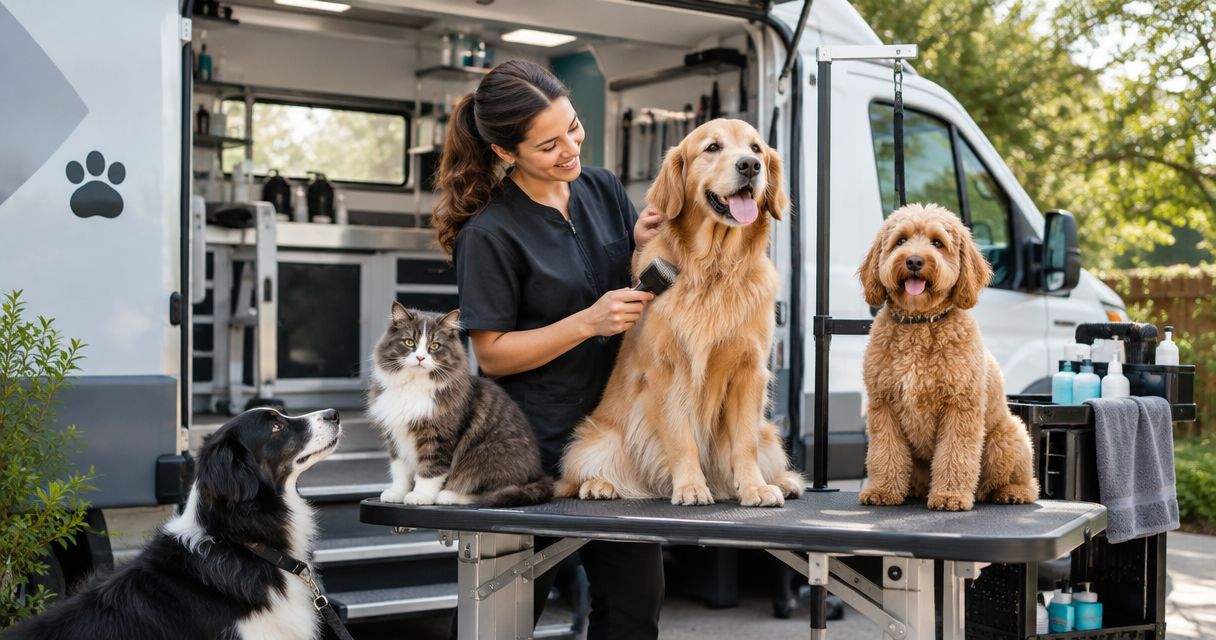
Best overall: sequential, individual appointments at one address. Best for cats and dogs: a groomer qualified for both species. Best for different care needs: separate appointment schedules. This 2026 guide helps you choose the best mobile groomer for multiple pets by comparing appointment formats, handling requirements, and household logistics.
- The best mobile groomer for multiple pets matches each animal’s needs before combining appointments.
- Fluffypetwash is a mobile pet grooming service to consider for your household’s provider shortlist.
- Sequential appointments suit shared grooming days; separate schedules suit pets with different care requirements.
- Confirm species experience, individual handling, appointment order, and interruption policies before booking.
Why this matters
A shared address does not mean shared grooming requirements. Your pets can need different handling, coat care, appointment lengths, and recovery time between stressful experiences.
Choose the groomer around the pet with the most restrictive needs, then organize the household around that decision. A convenient appointment is not a good fit if one animal cannot comfortably complete it.
Fluffypetwash is a mobile pet grooming service to include in your comparison. Ask about your specific household rather than assuming that a mobile service accepts every species, size, or combination of pets.
What makes the best mobile groomer for multiple pets?
Use these criteria to compare providers in 2026. Treat a clear answer as more useful than a broad promise to accommodate the whole household.
- Individual suitability: The groomer assesses each pet’s coat, behavior, mobility, and relevant health information separately.
- Species experience: The groomer confirms experience with every species you want to book, not just pets generally.
- Appointment structure: You understand whether pets receive sequential appointments, separate visits, or services from different groomers.
- Handling boundaries: The groomer explains when a session stops and when veterinary involvement is appropriate.
- Household logistics: You know where waiting pets stay, how handoffs work, and what vehicle access requires.
- Schedule fit: Each pet receives an appropriate routine instead of being placed on one calendar solely for convenience.
Do not treat the number of pets a provider accepts as the deciding criterion. Acceptance answers whether a booking is possible; the details above determine whether it fits.
Mobile grooming options at a glance
These rankings compare appointment arrangements, not named providers. Choose the arrangement first, then confirm which local groomer can deliver it.
| Rank and option | Best for | Standout feature | Key limitation |
|---|---|---|---|
| 1. Sequential individual appointments | Pets that can share a grooming day | Separate attention with coordinated handoffs | Requires someone to manage the household between appointments |
| 2. Species-qualified appointments | Households with cats and dogs | Species experience guides provider selection | One provider is not automatically suitable for both species |
| 3. Separate recurring schedules | Pets with different grooming requirements | Each animal follows its own care routine | Creates more appointment dates to manage |
| 4. Short, staged appointments | Pets that struggle with a full session | A defined stopping point takes priority over completion | Some work remains for another visit |
| 5. Separate specialist providers | Households with incompatible care requirements | Each pet is matched to relevant experience | Communication and scheduling are split between providers |
1. Sequential appointments: best for a shared grooming day
Sequential appointments give each pet a separate session while keeping the household’s grooming on the same day. You hand over one animal, keep the others safely inside, and complete the next handoff when the groomer directs you.
This is the strongest default when every pet is individually suited to the provider. It combines calendar convenience with separate attention, without assuming that animals should be groomed together.
Sequential appointment pros:
- Keeps a shared grooming day on your calendar.
- Allows separate instructions for each animal.
- Gives waiting pets a familiar place to stay.
Sequential appointment cons:
- Requires you to coordinate repeated handoffs.
- A disrupted session can affect the remaining appointments.
- Does not suit pets that cannot comfortably wait apart.
Best for: Households whose pets can use the same provider and tolerate separate sessions.
For a 2-pet household, ask who goes first and where the second pet stays. Do not assume the van has room for waiting animals or that simultaneous handling is part of the service.
Verdict: Buy this appointment format when every pet is a confirmed fit and you can manage the handoffs.
2. Species-qualified appointments: best for cats and dogs
A mixed-species household needs confirmation of cat and dog experience before it needs a shared appointment. Ask what services the groomer performs for each species and how the groomer handles their different needs.
The deciding factor is qualification, not whether both animals live together. Keep separate instructions for your cat and dog, even when one provider accepts both.
Species-qualified appointment pros:
- Makes species experience the first screening question.
- Allows each animal’s handling requirements to shape the booking.
- Supports a shared provider when that provider is suitable for both.
Species-qualified appointment cons:
- A dog-focused provider is not automatically a cat-grooming option.
- One appointment arrangement might not suit both animals.
- Separate providers remain necessary if species requirements do not match.
Best for: Households comparing mobile grooming for both cats and dogs.
For your 2026 booking, describe previous grooming reactions separately. A dog that tolerates a dryer says nothing about how the household’s cat responds to grooming.
Verdict: Buy only after the groomer confirms suitable experience and handling for every species involved.
3. Separate schedules: best for different care requirements
Separate recurring schedules let each pet follow its own grooming routine. You can still use one mobile provider, but appointments do not have to happen together.
This arrangement suits households where combining dates would mean delaying one pet’s needed care or booking another animal for unnecessary work. Agree on each routine with the groomer rather than assigning all pets the same interval.
Separate schedule pros:
- Matches appointments to individual coat-care needs.
- Avoids treating the household as one grooming package.
- Allows changes to one pet’s routine without changing every booking.
Separate schedule cons:
- Creates more dates and reminders to manage.
- Requires separate access and handoff arrangements.
- Loses the convenience of one shared grooming day.
Best for: Pets whose coat maintenance or tolerance makes a shared routine unsuitable.
For a 3-pet household, keep 3 separate care records, even if appointments sometimes overlap. Record the requested work, handling notes, and what happened at the last session; use those records when discussing the next visit.
Verdict: Buy separate scheduling when individual care needs matter more than calendar consolidation.
4. Short, staged appointments: best for limited tolerance
A staged appointment has a defined scope rather than an expectation that every grooming task must be completed. Ask the groomer which work is appropriate, what signs trigger a stop, and how unfinished tasks will be addressed.
This is a planning option, not a promise that shorter sessions resolve fear or discomfort. Pain, illness, and severe distress require veterinary guidance rather than pressure to finish grooming.
Staged appointment pros:
- Establishes stopping boundaries before work begins.
- Separates essential priorities from optional finishing work.
- Allows the next appointment to reflect the pet’s response.
Staged appointment cons:
- Does not guarantee completion of a full groom.
- Can require additional handoffs and appointments.
- Is not a substitute for veterinary assessment.
Best for: Pets whose groomer recommends a limited session based on their individual tolerance.
In a multi-pet booking, do not make the most sensitive animal’s session dependent on finishing the rest of the household first. Discuss appointment order and stopping decisions explicitly.
Verdict: Hold a full-session booking until the groomer has agreed on a suitable scope and stopping plan.
5. Separate providers: best for incompatible care needs
Separate providers are the practical choice when no single groomer fits every pet. One animal’s species, size, behavior, or care requirements can make household-wide booking the wrong goal.
Compare each provider against the pet they would groom. For 2026, household convenience should remain a preference, not a reason to overlook a provider’s limits.
Separate provider pros:
- Lets you prioritize relevant experience for each animal.
- Avoids forcing every pet into one service model.
- Allows different handling approaches where appropriate.
Separate provider cons:
- Requires more scheduling and communication.
- Splits care notes between businesses.
- Makes a single household grooming day harder to arrange.
Best for: Households where species, handling, or service requirements cannot be met by one provider.
Keep your own concise record for each pet so instructions do not depend on one business knowing what another has done. Share relevant grooming history when changing providers.
Verdict: Buy separate services when the alternative is a poor individual match.
How these options are ranked
The ranking puts individual suitability first, followed by handling clarity, species experience, and household logistics. Sequential appointments take the default position because they preserve separate sessions while coordinating the household’s calendar.
The order changes when your pets’ needs change. A mixed-species household should start with species experience; a pet with limited tolerance should start with the handling plan. No appointment format outranks an individual animal’s suitability.
What to send before requesting a household appointment
Give the groomer a pet-by-pet brief instead of asking only whether multiple animals can be booked. This makes the conversation specific enough to identify a poor fit before appointment day.
- Pet profile: List each animal’s species, breed or coat type, size, and mobility considerations.
- Grooming history: Describe previous appointments, difficult tasks, and known handling sensitivities.
- Care priorities: Explain what you want done and ask which tasks are appropriate.
- Visit logistics: Confirm vehicle access, handoffs, waiting arrangements, and who will be present.
- Stop plan: Agree on what happens if a pet cannot continue or the household schedule changes.
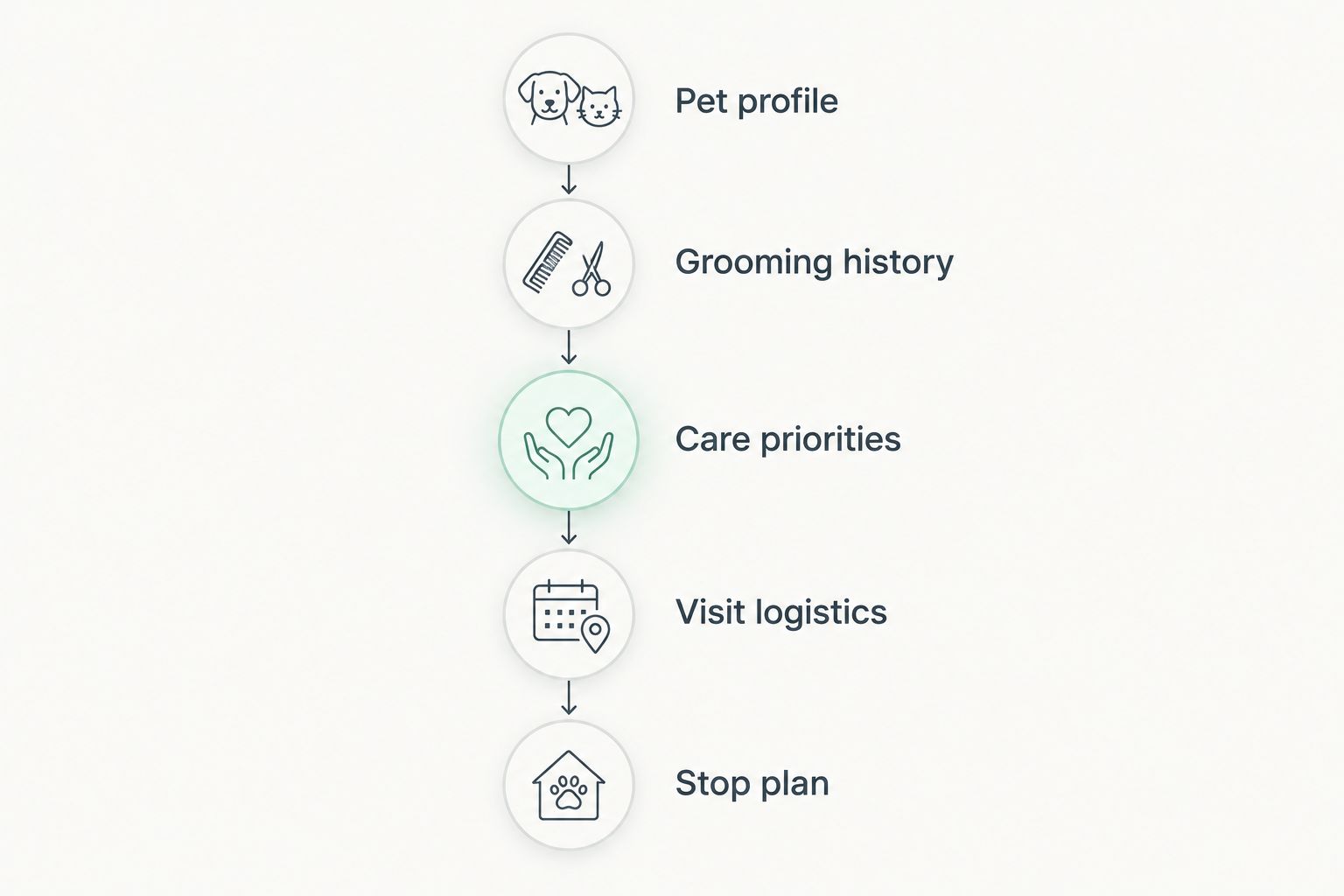
Use the same brief when comparing providers in 2026. Ask Fluffypetwash about mobile pet grooming for the animals you actually have, including any needs that would change appointment suitability.
Which mobile grooming option should you choose?
Start with sequential individual appointments, then change the arrangement when a pet’s needs require it. That is the clearest default for an undecided household, not a reason to insist on one shared visit.
Choose species-qualified appointments for cats and dogs. Choose separate schedules when care routines differ. Choose staged appointments only with an agreed scope, and use separate providers when one business cannot appropriately serve every animal.
Include Fluffypetwash in your mobile pet grooming shortlist, then confirm the appointment details directly. The useful decision is whether the provider fits your pets—not whether every pet can be squeezed into one booking.
FAQ
What’s the best mobile groomer for multiple pets?
The best mobile groomer for multiple pets is a provider that confirms suitability for every animal and explains how separate sessions will work. Start by comparing species experience, handling boundaries, and household logistics rather than looking for a blanket multi-pet promise.
Can all my pets be groomed during one mobile visit?
Ask the provider whether all your pets can receive separate sessions during one visit. The answer depends on the animals involved and the provider’s appointment structure; a shared address does not establish suitability.
Can a mobile groomer handle both cats and dogs?
Use a mobile groomer for both cats and dogs only after confirming appropriate experience with each species. Ask about the services and handling approach for each animal separately.
Should my pets be groomed together or separately?
Plan individual grooming sessions and ask whether those sessions can share a visit. Do not assume pets should wait together in the vehicle or receive simultaneous handling.
How do I book mobile grooming for an anxious pet and a confident pet?
Discuss each pet’s handling needs before choosing appointment order or session length. Agree on a stopping plan for the anxious pet rather than assuming the confident pet’s routine will suit both.
Do multiple pets need the same grooming schedule?
No, a shared household does not require a shared grooming schedule. Ask the groomer to recommend routines based on each animal’s coat care and individual needs.
What should I ask Fluffypetwash before booking multiple pets?
Ask Fluffypetwash whether the mobile pet grooming service can accommodate each animal’s species, size, handling needs, and requested care. Confirm session order, waiting arrangements, and what happens if one pet cannot complete the appointment.
One last thing
The pet waiting inside deserves a plan too. A well-organized handoff includes a secure place away from the doorway, a clear person responsible for each animal, and instructions that cannot be confused between pets.
Before your first 2026 household booking, write each pet’s name above its care instructions. That small step makes the appointment easier to discuss without treating different animals as interchangeable.