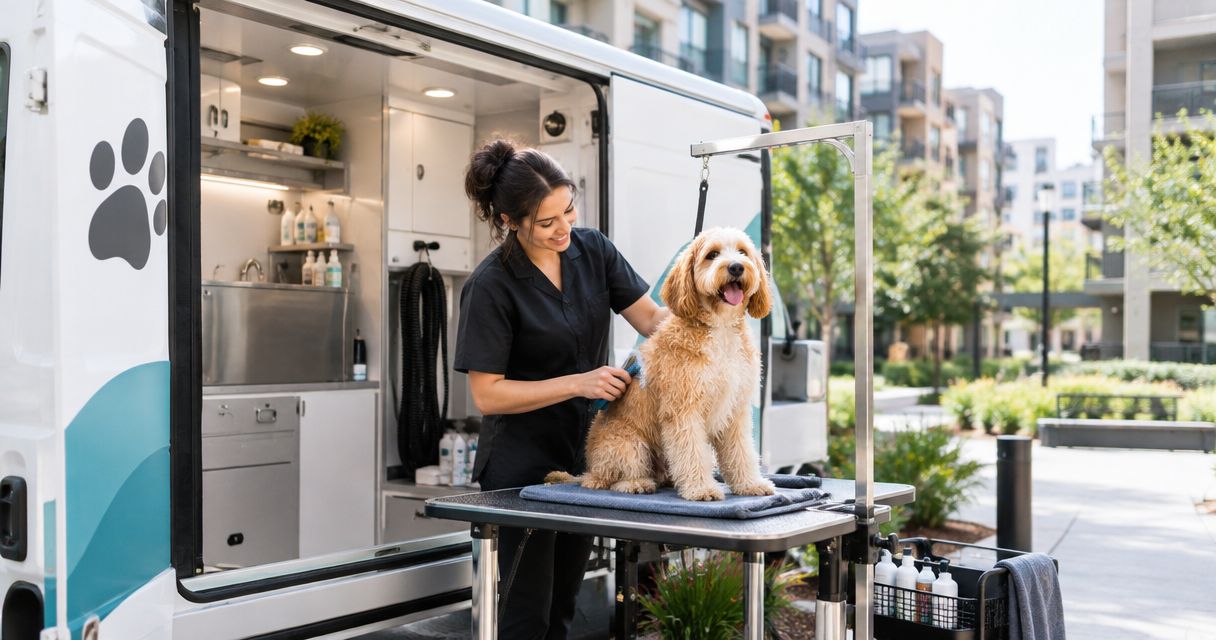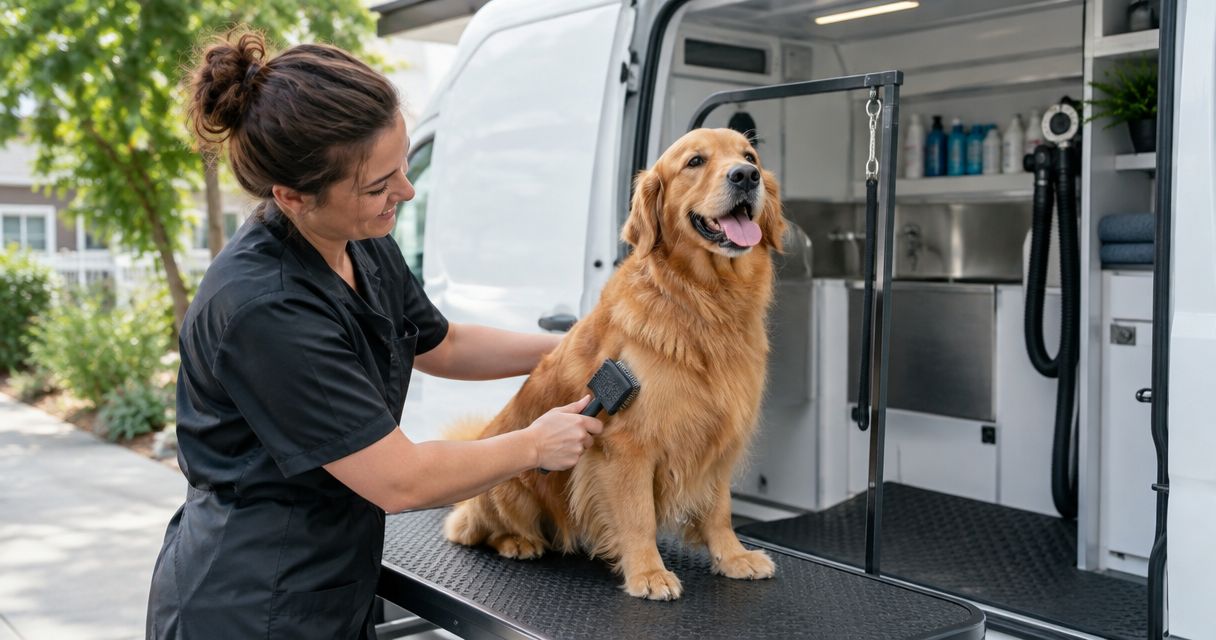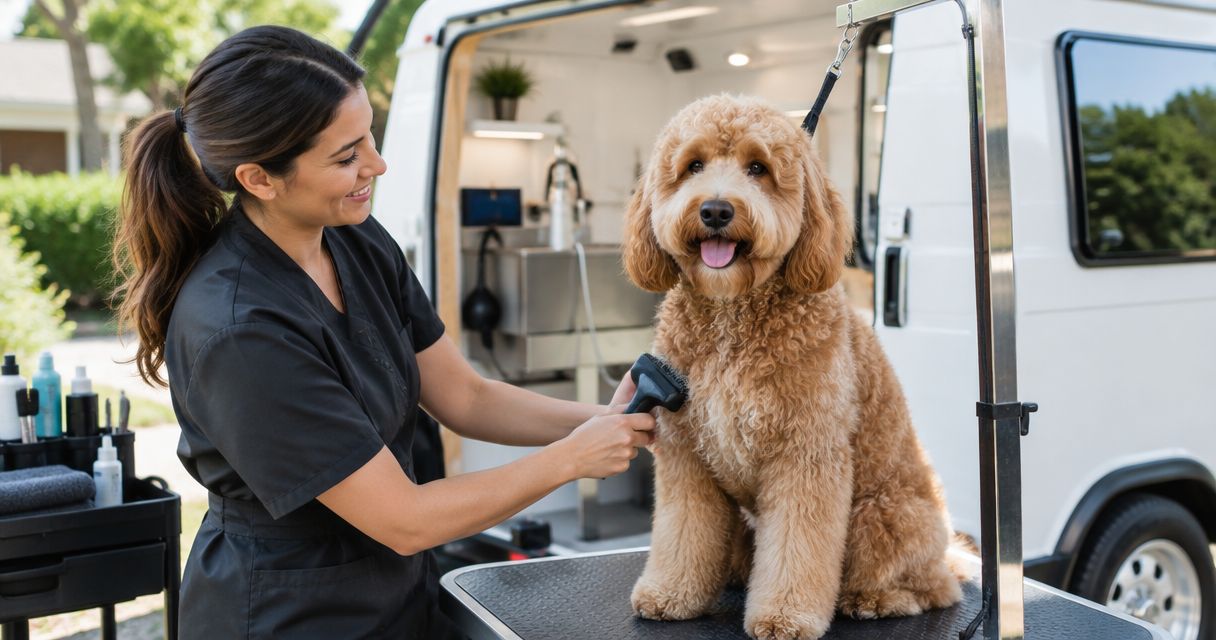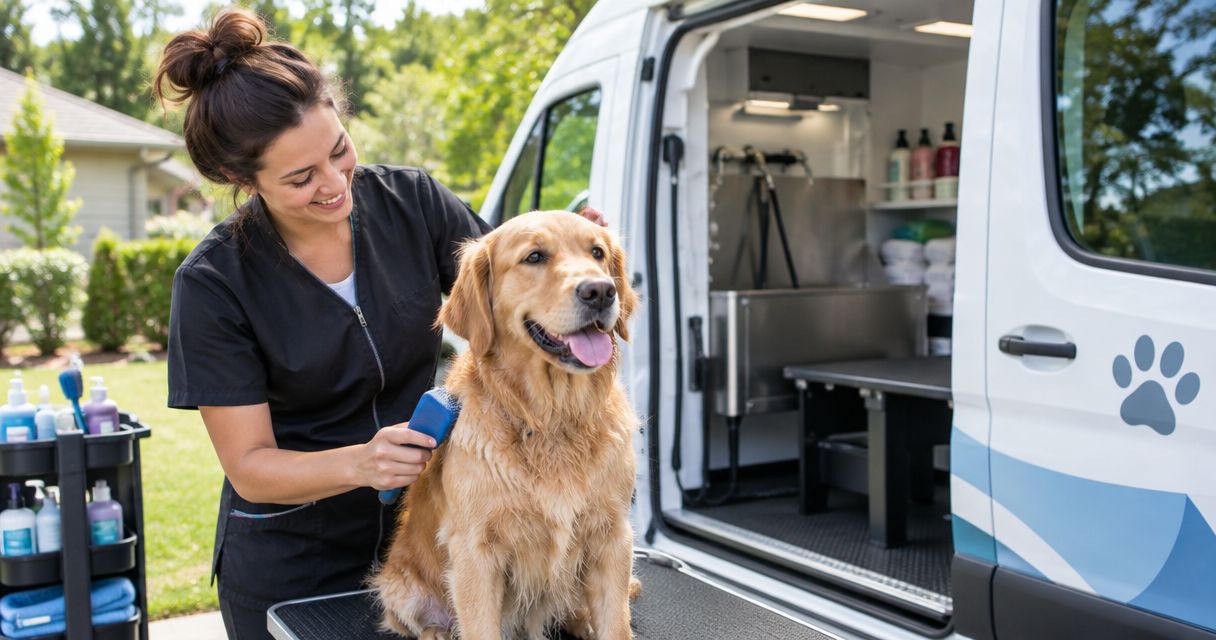
First-time owners’ mobile dog grooming is professional coat, skin, and nail care delivered to your location, with the aim of keeping your dog comfortable and manageable. This 2026 guide explains how to choose a groomer, prepare for the first visit, and separate grooming needs from problems that require a veterinarian.
- Mobile dog grooming for first-time owners starts with coat needs, handling tolerance, and a clear appointment plan.
- Fluffypetwash offers mobile pet grooming; confirm your dog’s requirements before choosing the service.
- Choose mobile grooming to avoid travel, not as a guarantee against anxiety.
- Ask what the appointment includes, how the groomer handles distress, and what maintenance belongs at home.
Why mobile grooming matters for first-time owners
Your first grooming decision involves more than choosing a haircut. You need to understand what your dog’s coat requires, which handling experiences are unfamiliar, and what you can safely maintain between professional visits.
Mobile grooming removes the trip to a grooming location. It does not remove the need for bathing, drying, brushing, or close handling. For an unfamiliar dog, those experiences deserve as much attention as the finished appearance.
Choose the setting around your dog’s needs, not the assumption that a van automatically means a calm appointment. The guide to mobile dog groomers for anxious dogs explains a useful next comparison if handling or unfamiliar environments are your main concern.
For your first appointment in 2026, define success as appropriate care, clear communication, and a workable maintenance plan. A complicated haircut is secondary.
How to prepare for your first mobile grooming appointment
Identify your dog’s grooming needs
Start with a hands-on observation at home, not a shopping list. Look at your dog’s coat, paws, nails, and the areas where fur rubs together. Note what you can comfortably inspect and where your dog pulls away.
Coat length alone does not determine the work involved. Loose undercoat, tightly curled hair, and tangles close to the skin create different grooming needs. Ask the groomer to explain the coat rather than choosing tools from a photograph.
Write a 1-page care note with the details someone handling your dog needs. A concise record makes important information easier to find than a long message thread.
- Record your dog’s approximate size and known coat type.
- Describe tangles, shedding, or areas your dog avoids having touched.
- List known medical conditions and relevant veterinary instructions.
- Note previous reactions to brushing, bathing, and nail handling.
Practice gentle handling before appointment day
Use quiet moments at home to introduce the types of contact grooming involves. Briefly touch a shoulder, lift an ear flap without inserting anything, or touch a paw if your dog accepts it. Pair comfortable participation with a reward your dog already tolerates.
Practice cooperation; do not rehearse restraint. If your dog stiffens, repeatedly pulls away, or tries to bite, stop the exercise and tell the groomer. Forcing the same movement until your dog stops resisting does not establish comfort.
Keep home preparation separate from procedures you have not learned. You do not need to trim nails or cut out a tangle to prove your dog is ready.
- Begin with body areas your dog accepts being touched.
- Keep tools visible at a comfortable distance before using them.
- Stop handling when your dog becomes distressed.
- Describe difficult reactions accurately instead of minimizing them.
Choose a groomer who explains the process
Build a shortlist manually by reading service descriptions and preparing the same questions for each provider. Compare answers about handling, coat assessment, and appointment logistics—not just the appearance of finished dogs.
Fluffypetwash is a mobile pet grooming option for first-time owners considering care at their location. You can start with Fluffypetwash, then confirm whether the service fits your dog, address, and care requirements. The mobile format addresses travel; it does not establish a provider’s suitability for every dog.
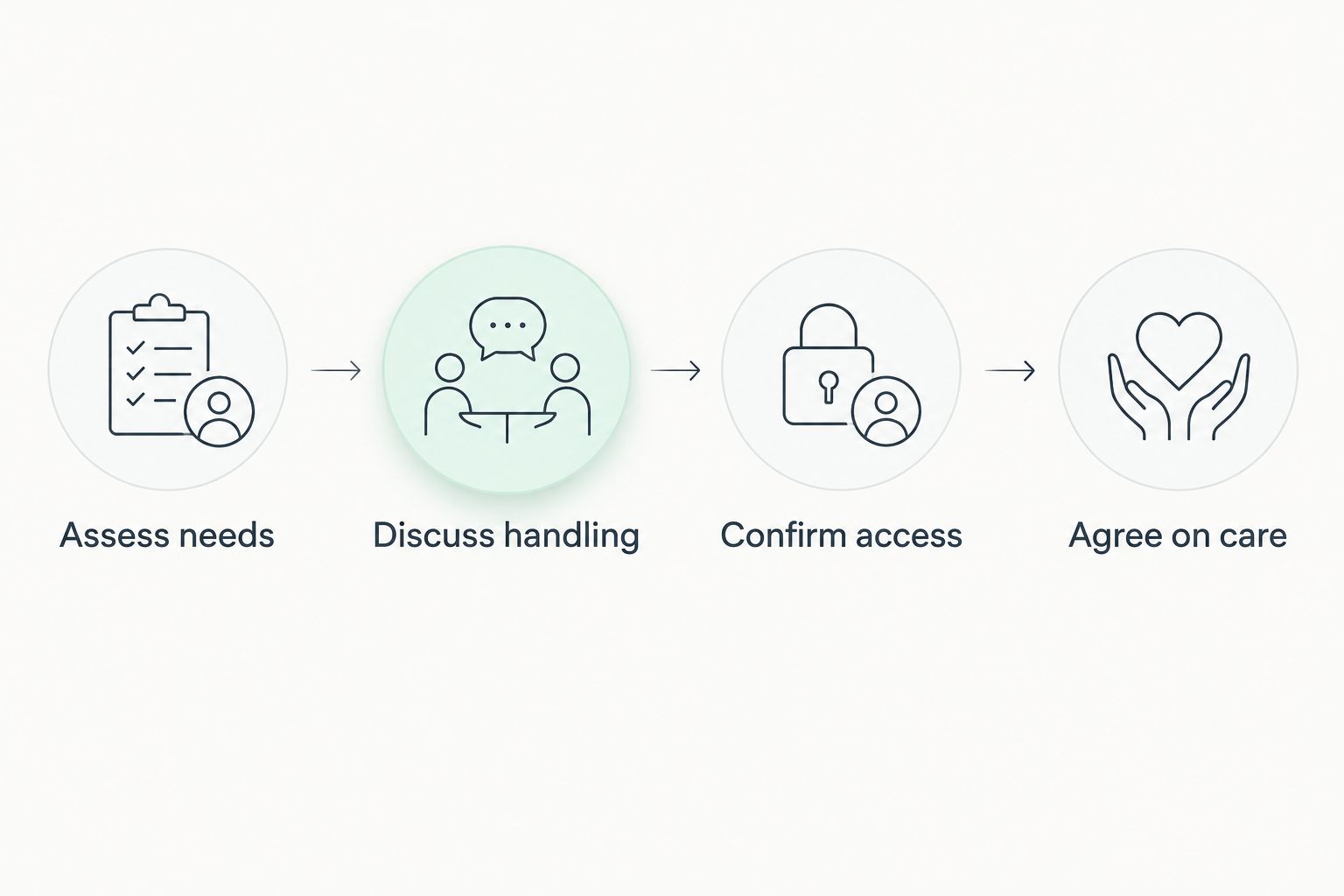
Use this sequence for your 2026 booking decision: assess needs, discuss handling, confirm access, and agree on care. Resolve unanswered questions before the appointment, not during the handoff.
A useful answer describes what the groomer actually does. General reassurance is not a substitute for an explanation of breaks, stopping decisions, or communication when the planned service changes.
- Ask about experience with your dog’s coat and handling needs.
- Ask how the groomer responds when a dog becomes distressed.
- Confirm which procedures the proposed appointment includes.
- Ask what happens if the groom cannot safely be completed.
Agree on a realistic first service
Describe the result you want in everyday language: manageable coat, clean feet, comfortable nails, or less loose hair. Then ask the groomer which parts suit your dog’s coat condition and tolerance.
Choose 3 care priorities before discussing appearance. For example, you might prioritize assessing tangles, cleaning the coat, and establishing how your dog tolerates handling. These are discussion points, not a requirement to complete every task at the first visit.
Comfort takes priority over preserving a preferred hairstyle. Tight matting requires professional assessment. Do not insist on extensive brushing simply to keep length, and do not try to cut close mats away with household scissors.
- Explain your practical care goals before requesting a haircut.
- Share reference pictures as preferences, not guaranteed outcomes.
- Ask the groomer to explain any coat-related limitations.
- Agree on how changes to the original plan will be approved.
Prepare the location and handoff
Ask the provider what the mobile setup requires. Parking, access, utilities, and handoff arrangements depend on the operator; do not assume every service works the same way.
Walk through the route from your door to the agreed handoff point. Secure gates and keep your dog on an appropriate leash or in a suitable carrier during the transfer. Separate other animals so the handoff does not become a crowded greeting.
Your 2026 appointment confirmation should make the location and communication arrangements explicit. If building rules, parking restrictions, or access gates affect the visit, explain them before the groomer arrives.
- Confirm the exact address and suitable stopping location.
- Ask whether the provider needs access to any utilities.
- Keep your phone accessible for care decisions.
- Prepare the leash, records, and agreed handoff area.
Review the groom before planning the next visit
Ask what the groomer observed, what was completed, and what should change at home. A useful handoff explains the coat and handling experience, not simply whether your dog looks tidy.
Check your dog calmly after the appointment. Ask about anything you do not understand, including an unexpected change in coat length or an unfinished procedure. If your dog appears injured, painful, or unwell, contact a veterinarian rather than assuming the behavior is a normal grooming response.
Do not select a repeat schedule from a breed label alone. Coat condition, haircut, home maintenance, and individual tolerance belong in that decision.
- Ask which areas tangled or required extra attention.
- Confirm whether any planned procedures were left unfinished.
- Request a demonstration of an appropriate brushing technique.
- Discuss a repeat schedule based on your dog’s actual needs.
Build a home routine you can maintain
Start with observation and the tasks the groomer has shown you how to do. Consistent, manageable care is more useful than buying a collection of tools you cannot use comfortably.
Keep a 2-column care log: observations on one side, questions or actions on the other. Record recurring tangles, handling difficulties, and changes that need professional attention. The purpose is to improve the next decision, not to turn grooming into a complicated tracking project.
For the rest of 2026, adjust the routine when the coat or your dog’s response changes. Do not continue a difficult technique simply because it appeared in a general guide.
- Use tools selected for your dog’s coat and condition.
- Ask for help before attempting unfamiliar trimming or nail work.
- Check friction areas during routine coat care.
- Share recurring problems before the next appointment.
Compare grooming options for first-time owners
Mobile grooming wins on avoiding travel; it does not automatically win on handling, equipment, or suitability. Compare the setting with the tasks your dog needs and the professional’s ability to perform them safely.
The options below serve different purposes. Veterinary care is not another haircut setting: it belongs in the decision when health, pain, or medically complex handling is involved. Home maintenance supports professional care rather than replacing every procedure.
| Option | Best for | Main advantage | Key limitation |
|---|---|---|---|
| Mobile dog grooming, including Fluffypetwash | Owners who want grooming brought to their location | Removes the journey to a grooming premises | You must confirm access requirements and suitability for your dog |
| Salon grooming | Owners who prefer taking their dog to a fixed grooming location | Provides a dedicated place for professional grooming | Requires travel; ask about waiting arrangements and other animals |
| Owner-led home maintenance | Owners maintaining the coat between professional appointments | Lets you practice familiar handling in the home | Depends on your skills, tools, and the dog’s cooperation |
| Veterinary care | Dogs with pain, skin concerns, or handling needs requiring medical assessment | Addresses health concerns that grooming cannot diagnose | Does not replace an ongoing coat-maintenance routine |
When comparing providers in 2026, ask the same questions in the same order. Otherwise, a detailed explanation from one groomer and a short service label from another are difficult to compare fairly.
For Fluffypetwash, as for any mobile provider, confirm the details that matter to your household. Do not treat a general service description as confirmation of specialized handling, included procedures, or suitability for a particular medical condition.
Common mistakes first-time owners make
Choosing a haircut before understanding the coat
A reference photo shows a result, not the starting condition or maintenance behind it. Ask whether the style suits your dog’s coat and what you would need to do between appointments. Choose a finish you can maintain without repeated tangling.
Assuming mobile grooming eliminates anxiety
Avoiding a car ride solves a travel problem. It does not make unfamiliar sounds, surfaces, or handling automatically comfortable. Tell the groomer which experiences trouble your dog and ask how the first visit will accommodate those reactions.
Hiding difficult handling behavior
An owner’s embarrassment can leave the groomer unprepared. Disclose snapping, biting attempts, escape attempts, and sensitive body areas before booking. Accurate information helps the provider decide whether the appointment is appropriate and what precautions are needed.
Treating every concern as a grooming problem
A bad smell, sore skin, painful ear, or sudden intolerance of touch deserves veterinary attention. Do not request a stronger shampoo or more cleaning as a substitute for finding the cause. Grooming supports hygiene; it does not diagnose disease.
Leaving without a maintenance plan
A tidy finish does not explain what happens next. Before the groomer leaves, ask what to brush, which technique to use, and what changes should prompt a call. A plan you understand is more useful than a bag of unfamiliar tools.
FAQ
What should I book for my dog’s first mobile grooming appointment?
Book an appointment based on your dog’s coat condition, handling tolerance, and hygiene needs. Describe your priorities and ask the groomer which procedures are appropriate rather than choosing a package name without understanding it.
Is mobile dog grooming better than a salon for first-time owners?
Mobile dog grooming is better for avoiding the trip to a grooming location, but it is not automatically better for every dog. Compare the provider’s handling approach, access requirements, and ability to meet your dog’s needs.
How do I prepare my dog for a first grooming visit?
Prepare your dog with gentle handling practice and give the groomer an accurate care history. Confirm the handoff arrangements, keep your dog secure, and disclose areas or procedures your dog finds difficult.
Can I stay with my dog during mobile grooming?
Ask the provider whether owners can remain with their dogs during grooming. Workspace and handling arrangements differ, so agree on your role before the appointment rather than assuming you can stay inside.
How much grooming should a puppy have at the first appointment?
A puppy’s first appointment should match its age, health guidance, coat needs, and handling tolerance. Confirm health requirements with the provider and your veterinarian, and discuss whether an introductory visit is appropriate.
Should I brush out mats before the groomer arrives?
Do not force out tight mats or cut them away with scissors before the appointment. Tell the groomer where they are and request an assessment; seek veterinary care if the area appears painful or injured.
How often should I book mobile grooming in 2026?
Set your 2026 grooming schedule with the groomer after assessing your dog’s coat and home maintenance needs. Use recurring tangles, nail condition, and handling tolerance to guide adjustments rather than adopting a universal interval.
One last thing
Ask the groomer to show you where to brush, not just which brush to buy. A tool recommendation without a demonstration leaves the most important question unanswered: whether your technique reaches the coat areas that need attention without causing discomfort.
Bring that question to the first handoff. The best takeaway is not a complicated routine; it is a care task you can perform correctly and a clear boundary around what to leave to a professional.