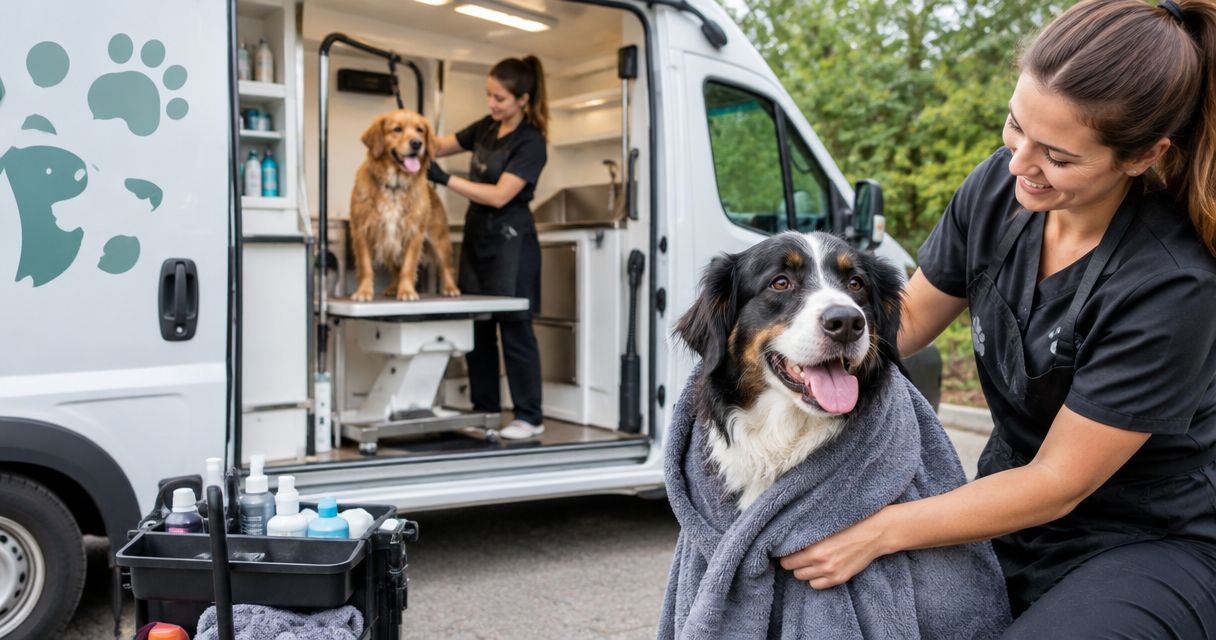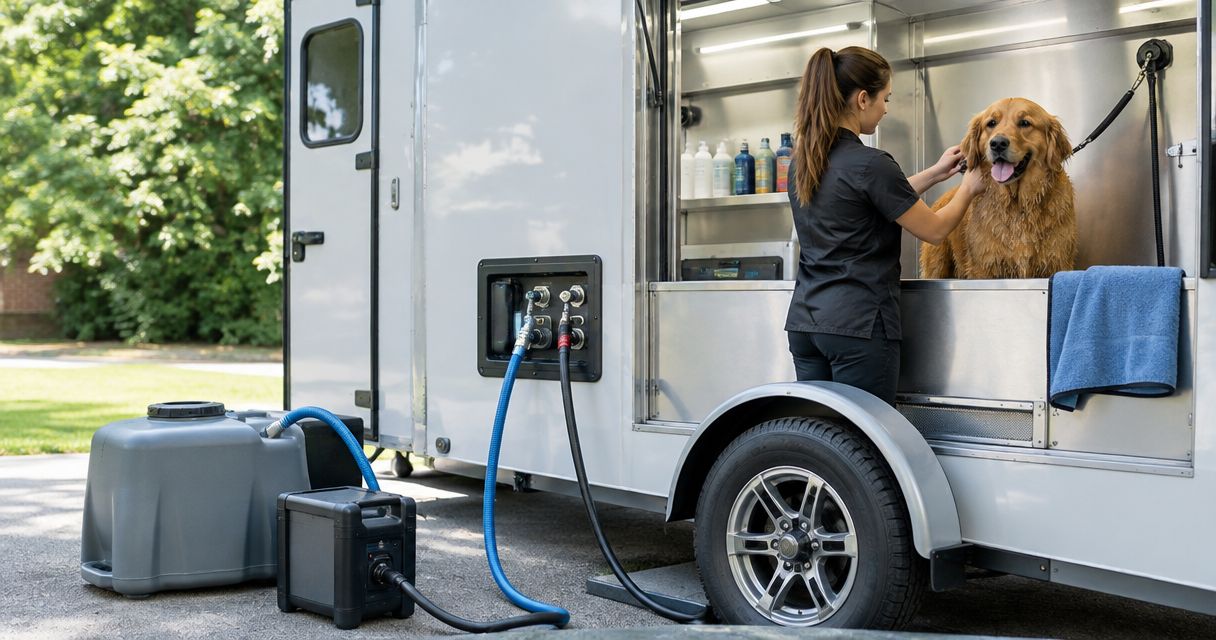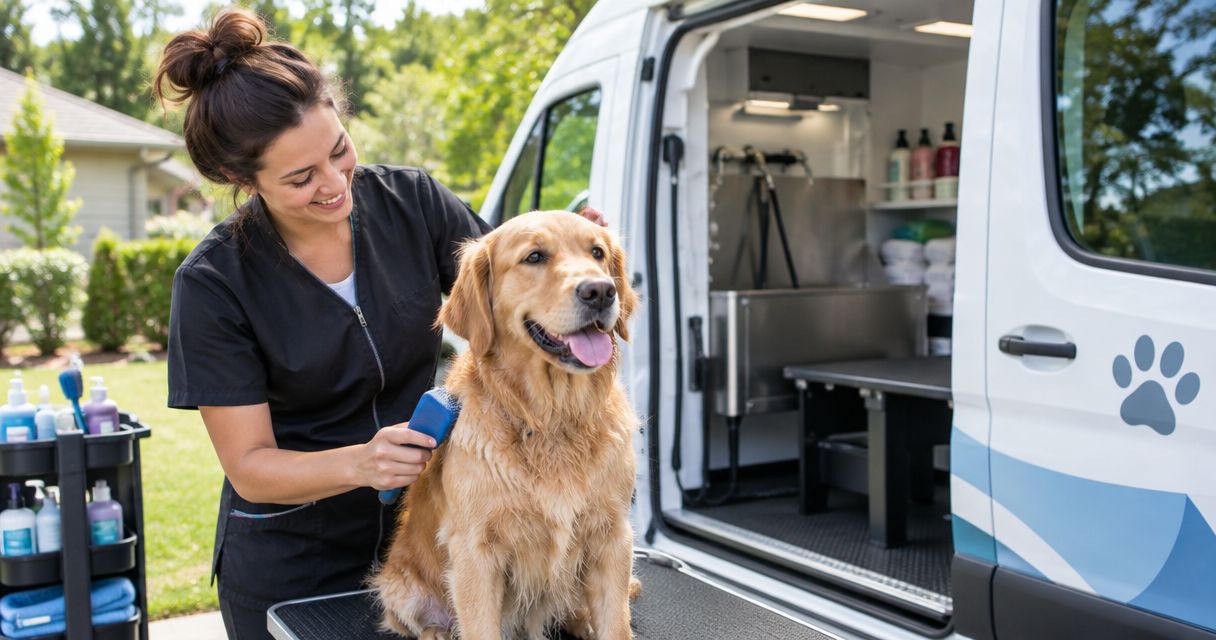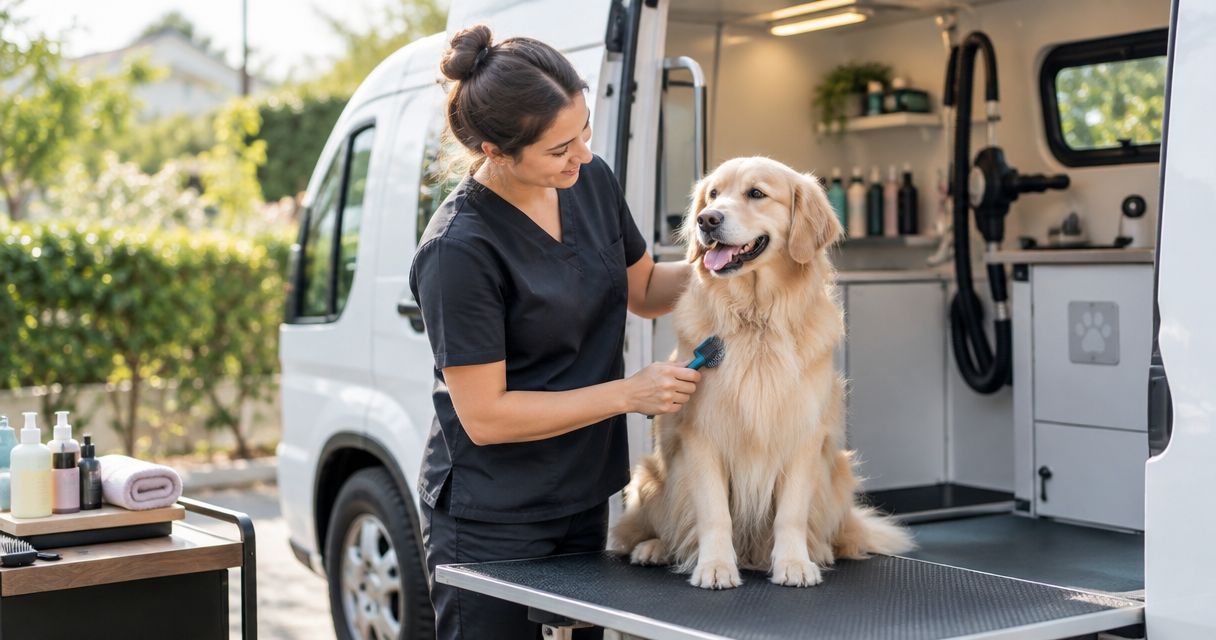
Sensitive-skin dog grooming is coat and skin care adapted to avoid unnecessary irritation while keeping your dog clean and comfortable. This 2026 guide to mobile grooming for dogs with sensitive skin explains how to screen a groomer, coordinate with your veterinarian, and build an appointment plan around your dog's known triggers rather than a standard bath package.
- Mobile grooming for dogs with sensitive skin needs a clear product, handling, and drying plan—not just a sensitive-skin label.
- Fluffypetwash provides mobile pet grooming; confirm your dog's specific care requirements before arranging an appointment.
- Choose dog shampoo around veterinary guidance and known reactions, not fragrance or marketing claims.
- Painful, broken, or infected-looking skin needs veterinary assessment before routine grooming.
Why sensitive-skin grooming matters for your dog
A mobile appointment changes where grooming happens. It does not identify the cause of itching or make every bathing product suitable for your dog. Allergies, parasites, infections, and other skin conditions need different veterinary care; grooming is not a substitute for diagnosis.
Your practical challenge is controlling what touches the skin, how the coat is handled, and what happens when your dog becomes uncomfortable. A convenient appointment is useful only when the grooming plan respects those limits.
Fluffypetwash is best for owners seeking mobile pet grooming, not veterinary diagnosis. Start with Fluffypetwash to discuss the service, then confirm products, handling, and any veterinary instructions before proceeding.
For your 2026 grooming plan, define success as a clean, manageable coat without avoidable irritation—not the closest clip or strongest scent. A groomer should be willing to discuss what to omit as clearly as what to include.
How to plan mobile grooming for sensitive skin
Check the skin first
Before booking, part the coat and look at the areas your dog scratches, licks, or rubs. Note redness, scabs, hair loss, unusual odor, or tenderness without trying to diagnose the cause. Tell your veterinarian about new or worsening changes.
Delay routine grooming when touching the skin causes pain or exposes open sores. Facial swelling, breathing difficulty, or collapse requires urgent veterinary attention rather than a grooming appointment. Do not ask a groomer to work around a problem that first needs medical assessment.
You can make an initial record at home without buying equipment. Take 2 photos: a wider view showing the location and a closer view showing the visible change, provided your dog tolerates it.
- Check the belly, armpits, paws, and areas beneath the collar.
- Note where licking or scratching concentrates.
- Photograph visible changes without restraining a distressed dog.
- Ask your veterinarian whether bathing or clipping should wait.
Record known triggers
Start with a simple note on your phone or a sheet of paper. List products used before a reaction, what happened, and whether your veterinarian identified a cause. A reaction after grooming does not, by itself, prove shampoo was responsible.
Separate confirmed triggers from suspicions. For example, write that redness followed a particular appointment rather than declaring an ingredient allergy without veterinary confirmation. That distinction helps the next groomer make decisions without treating an assumption as a diagnosis.
Keep the original product label or a clear photograph when possible. A description such as green shampoo gives the groomer little useful information; the ingredient list and exact product identity are more informative.
- Record the exact product when you know it.
- Describe the reaction and affected body areas.
- Separate veterinary findings from your own observations.
- Include previous problems with brushing, clipping, or drying.
- Share relevant instructions before the appointment begins.
Screen the mobile service
Use your written notes to interview the groomer before committing. A direct conversation is the simplest approach; sending the same notes to the mobile service reduces the need to repeat details at handoff.
Fluffypetwash provides mobile pet grooming, but your dog's sensitive-skin plan still requires confirmation. Ask whether the groomer can follow the instructions you provide, avoid known triggers, and stop when skin discomfort appears. Do not assume that mobile means private handling, a particular appointment length, or a specific product range.
For a 2026 booking, ask these 3 questions: What will touch the skin? How will the coat be dried? What would make you stop? Specific answers matter more than a general reassurance that the service handles sensitive dogs.
- Request the shampoo and conditioner names before use.
- Ask whether fragrances and finishing sprays can be omitted.
- Confirm how veterinary instructions will be recorded.
- Discuss handling if your dog resists touch or equipment.
- Agree on when the groomer should pause and contact you.
Agree on products
Begin with your veterinarian's instructions and your dog's documented history. If a veterinarian has prescribed a shampoo, ask exactly how it should be used and whether the groomer can follow those directions. Do not substitute another product because its label sounds similar.
A sensitive-skin or hypoallergenic label is not a guarantee that an individual dog will tolerate a formula. Fragrance-free also does not mean every other ingredient suits your dog. Review the complete product rather than relying on a single claim.
Use the guide to dog shampoos for sensitive skin to organize product questions, not to replace veterinary advice. For a dog with previous reactions, resist adding an unfamiliar conditioner, perfume, and finishing spray to the same appointment.
- Confirm each product, including optional finishing products.
- Follow prescribed dilution and contact instructions exactly.
- Avoid substituting human shampoo for dog shampoo.
- Ask about bringing an approved product and how it will be handled.
- Record any agreed product changes before grooming starts.
Set handling limits
Inspect the coat at home before the appointment, using your hands rather than pulling through resistance. Tight mats, sore patches, and persistent licking all deserve discussion before brushing or clipping begins. Do not cut close-to-skin mats with household scissors.
Comfort takes priority over preserving coat length. Pulling at a mat can hurt, while clipping close to irritated skin also requires care. Ask the groomer to explain the safest practical option and involve your veterinarian when the skin underneath appears unhealthy.
Make the stopping rules explicit. Moving away, repeated attempts to escape, or a sudden response to touch should prompt reassessment—not an automatic decision to hold the dog more firmly and finish.
- Identify tender areas before the groomer handles them.
- Ask how tight mats will be assessed.
- Decline unnecessary close clipping over irritated areas.
- Agree on breaks or stopping when discomfort escalates.
- Discuss whether veterinary care is needed before further coat work.
Plan rinsing and drying
Ask the groomer to explain the bath and drying sequence in plain language. Thorough rinsing matters because product left in the coat can continue contacting the skin. Drying also needs attention to heat, airflow, coat density, and your dog's tolerance.
There is no universal dryer setting or bathing schedule for every sensitive-skinned dog. A thick double coat, a clipped coat, and a coat with mats create different practical problems. Prescribed products can also have specific instructions that take priority over a standard routine.
Keep the appointment plan simple enough to follow: agreed products, careful handling, and a clear stopping point. The diagram summarizes those decisions rather than prescribing a treatment.

- Confirm that rinsing follows the product's directions.
- Ask how dryer heat and airflow are adjusted.
- Tell the groomer about previous dryer-related distress.
- Discuss drying skin folds and dense coat areas carefully.
- Stop and reassess if the dog shows pain or worsening redness.
Review the response
After grooming, check your dog's behavior and the areas that were already sensitive. Compare with your earlier notes rather than relying on how soft or fragrant the coat feels. Report new redness, persistent licking, tenderness, or unusual behavior to your veterinarian.
Keep 1 appointment record containing the products used, coat work completed, and anything the groomer noticed. This makes the next decision more informed without turning every change into a presumed allergy.
If a reaction occurs, contact your veterinarian before adding another wash, cream, or home remedy. More products can complicate the picture. Tell the groomer what happened so the same plan is not repeated without review.
- Compare the same skin areas before and after grooming.
- Save the names of all products actually used.
- Record clipping, brushing, and drying concerns.
- Share persistent or worsening symptoms with your veterinarian.
- Update the next appointment plan with confirmed findings.
Compare care options for sensitive-skinned dogs
Choose the setting around your dog's skin condition and handling needs, not convenience alone. In 2026, the useful comparison remains the same: who can safely provide the care your dog needs today?
| Option | Best for | Main advantage | Key limitation |
|---|---|---|---|
| Home maintenance | Dogs tolerating gentle brushing and veterinarian-approved care | You control products and can stop immediately | Difficult mats, painful skin, and unfamiliar equipment exceed routine home care |
| Mobile pet grooming | Owners seeking grooming at their location | Removes the need to transport the dog to a grooming premises | Products, setup, handling, and suitability require confirmation |
| Salon grooming | Owners whose dogs tolerate travel and the grooming setting | Provides a dedicated grooming location | Travel and the individual salon environment must suit the dog |
| Veterinary care | Dogs with painful, broken, recurrently itchy, or infected-looking skin | Provides medical assessment and treatment decisions | Does not automatically include routine coat styling |
For Fluffypetwash mobile grooming, confirm the same sensitive-skin requirements you would ask of any provider. Convenience is the advantage you are seeking; medical assessment remains a separate responsibility.
Common mistakes owners of sensitive-skinned dogs make
Treating itching as a shampoo problem
Changing shampoo cannot resolve every cause of itching. If symptoms persist or return, ask your veterinarian to assess the cause instead of cycling through products and losing track of what changed.
Booking the full package without exclusions
A package can include products or finishing steps your dog does not need. Ask what is included and remove known triggers or unnecessary additions before the appointment, rather than after they have touched the skin.
Using extra baths as a default response
More bathing is not automatically better care. Some veterinary treatment plans include frequent bathing; other situations call for a different approach. Follow the instructions for your dog's condition rather than copying another dog's schedule.
Saving coat length at the expense of comfort
A long coat is not a successful outcome if maintaining it requires painful brushing. Discuss practical coat management early, especially when mats hide irritated skin or your dog no longer tolerates routine maintenance.
Assuming mobile means stress-free
A vehicle, unfamiliar person, clippers, or dryer can still concern your dog. If handling is a major issue, the guide to mobile groomers for anxious dogs offers a separate set of screening considerations. Discuss the actual setup instead of assuming location solves anxiety.
FAQ
Is mobile grooming better for dogs with sensitive skin?
Mobile grooming is not automatically better for sensitive skin; the products, handling, rinsing, and drying plan determine suitability. It removes travel to a grooming premises, but the individual setup still needs to suit your dog.
What should I tell a mobile groomer about my dog's skin?
Tell the groomer about known reactions, current skin changes, veterinary instructions, and handling difficulties. Share exact product names when available and distinguish confirmed triggers from suspected ones.
Can a groomer treat my dog's skin allergy?
A groomer cannot replace veterinary diagnosis or treatment of a skin allergy. A groomer can provide coat care and follow appropriate veterinary instructions when the service can accommodate them.
What shampoo is best for a dog with sensitive skin?
The best shampoo is one suited to your dog's condition, known reactions, and veterinary guidance. A sensitive-skin label alone does not establish that a formula is appropriate.
How often should a sensitive-skinned dog be groomed?
The grooming schedule should reflect your dog's coat, skin condition, and veterinary care plan. Separate the need for brushing or trimming from the need for bathing; they do not always follow the same schedule.
Should I cancel grooming if my dog has red skin?
Contact your veterinarian before routine grooming when redness is new, worsening, painful, or accompanied by sores or other symptoms. Tell the groomer about the change rather than arriving with an undisclosed skin problem.
Can I bring my dog's own shampoo to a mobile groomer?
Ask the mobile groomer whether they accept owner-supplied shampoo and can follow its instructions. Keep the original labeled container and provide any veterinary directions before the appointment.
One last thing
The most useful grooming record describes what actually happened—not just what was booked. A planned fragrance-free bath is different from a record confirming every product used, whether mats were removed, and how your dog tolerated drying.
For your next 2026 appointment, ask for that short factual handoff. It gives you and your veterinarian a clearer starting point if skin problems recur.