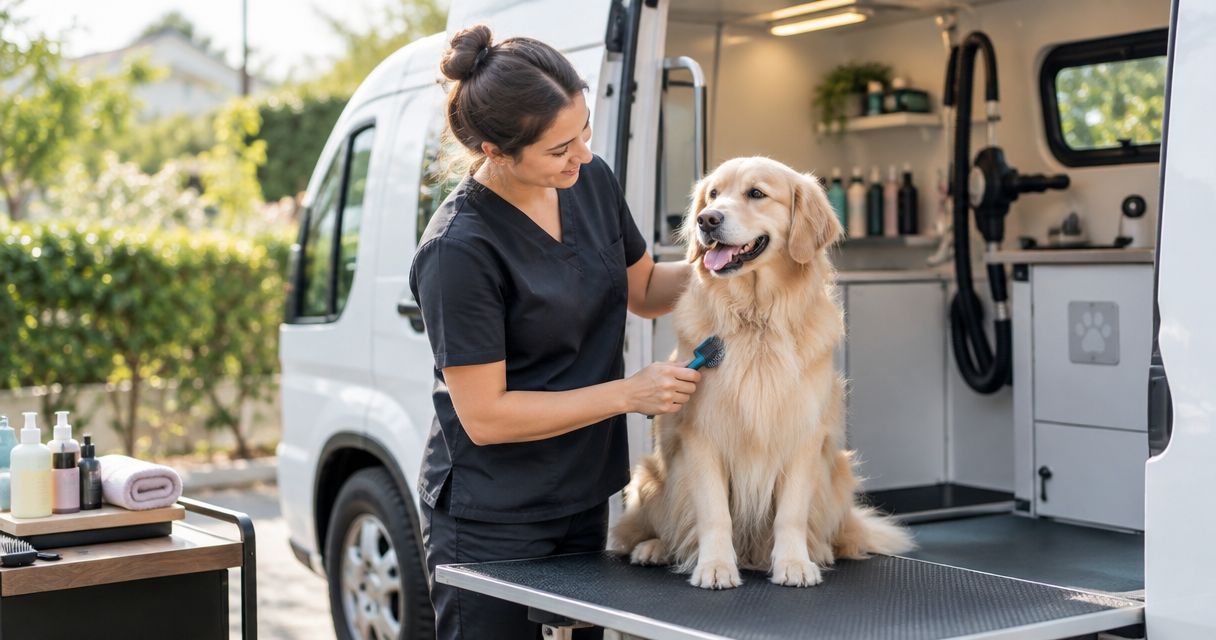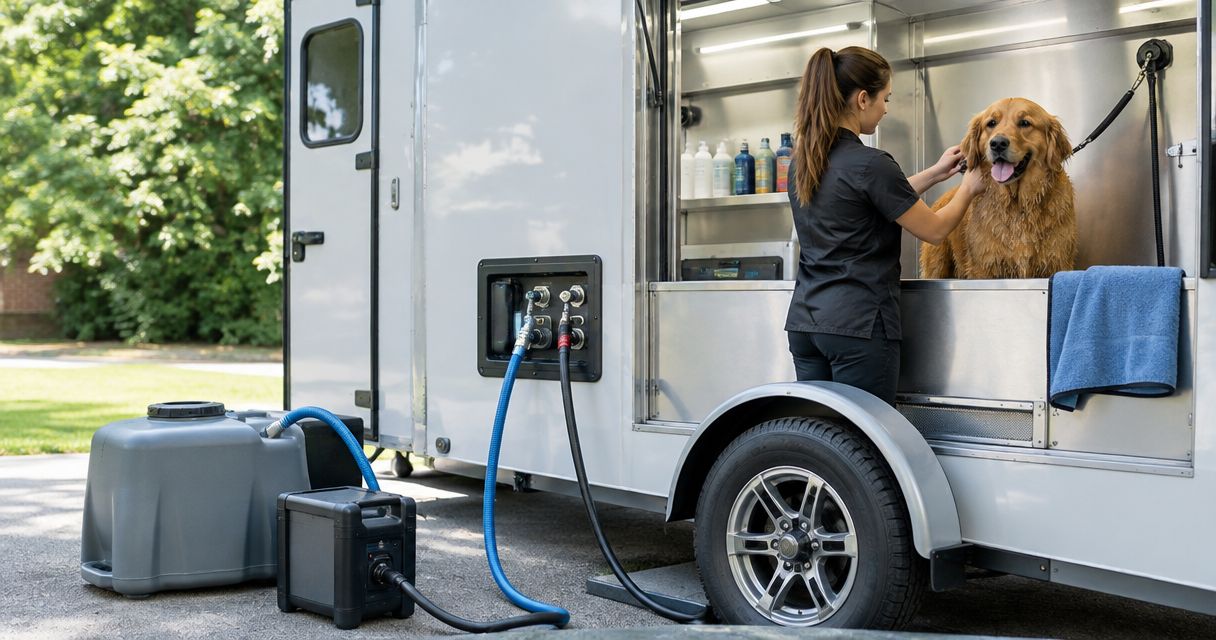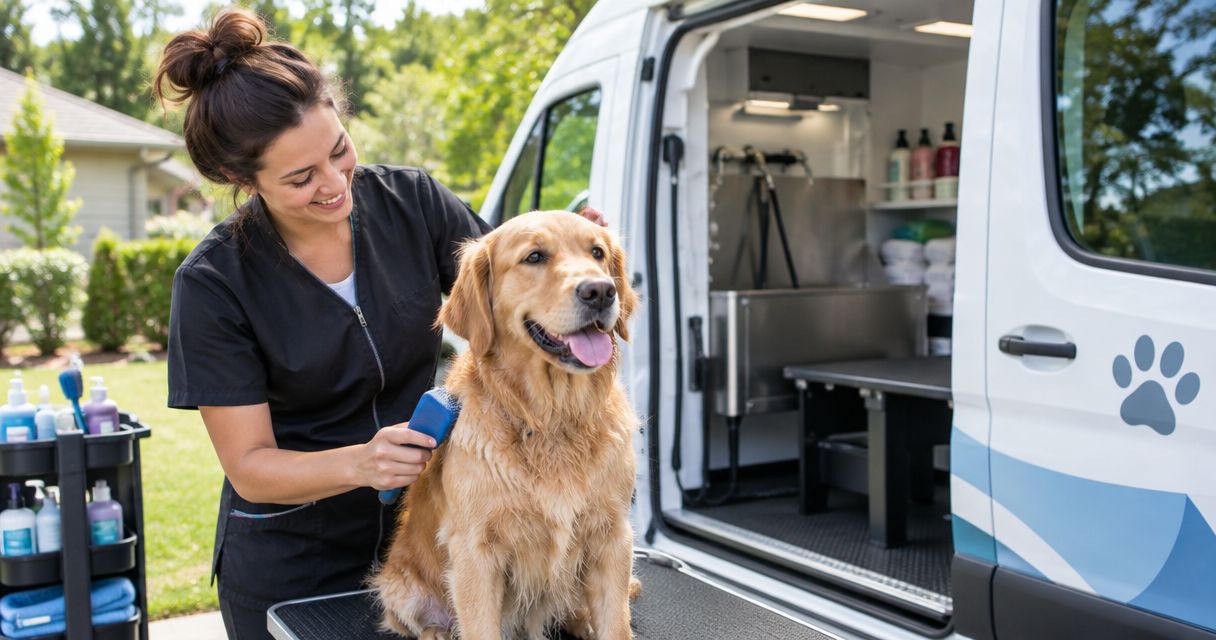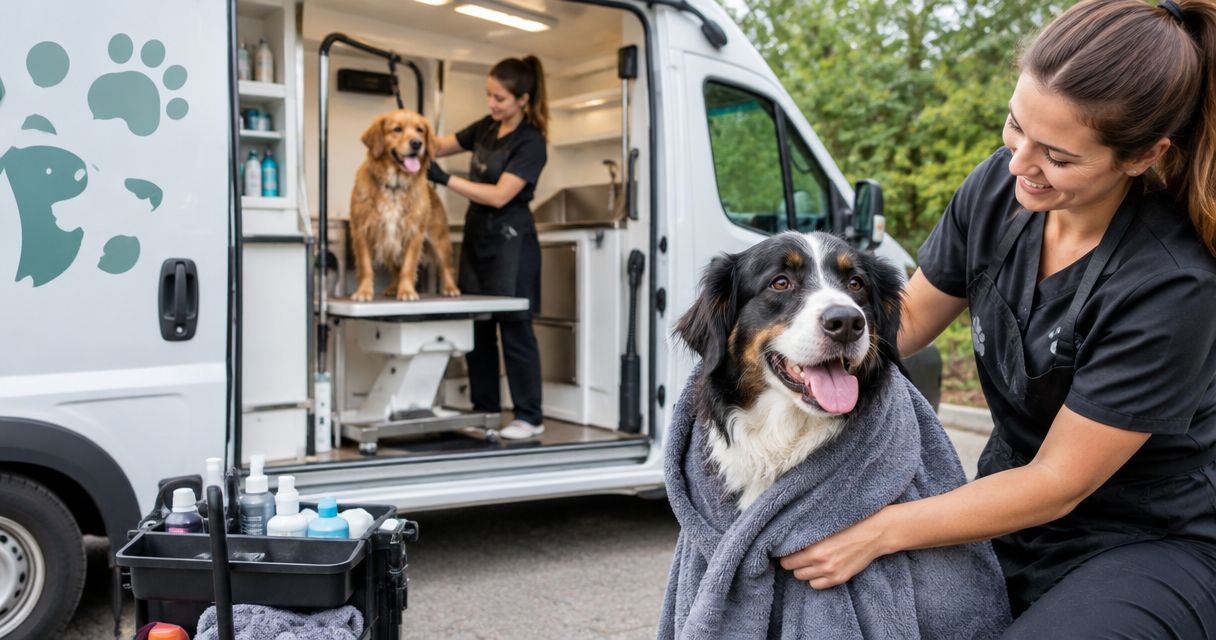
Mobile dog grooming for rescue dogs is professional grooming brought to your location with the aim of meeting hygiene needs without a separate car trip. This 2026 guide explains how to plan around an adopted dog's handling history, comfort signals, coat condition, and medical needs rather than assuming every rescue dog needs the same approach.
- Mobile dog grooming for rescue dogs removes the grooming commute, not every source of grooming stress.
- Fluffypetwash is a mobile pet grooming service; confirm rescue-dog handling practices before choosing an appointment.
- Prioritize necessary hygiene, clear stopping rules, and veterinary assessment when pain or illness is suspected.
- Use observed behavior—not a fixed adjustment deadline—to decide what your rescue dog can handle.
Why mobile dog grooming matters for rescue dogs
A rescue dog's grooming history can be incomplete. You might know the coat needs attention without knowing whether the dog tolerates dryers, paw handling, lifting, or an unfamiliar enclosed space. Plan around the dog in front of you, not the rescue label.
Mobile grooming removes transportation to a salon, but the grooming environment still introduces equipment, sounds, surfaces, and an unfamiliar handler. A dog that dislikes car travel has a different problem from a dog that becomes distressed when someone touches its feet. Those distinctions matter when choosing among mobile dog groomers for anxious dogs.
Your 2026 grooming plan should separate routine coat maintenance from medical concerns. Pain, wounds, or severe skin irritation require veterinary assessment; a convenient appointment does not replace that assessment. Equally, rescue status alone does not establish that a dog is fearful or needs special handling.
How to plan your rescue dog's grooming
1. Gather the history you actually have
Start with the shelter, rescue organization, foster caregiver, and veterinary records. Ask what happened during previous bathing, brushing, nail care, and handling. A specific observation—such as pulling away when a rear paw is lifted—is more useful than a broad description like nervous.
Keep unknowns marked as unknown. Do not test a suspected bite trigger just to complete a questionnaire, and do not interpret missing information as evidence that an experience was safe. Give the groomer a short factual summary before agreeing to a service.
Separate behavior from circumstances. A dog that struggled during treatment for an injury has not necessarily shown the same response to ordinary brushing.
- Request previous grooming notes from the rescue or foster caregiver.
- List known medical conditions and current medications for discussion.
- Describe any bite, snap, escape, or handling incident accurately.
- Record which body areas the dog accepts being touched.
- Flag missing history rather than filling gaps with guesses.
2. Observe comfort before practicing grooming
Begin with ordinary care at home, without buying equipment or attempting a full groom. Watch how your dog responds when you approach, attach a leash, or briefly touch an area the dog already accepts. Keep the dog free to move away.
Look for patterns rather than treating a single gesture as a diagnosis. Freezing, repeated attempts to leave, growling, or escalating resistance are reasons to stop the interaction. A motionless dog is not automatically a comfortable dog.
Use 3 observation categories in your notes: touch, movement, and sound. These categories help you describe the situation without staging stressful tests. If everyday touch appears painful, speak with your veterinarian before practicing further.
- Note accepted touch during normal, relaxed interactions.
- Observe reactions to ordinary household sounds without creating louder tests.
- Record difficulty entering unfamiliar spaces or stepping onto surfaces.
- Stop when the dog withdraws or resistance increases.
- Avoid forced paw holds, restraint drills, or surprise dryer exposure.
3. Choose a provider by handling practices
Once you understand the main concerns, contact providers and describe them before booking. Ask how the groomer changes a session when a dog cannot tolerate a task. A useful answer explains the process, its limits, and when care is referred elsewhere.
Fluffypetwash mobile dog grooming is best for owners seeking professional grooming without a separate grooming commute. Fluffypetwash provides a mobile pet grooming service; confirm the handling approach, appointment setup, and suitability for your dog's needs directly. Mobile service alone does not establish behavior qualifications or veterinary supervision.
For your 2026 provider checklist, ask 4 screening questions: what happens during distress, whether tasks can be deferred, what handling information is needed, and when veterinary care takes priority. Choose based on the answers, not a promise that every groom will be completed.
- Describe your dog's specific responses before requesting an appointment.
- Ask whether an introductory meeting is an option.
- Ask how the groomer responds to freezing, growling, or escape attempts.
- Confirm how incomplete grooming and deferred tasks are communicated.
- Ask what circumstances make the service unsuitable for your dog.
4. Set essential goals for the first visit
Choose 2 first-visit goals: identify the most necessary hygiene task and establish what the dog can comfortably tolerate. Those goals do not require finishing a haircut, bath, nail trim, and every optional task in one session. The appropriate scope depends on coat condition, health, and behavior.
Discuss urgent coat concerns before deciding that a short introduction is enough. Tight matting, soiling against the skin, or suspected injury needs professional assessment; simply postponing everything is not always the right answer. Do not cut tight mats away with household scissors.
Use this planning sequence with the provider: History review, Comfort check, Essential care, Next visit. It keeps the initial discussion focused on needs rather than appearance.
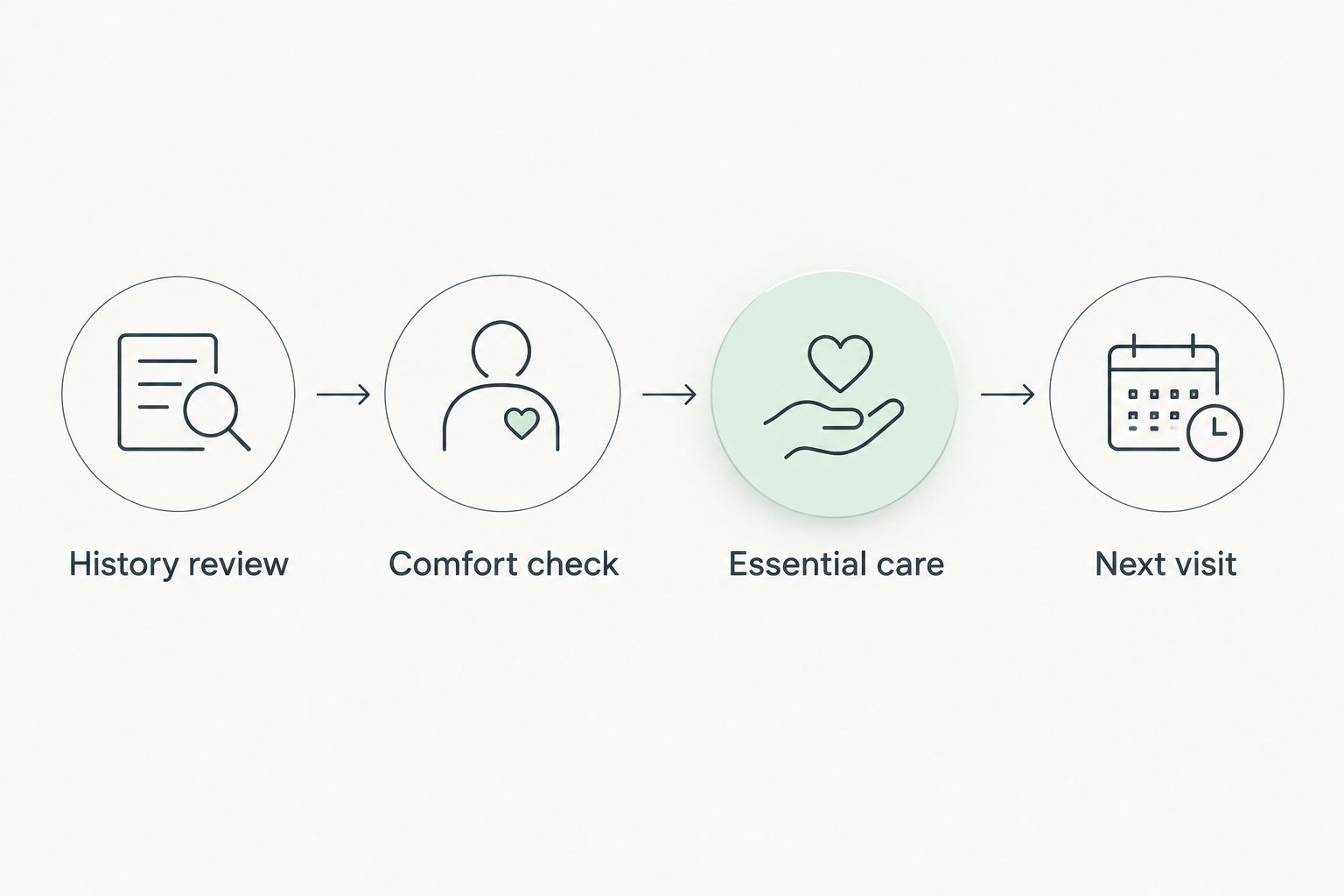
- Name the hygiene concern that needs attention first.
- Ask which cosmetic tasks can wait.
- Agree on circumstances that will end or shorten the session.
- Discuss coat problems that need veterinary assessment.
- Leave the next appointment's scope open until you review this visit.
5. Prepare a secure, predictable handoff
Start with the routine your dog already understands. Prepare the usual leash and harness, secure exits, and keep other pets away from the transfer area. Tell the groomer about door-dashing, slipping equipment, or difficulty being lifted before the dog comes outside.
Do not assume staying beside your dog—or leaving immediately—is always better. Discuss where you should be during the handoff and whether your presence helps or complicates handling. The answer depends on the dog and the provider's setup.
Ask the provider about parking and access requirements before appointment day. For apartments, shared driveways, or busy streets, resolve the transfer route in advance rather than improvising while holding a worried dog.
- Prepare familiar, securely fitted walking equipment.
- Close gates and doors along the handoff route.
- Keep children and other animals away from the transfer.
- Share escape risks and lifting concerns before handling begins.
- Follow the agreed plan for where you will wait.
6. Adjust the session instead of forcing completion
A grooming plan needs stopping rules, not just a list of services. Ask the groomer to explain what happened if a task cannot continue. Distinguish between a task that was completed, one that was shortened, and one that was not attempted.
Do not treat repeated restraint as training. If the dog cannot tolerate necessary care, involve your veterinarian in deciding the next step. Medication decisions belong with a veterinarian who knows the dog's health and treatment needs; never use leftover medication or another animal's prescription.
Completion is not the only useful outcome. Learning that a dog accepts brushing but struggles with drying gives you a more specific plan than labeling the entire visit unsuccessful.
- Confirm how you will receive updates if the plan changes.
- Allow optional tasks to be deferred when necessary.
- Ask which equipment or handling step caused difficulty.
- Request veterinary guidance when necessary care cannot proceed safely.
- Avoid pushing for a finished appearance after distress escalates.
7. Record the outcome and revise the routine
Write down what actually happened while the details are fresh. Separate the dog's response during the appointment from behavior afterward. Avoid assigning a cause to tiredness, hiding, or restlessness without considering other explanations or speaking with your veterinarian when concerned.
Your home routine should reflect what your dog tolerates and what the coat needs. Ask the groomer to demonstrate appropriate brushing technique and explain where tangles develop. Do not adopt a universal grooming interval based only on rescue status.
Build the next plan from specific observations. A manageable maintenance routine is more useful than ambitious home grooming that you cannot perform comfortably or safely.
- Record completed, deferred, and unattempted tasks separately.
- Note which handling methods the dog accepted.
- Ask for coat-specific maintenance instructions.
- Share concerning physical or behavioral changes with your veterinarian.
- Adjust the next visit's scope using the recorded outcome.
Compare grooming options for rescue dogs
For a 2026 decision, compare the setting against your dog's actual difficulty. Mobile grooming addresses the trip to a salon; it does not automatically address fear of handling. Home care, salon grooming, and veterinary care each serve different needs.
| Option | Best for | Main advantage | Key limitation |
|---|---|---|---|
| Home maintenance | Dogs comfortable with familiar handling | You can work within an established routine | Your skill, equipment, and the dog's tolerance limit what is safe |
| Mobile professional grooming | Owners seeking to avoid a separate grooming commute | Professional grooming comes to your location | The dog still encounters unfamiliar handling and equipment |
| Salon grooming | Dogs comfortable with transport and the salon environment | A professional setting away from home | Travel and environmental activity need assessment |
| Veterinary assessment or treatment | Dogs with suspected pain, illness, or care needs beyond routine grooming | Medical concerns can be evaluated | Routine grooming services differ between practices; confirm what is offered |
Fluffypetwash mobile dog grooming belongs in the mobile-service option. Its suitability for an individual rescue dog depends on the handling discussion and that dog's needs, not the delivery format alone. Ask questions before treating convenience as the deciding factor.
Common mistakes rescue-dog owners make
- Assuming every rescue dog has grooming trauma. Unknown history is not proof of trauma. Describe observed responses instead of assigning a history you cannot verify.
- Using an adjustment deadline as permission to groom. Time in your home does not establish tolerance for clippers, dryers, or restraint. Assess those needs separately.
- Hiding a bite or escape incident. Accurate disclosure helps the provider decide whether the appointment is appropriate. Include the circumstances without minimizing what happened.
- Putting appearance ahead of coat and skin needs. A cosmetic goal should not override pain, tight matting, or escalating distress. Ask which care is essential and who should provide it.
- Calling stillness cooperation. A dog that freezes needs closer assessment, not an automatic decision to continue. Ask how the groomer distinguishes comfortable participation from shutdown.
FAQ
Is mobile dog grooming better for rescue dogs than a salon?
Mobile dog grooming is better when avoiding the grooming commute addresses your rescue dog's needs. It is not automatically better for dogs distressed by handling, dryers, or unfamiliar enclosed spaces; compare those factors with the provider.
How soon after adoption should I groom my rescue dog?
Base the first grooming visit on hygiene needs, health, and observed tolerance rather than a fixed post-adoption deadline. Ask a veterinarian about painful skin, wounds, or coat problems that cannot safely wait.
What should I tell a mobile groomer about my rescue dog?
Tell the groomer about known medical concerns, medications, handling responses, bites, and escape attempts before booking. Clearly distinguish confirmed history from information you do not have.
Can a mobile groomer handle a rescue dog that bites?
A bite history requires an individual suitability assessment before any appointment is agreed. Describe what happened and ask whether the provider can safely meet the dog's needs or recommends veterinary guidance.
Should I bathe my matted rescue dog before the groomer arrives?
Do not bathe a heavily matted rescue dog before getting professional advice. Wetting and drying a tightly tangled coat can complicate care; describe the matting and ask whether grooming or veterinary assessment should come first.
Can my rescue dog's first grooming appointment be just an introduction?
Ask whether the provider offers an introductory visit and whether delaying grooming is appropriate for your dog's coat and health. An introduction does not replace necessary care for painful or unhygienic coat problems.
What should I confirm before choosing Fluffypetwash for my rescue dog?
Confirm the appointment setup, handling approach, stopping rules, and suitability for your dog's disclosed needs. Fluffypetwash is a mobile pet grooming service; rescue-specific handling practices must be confirmed directly.
One last thing
Make a deferred task part of your 2026 grooming record, not a blank space. Write down what prevented it and what must change before another attempt. A useful first visit produces a safer next plan, even when the coat is not finished.