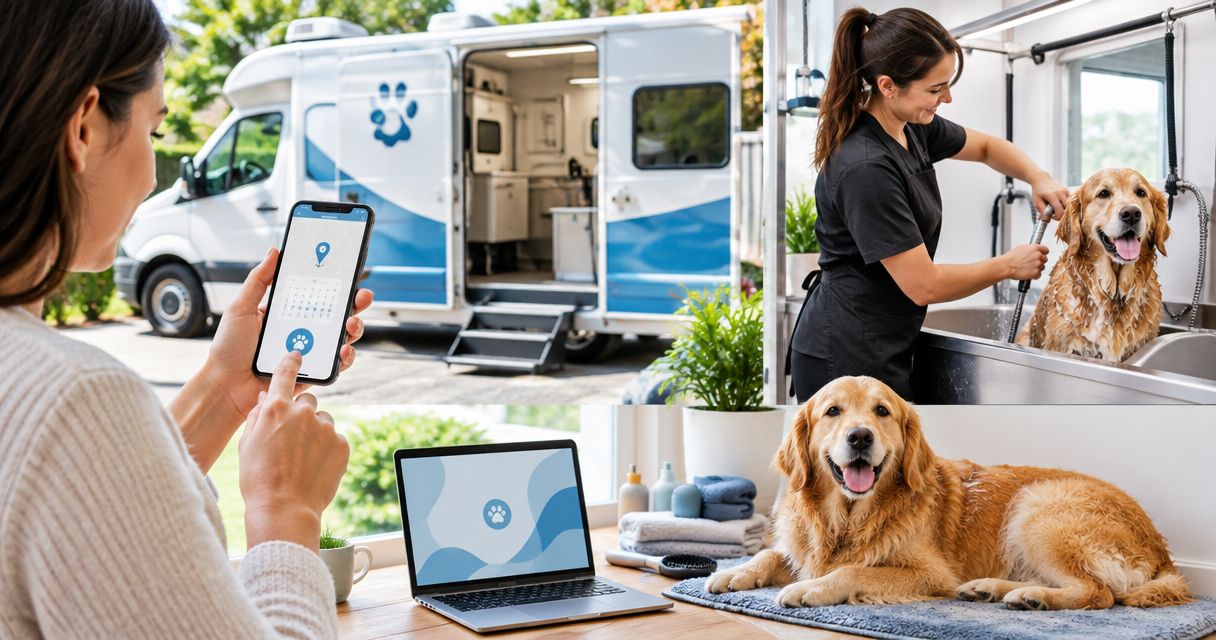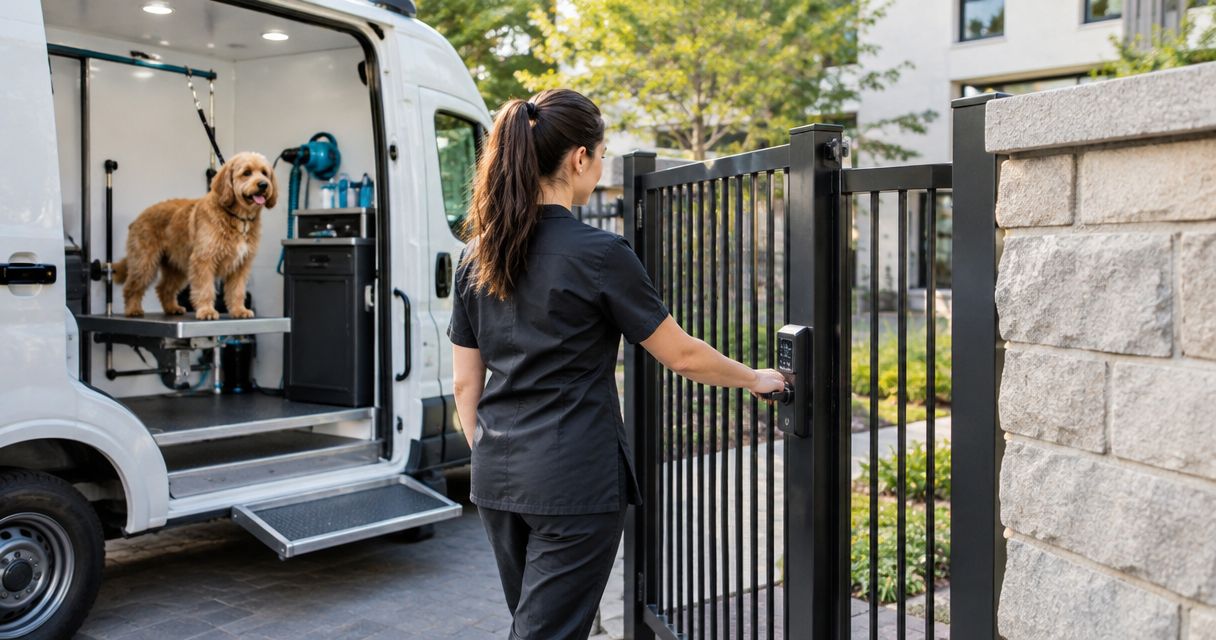
Instead of manually talking your groomer through a locked gate at every visit, set up an approved entry method, parking instructions, and a backup contact before arrival. For mobile dog grooming gate access, connect the entrance to a clear pet handoff plan—not just a working code.
- For Fluffypetwash mobile pet grooming, the best access plan connects an approved entrance, safe parking, and a reachable owner.
- Mobile dog grooming gate access requires property permission, a tested entry method, and an exit route.
- Building access and pet handoff are separate arrangements; confirm both before the appointment.
- Use an individual visitor credential when supported, rather than sharing a permanent resident code.
Why this matters
A gate code does not explain where a grooming vehicle should park or how your dog reaches the groomer. Treat access as 3 checkpoints: entry, parking, and pet handoff. Each needs an agreed instruction.
When arranging mobile pet grooming with Fluffypetwash, confirm the provider's arrival and handoff requirements directly. Do not assume that booking a visit authorizes entry to a private community or permission to leave your dog unattended.
For a 2026 appointment, check the property's current visitor rules rather than reusing an old delivery note. A visitor entrance, loading area, or staff procedure can change independently of your booking.
Before you start
- Get permission and access authority. Have your appointment details, the property manager's visitor requirements, and permission to issue visitor credentials or request staff-assisted entry. If you rent, confirm who controls contractor access.
- Gather the arrival information. Identify the correct vehicle entrance, approved parking location, pet handoff point, and 1 primary phone number. Keep a backup contact only if that person has agreed to help.
- Check the hidden obstacle: vehicle access is not pedestrian access. A fob that opens your lobby does not establish that a grooming vehicle can enter, turn, park, or leave. Ask about posted clearance limits and vehicle restrictions before sharing credentials.
Entrance and permission setup
- Identify the actual vehicle entrance. Give the entrance's street name and a visible landmark. Distinguish it from pedestrian gates, resident-only lanes, and garage entrances. Do not rely on a map pin that ends inside the property.
- Ask the property manager about mobile grooming. Confirm whether the visit is permitted and where the vehicle can operate. Ask whether staff need the business name, appointment date, or driver details; supply only what the property actually requires.
- Check the route through the property. Identify clearance signs, restricted turns, loading rules, and any separate exit. Ask the groomer to confirm that the proposed route and parking location suit the vehicle.
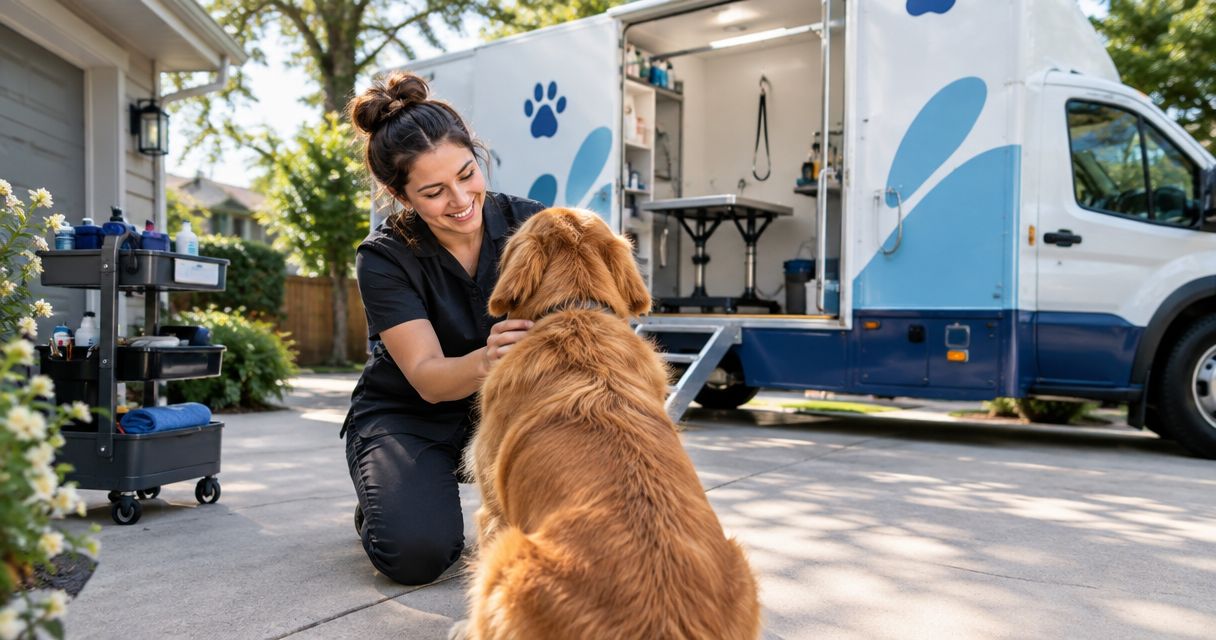
- Choose the pet handoff point. Specify where you will meet the groomer with your dog secured on a leash or in an appropriate carrier. The vehicle's parking location and your front door are not automatically the same place.
Expected result: You can describe an authorized route from the public street to the approved parking area, then identify exactly where the dog changes hands.
Do not direct a groomer through an entrance simply because your own car fits. If vehicle suitability remains unresolved, ask the property manager and groomer to agree on an alternative before the appointment.
Entry method configuration
Choose the entry method your property permits. The best option is the one you can authorize, test, and withdraw—not necessarily the one requiring the fewest messages.
| Entry method | Best for | Advantage | Limitation |
|---|---|---|---|
| Individual visitor credential | Properties with supported visitor access | Separates a visitor's access from your resident credential | Requires authorization and correct validity settings |
| Call-box release | Owners who can answer during arrival | Lets you approve entry when the groomer calls | Entry depends on a working call and your response |
| Staff-assisted entry | Buildings with an approved staffed process | Keeps admission within the property's procedure | Requires staff instructions and coverage at arrival |
| Owner meeting at entrance | Properties without suitable remote access | Avoids sharing a gate credential | Requires you to be physically present |
- Create or request visitor access. Use the property's approved app, portal, intercom process, or management office. Follow the labels shown in that system; access-control interfaces do not share a universal set of buttons or fields.
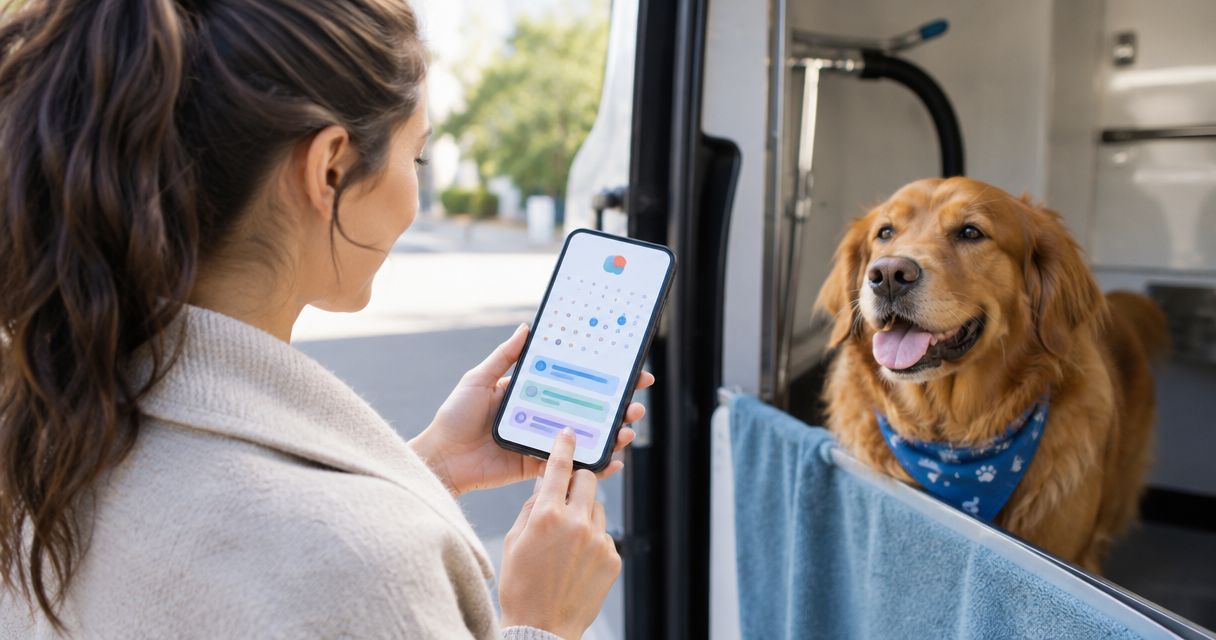
- Match access to the appointment. If the system supports validity dates and times, check both the start and end settings. Agree on an arrival window with the groomer before applying a narrow restriction.
- Confirm the credential's scope. Check which entrance it opens and whether it covers vehicle access, pedestrian access, or both. Do not grant unrelated building access merely to avoid clarifying the route.
- Test the permitted method. For call-box entry, verify the listed name and receiving phone. For a visitor credential, use the property's approved testing process. Never test by blocking a gate or entering a restricted lane.
- Protect resident credentials. Do not send your resident account password or permanent personal access credential. If temporary access is unavailable, arrange an approved call-box, staff-assisted, or in-person alternative.
Expected result: The chosen method works at the intended entrance, and you know who can resolve a failure without bypassing property security.
Arrival instructions and handoff
A useful access message follows the order the groomer encounters the property: entrance, entry method, parking, then pet handoff. Keep sensitive credentials out of public appointment descriptions, shared calendars, and reviews.
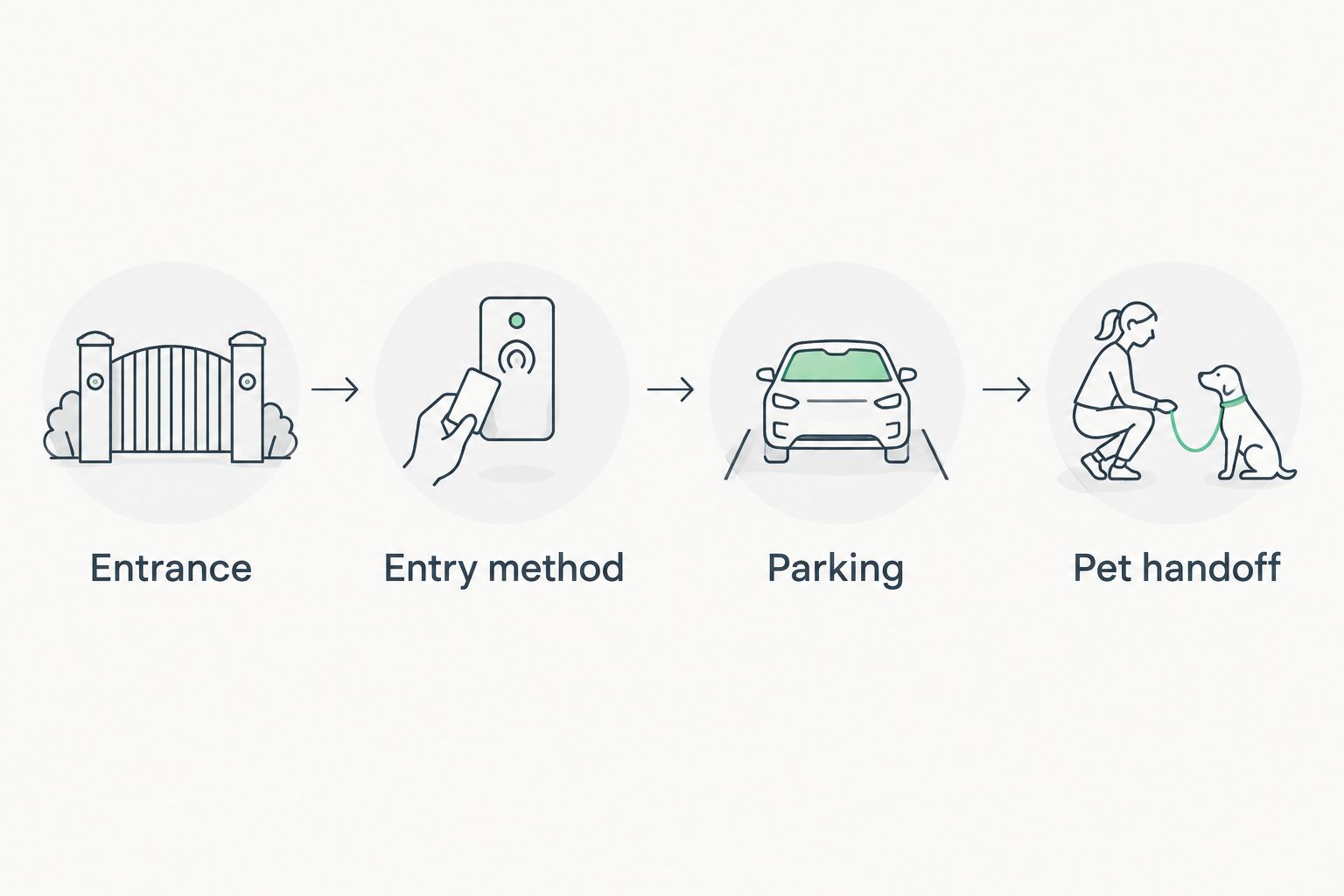
- Write a short access note. State the appointment date, entrance street, permitted entry method, parking location, and meeting point. Add the call-box listing if it differs from your name.
- Send credentials through an agreed private channel. Ask the groomer how access information should be provided. Keep the credential separate from broadly shared instructions when possible.
- Name the fallback. Specify who the groomer should contact if entry fails. Include the agreed meeting alternative, but do not direct the driver to wait in a traffic lane or follow another vehicle through the gate.
- Request acknowledgment. Ask the groomer to confirm receipt of the entrance and parking instructions. Delivery of a message is not confirmation that the proposed location is suitable.
- Prepare your dog before the handoff. Keep your dog secured inside until you are ready to meet. Do not open a gate remotely while an unsecured dog is in the entry area.
Expected result: The groomer has one current instruction set, and you know where to meet without bringing your dog into moving traffic.
Use this format for a 2026 access note, replacing each line with your actual arrangements:
- Appointment: Include the confirmed date and arrival window.
- Entrance: Identify the street and gate landmark.
- Entry: Describe the approved method; send a credential privately if needed.
- Parking: Name the location approved by the property and groomer.
- Handoff: State where you will meet with your secured dog.
- Fallback: Provide the agreed contact and alternative meeting point.
The mobile pet grooming guide for apartment dwellers covers the wider building arrangements to consider alongside gate access.
Appointment verification and access cleanup
- Recheck the appointment details. Compare the booking date with any visitor credential or staff admission record. Remove outdated instructions from the message thread by clearly identifying the current version.
- Keep the contact phone reachable. Check that calls from an unfamiliar number can reach you. If your phone filters those calls, arrange an arrival-contact method you will actually notice.
- Confirm the handoff before leaving. Permission to enter a property is not permission to collect a dog from an empty home. Agree explicitly on who will be present and who can authorize grooming decisions.
- Check departure arrangements. Confirm whether the vehicle uses a separate exit or needs another release. Never assume that successful entry establishes a working exit route.
- Close visitor access afterward. Revoke or let the credential expire according to the property's process. Remove obsolete access details from any saved instructions you control.
Expected result: Entry, pet transfer, and departure are accounted for, and the visit does not leave unnecessary continuing access behind.
Repeat visits when access details change
For recurring visits in 2026, keep the non-sensitive directions in a reusable note and verify the appointment-specific access separately. Reusing directions saves rewriting; reusing an expired credential creates an avoidable gate problem.
Best for recurring appointments: Maintain a master note containing the entrance landmark, approved parking area, handoff point, and primary contact. Its advantage is consistency. Its limitation is that someone must update it when building rules or arrangements change.
After each new booking, check the appointment date, refresh visitor authorization if required, and confirm whether the same person will handle the dog. If the property changes entry systems, replace the instructions rather than adding conflicting directions beneath them.
Do not assume that Fluffypetwash appointments automatically update a building's visitor system. Treat the booking and property authorization as separate tasks unless an explicit arrangement says otherwise.
Troubleshooting gate and building access
The credential is rejected
Check the entrance, validity date, time restriction, and whether the credential permits vehicles. Contact the property manager or access administrator if those details are correct. Do not respond by sharing a resident password or asking the groomer to follow another vehicle.
The call box does not reach your phone
Verify the directory listing and the phone number registered with the property. Check call filtering and reception, then test using the approved process. If the call still fails, switch to an authorized in-person or staff-assisted handoff.
The vehicle reaches the gate but cannot continue
Stop the route plan and contact the groomer and property manager. A clearance restriction, tight turn, or unsuitable parking area requires a different approved location—not an improvised maneuver. Move the pet handoff only after everyone agrees where it will happen.
Staff cannot find the visitor authorization
Confirm that the admission request matches the appointment date and the information the property requested. Ask the authorized resident or manager to resolve the record. Keep your dog inside while the entry issue is handled.
The groomer is inside, but nobody can hand over the dog
Contact the agreed handoff person rather than treating access permission as collection permission. If that person cannot attend, discuss the next step directly with the groomer. For Fluffypetwash mobile pet grooming, confirm any substitute handoff arrangement rather than assuming it is accepted.
Customize your workflow
Add an access check to the same reminder you use for the appointment. Keep the reminder non-sensitive: verify visitor permission, confirm parking, charge your phone, and prepare the leash or carrier. Leave gate credentials out of calendars visible to other people.
For a household with several helpers, assign one person to maintain the current instructions. Everyone else should use that version. A single owner for the note prevents conflicting directions without requiring a new app or automation.
If your dog needs a quieter handoff, ask whether the approved meeting point can also reduce time near traffic and busy entrances. Property permission and safe vehicle access still come first.
FAQ
How do I arrange mobile dog grooming gate access?
Arrange an approved entry method, confirm vehicle parking, and agree on a pet handoff point before arrival. Send current directions privately and provide a reachable contact if entry fails.
Should I give my mobile groomer my permanent gate code?
Use an individual visitor credential when your property supports it and permits you to issue one. Otherwise, arrange approved call-box entry, staff assistance, or an in-person meeting rather than sharing a resident account password.
Can I leave my dog home after giving the groomer building access?
Building access alone does not authorize unattended pet collection. Confirm the provider's requirements and explicitly agree on who will hand over your dog.
What if my apartment building does not allow grooming vehicles inside?
Ask the property manager and groomer whether another permitted location works for the appointment. Do not use a fire lane, restricted space, or neighboring property without authorization.
What should I do if the gate code does not work?
Check the correct entrance and the credential's validity settings, then contact the authorized property representative. Use the agreed fallback rather than bypassing the gate or following another vehicle.
Do I need to update gate access for every recurring appointment?
Verify the authorization for every visit, even when the directions stay the same. A new date, expired credential, changed contact, or revised building rule requires updated instructions.
Does the groomer need access to my apartment?
Do not assume apartment entry is required for a mobile grooming appointment. Ask where the dog handoff takes place and grant only the access necessary for the agreed arrangement.
One last thing
Check the exit as carefully as the entrance. Your 2026 access setup is incomplete if the groomer can enter but needs an unavailable resident to leave. Confirm the departure route before the visit, while you can still resolve it without a vehicle waiting at a closed gate.