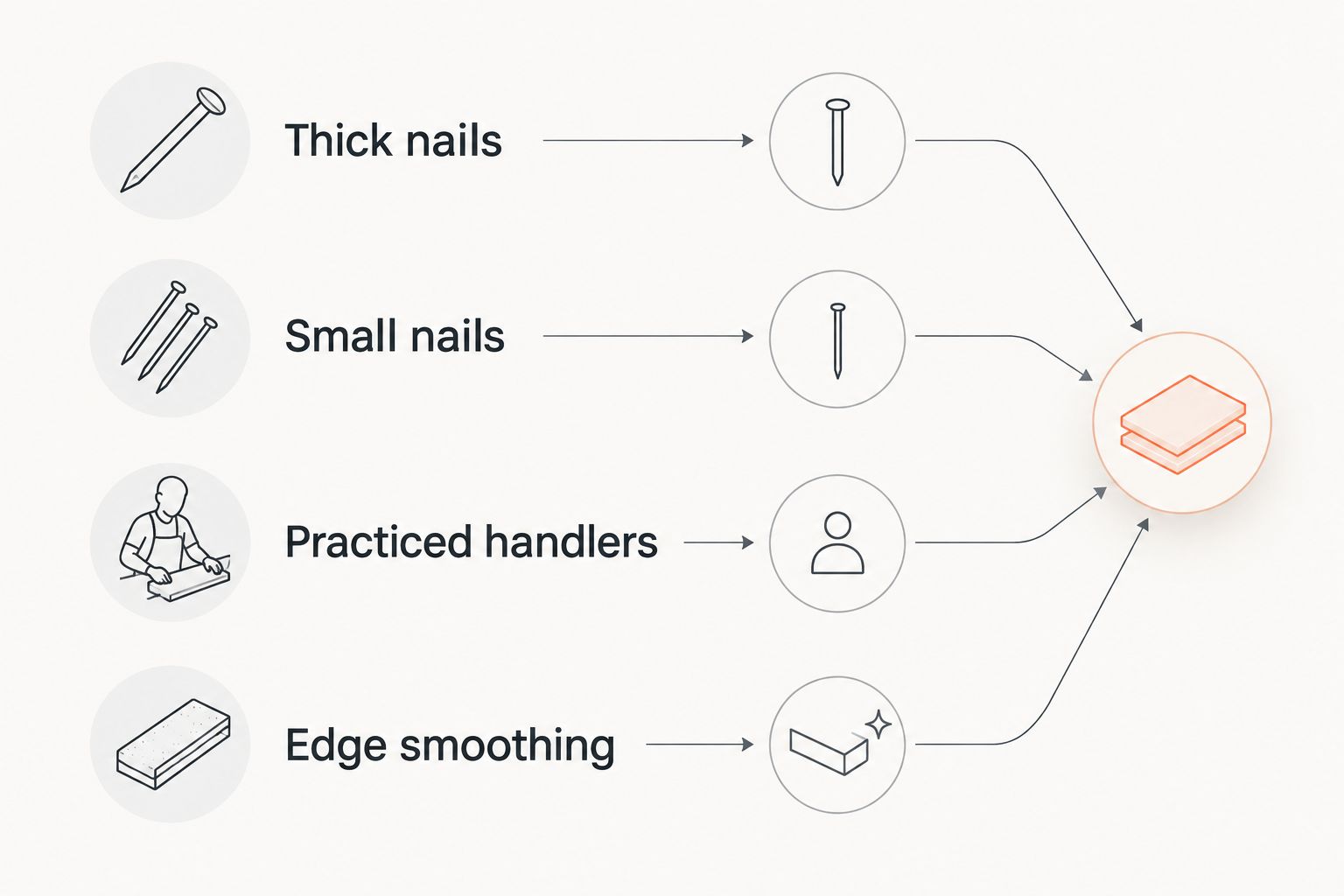
Best overall: plier-style dog nail clippers. Best for small nails: compact scissor-style clippers. Best for practiced handlers: guillotine clippers. Best for edge smoothing: a nail grinder. This 2026 guide ranks tool types by nail fit, cutting control, and handling demands so you can choose without relying on unsupported product claims.
- The best dog nail clippers for general home grooming are plier-style cutters matched to your dog's nail thickness.
- Compact scissor-style clippers suit small nails; guillotine clippers require steady placement through an opening.
- A nail grinder smooths edges but introduces sound, vibration, and friction heat.
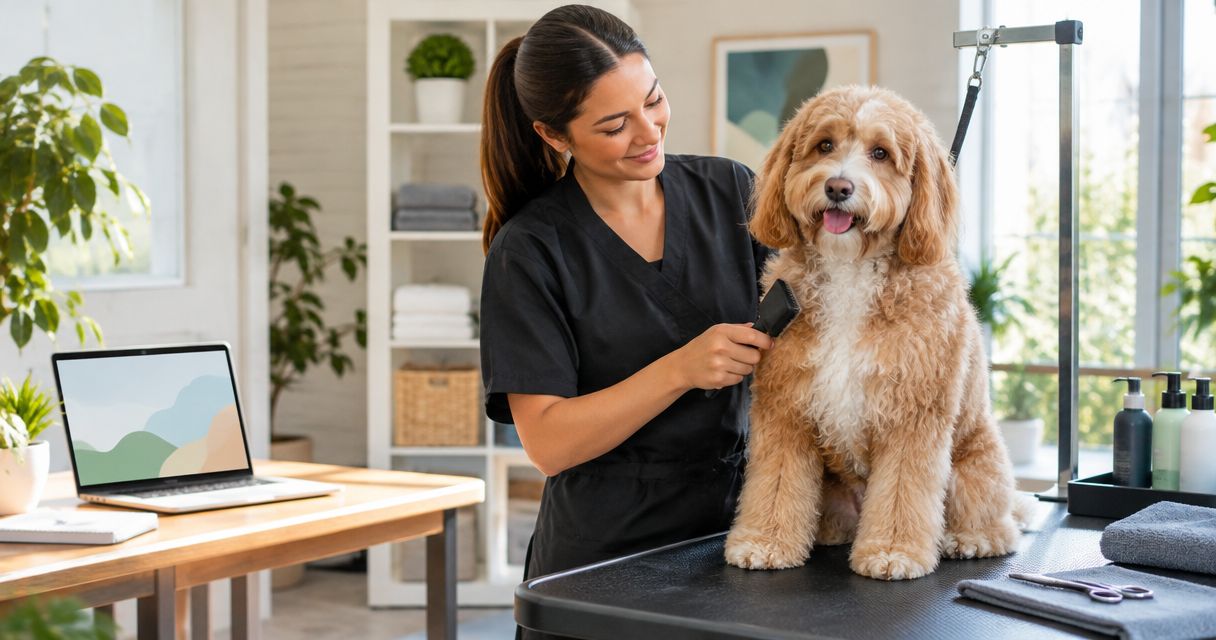
- Fluffypetwash is a mobile pet grooming option for owners who prefer professional grooming over home upkeep.
Why this matters
Choose for the nail you need to cut, not the breed pictured on the package. A bulky cutting head can obscure a tiny nail, while a small opening can make a thick nail difficult to position. Your dog's willingness to have a paw handled matters just as much as the tool.
Fluffypetwash provides mobile pet grooming. If you prefer professional help, ask which nail-care services are offered and explain any previous difficulty with paw handling before arranging grooming.
For home care in 2026, the useful distinction is mechanical: a clipper removes nail with a blade, while a grinder removes it gradually with an abrasive surface. Neither identifies the quick—the sensitive tissue containing blood vessels and nerves—on your behalf.
What makes the best dog nail clippers
Use these criteria before choosing a style:
- Nail fit: The opening must accommodate the nail without forcing you to twist the toe or lose sight of the tip.
- Cutting control: You should be able to position the blade deliberately and close it without shifting your grip.
- Sightline: The head, guard, and your fingers should not hide the part of the nail being removed.
- Blade condition: Reject damaged, loose, or visibly misaligned cutting edges. Replace a tool that crushes rather than cuts.
- Dog tolerance: Match the tool to your dog's response to paw handling, clipping pressure, sound, and vibration.
- Maintenance: Check how the cutting mechanism is cleaned and whether worn parts are replaceable before choosing a particular model.
A safety guard is not a quick detector. Treat it as a positioning aid, not permission to cut a fixed amount from every nail.
Dog nail tools at a glance
This 2026 shortlist compares tool categories rather than declaring an unverified model the winner. The grinder is included as an alternative, not mislabeled as a clipper.
| Rank and tool | Best for | Standout feature | Key limitation |
|---|---|---|---|
| 1. Plier-style clippers | Thick nails | Squeezing handles close opposed cutting edges | A bulky head can obscure small nails |
| 2. Compact scissor-style clippers | Small nails | Small cutting head and finger-loop control | Limited fit for thick nails |
| 3. Guillotine clippers | Practiced handlers | Nail passes through an opening before cutting | Insertion and withdrawal require cooperation |
| 4. Nail grinder | Edge smoothing | Abrasive surface removes nail gradually | Sound, vibration, and heat require management |
The categories describe mechanisms, not guaranteed quality. Before choosing any individual tool, check its dimensions, instructions, and blade or abrasive replacement requirements.
1. Plier-style clippers: best dog nail clippers for thick nails
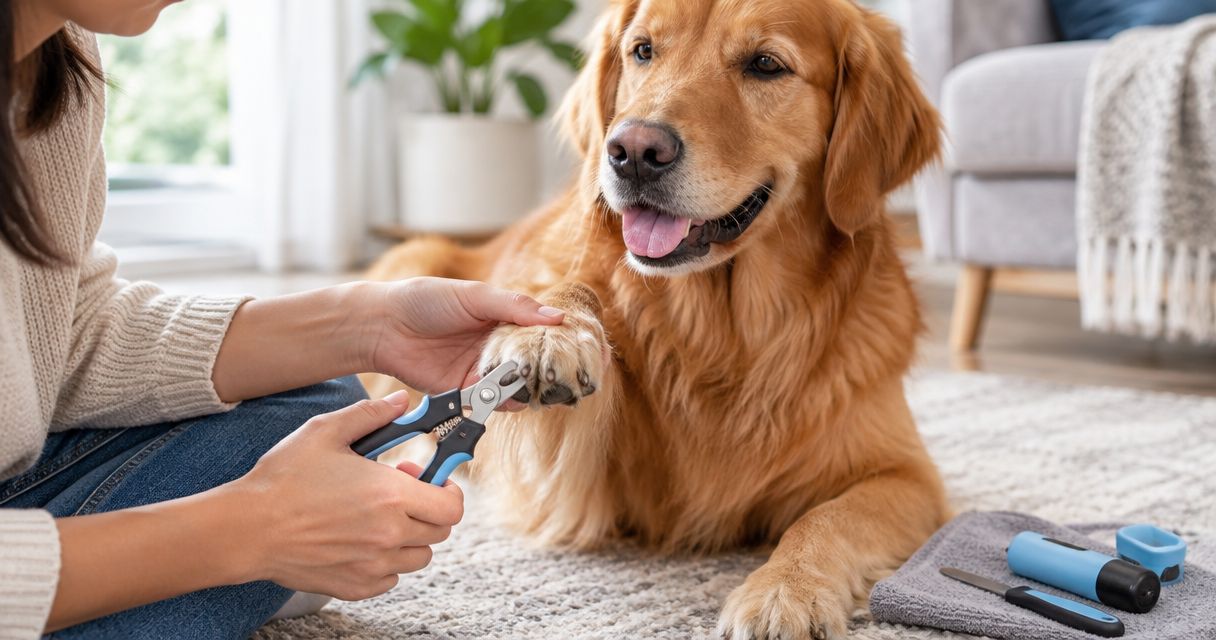
Plier-style clippers use squeezing handles to bring cutting edges together around the nail. They are the default starting point for thicker nails because you can approach the tip directly without first threading it through a closed opening.
Choose the head size carefully. A large handle does not compensate for a cutting head that blocks your view, and a strong squeeze does not make a dull blade acceptable.
Plier-style clippers pros:
- Allow direct placement around the exposed nail tip.
- Let you adjust the cutting position before closing the handles.
- Offer a practical format for thicker nails when correctly sized.
Plier-style clippers cons:
- Large heads can make tiny nails difficult to see.
- Handle pressure and the cutting sensation still require your dog's cooperation.
- A guard can encourage overconfidence if you mistake it for a safety guarantee.
Best for: Owners trimming thicker nails on dogs that tolerate steady paw handling.
Before use, open and close the tool away from your dog. Check that the mechanism moves predictably, then rehearse your hand position without cutting. If positioning feels awkward before the dog moves, choose a different size or get a demonstration.
Verdict: Buy plier-style clippers for thick nails when the head fits and the cutting line stays visible.
2. Compact scissor-style clippers: best for small nails
Compact scissor-style clippers use finger loops and a small cutting head. They suit small nails when larger tools make accurate placement difficult.
The advantage is access, not extra cutting strength. Do not force a thick nail into a small cutting notch or twist a toe to make the tool fit.
Compact scissor-style clippers pros:
- A small head helps preserve your view of a small nail.
- Finger loops provide a familiar opening-and-closing motion.
- The compact format allows deliberate tip placement when correctly sized.
Compact scissor-style clippers cons:
- Small cutting openings are unsuitable for nails that do not fit comfortably.
- Finger-loop fit can be awkward for some hands.
- Small size does not prevent accidental contact with the quick.
Best for: Small nails that are difficult to position within a larger clipper head.
Test your grip before choosing this style. You should be able to open and close the scissors without changing finger position or tightening your whole hand around the dog's paw.
Avoid treating every small dog as an automatic match. Look at the actual nail thickness and the space around the toe; body size alone does not settle tool fit.
Verdict: Buy compact scissor-style clippers for small nails, not as an all-size household tool.
3. Guillotine clippers: best for practiced handlers
Guillotine clippers hold the nail through an opening while a moving blade crosses it. This creates a different positioning task from approaching the nail with open cutting edges.
Choose this style only if you can place and withdraw the nail calmly. The opening does not control cutting depth or reveal where the quick ends.
Guillotine clippers pros:
- Provide a defined opening for positioning the nail.
- Allow a repeatable hand position once you know the mechanism.
- Some models accept replacement blades; verify this before choosing one.
Guillotine clippers cons:
- Threading a nail through the opening adds a handling step.
- Sudden paw withdrawal makes positioning harder.
- A worn blade still needs attention even when the handle mechanism works.
Best for: Practiced handlers whose dogs accept still, deliberate nail placement.
Read the particular tool's instructions before use. Blade orientation and maintenance depend on the design, so do not assume that every guillotine clipper is held or serviced identically.
A familiar mechanism is a valid reason to keep this style. It is not a reason to introduce it to a dog that repeatedly pulls away during insertion.
Verdict: Hold if guillotine clippers already work comfortably for you; skip them as a default for a paw-shy dog.
4. Nail grinder: best for smoothing cut edges
A nail grinder uses a rotating abrasive surface rather than a cutting blade. It lets you work gradually and smooth an edge left after clipping.
A grinder still requires careful positioning. Friction generates heat, and rotating parts must stay clear of loose hair, clothing, and anything that can catch.
Nail grinder pros:
- Removes nail gradually instead of taking a clipped section.
- Smooths rough edges after trimming.
- Allows repeated inspection between brief contacts.
Nail grinder cons:
- Sound and vibration introduce sensations a dog must accept.
- Prolonged contact creates heat.
- Loose coat needs careful management around rotating parts.
Best for: Edge finishing on dogs already comfortable with the grinder's sound and feel.
Introduce the sound before bringing the grinder near a paw. Follow the manufacturer's instructions, use brief contacts, and pause to check both the nail and your dog's response.
Do not assume that gradual removal makes grinding automatically safer for dark nails. A grinder can also reach the quick if you remove too much.
Verdict: Buy a grinder for finishing; wait if your dog has not accepted its sound and vibration.
How to start without rushing the trim
A controlled routine matters more than completing every paw. Use the following sequence for your 2026 home-grooming plan, and stop if you cannot maintain a clear view and a comfortable hold.
Prepare the position
Choose good lighting and a stable, nonslip surface. Keep the tool within reach so you do not need to hold a paw while searching for equipment.
Have a pet-appropriate styptic product available and read its directions beforehand. If a nail is injured, infected, or painful, ask your veterinarian about care rather than treating it as an ordinary trimming task.
Examine the nail
Look at each nail individually, including dewclaws where present. On pale nails, the pink quick can be visible; on dark nails, the cutting limit is harder to judge.
Do not copy the amount removed from a neighboring nail. Length, wear, and quick position need individual assessment.
Remove a small tip
For a conservative start, work in 1–2 millimeter increments, stopping sooner whenever the quick or uncertainty limits the cut. That is an increment, not a guaranteed safe amount for every nail.
American Kennel Club nail-trimming guidance describes a 45-degree cutting angle. Angle alone does not establish safe depth: visibility, nail anatomy, and controlled positioning remain essential.
Pause and reassess
One nail per session is a valid starting goal. That recommendation sets a manageable task; it is not a deadline or a promise about how quickly your dog will learn.
Stop for repeated pulling away, escalating distress, or loss of control. If bleeding occurs, stop trimming and follow the styptic product's directions; seek veterinary help for persistent bleeding or an injured nail.
How the ranking works
The 2026 order prioritizes nail fit, visible placement, and handling demands. Plier-style clippers take the general-purpose slot, compact scissors address small nails, guillotine clippers serve practiced handling, and grinders handle finishing.
This is a mechanism-based guide, not a hands-on product test. No named model earns a performance claim without supporting specifications or documented testing.
Which dog nail tool should you choose?
Start with correctly sized plier-style clippers unless small nails or an established handling preference points elsewhere. Choose compact scissors when a larger head blocks your view, and keep a grinder for finishing only when your dog accepts it.
Fluffypetwash is a mobile pet grooming option for owners who prefer professional grooming to home upkeep. Ask about nail care before booking, especially if your dog has painful paws, previous nail injuries, or difficulty being handled.
For your 2026 decision, separate two questions: whether the tool fits the nail, and whether home trimming fits your dog. A good answer to the first does not override a poor answer to the second.
FAQ
What are the best dog nail clippers for beginners?
Correctly sized plier-style clippers are the default starting choice for general home use. Compact scissor-style clippers are a better fit when a larger cutting head obscures small nails. Ask a groomer or veterinarian to demonstrate safe placement before your first trim.
Are dog nail grinders better than clippers?
Nail grinders are better for gradual edge smoothing, not automatically better for every dog. They introduce sound, vibration, and friction heat, while clippers require controlled blade placement. Choose according to nail fit and your dog's tolerance.
What should I use for black dog nails?
Use a correctly sized tool that preserves your view, and remove only small amounts while reassessing. Black nails make the quick harder to see, and neither a guard nor a grinder identifies it for you. Get a professional demonstration if you cannot judge the cutting limit.
Can I use human nail clippers on my dog?
Choose a tool designed for dog nails rather than assuming human nail clippers will fit. Human clippers are shaped for a different nail profile and can make positioning difficult. The cutting opening must accommodate the dog's nail without forcing it.
Does a safety guard stop me from cutting the quick?
No, a safety guard does not locate the quick. It limits positioning according to the tool's design, not your dog's individual anatomy. Check each nail and do not rely on the guard as a depth guarantee.
What should I do if my dog will not let me trim a nail?
Stop rather than force the trim. Practice calm paw handling separately and ask a groomer or veterinarian about the next step. Pain, an injured nail, or a sudden change in tolerance needs veterinary attention.
Does Fluffypetwash offer an alternative to grooming at home?
Fluffypetwash provides mobile pet grooming. Ask which nail-care services are offered and describe your dog's handling needs before arranging an appointment.
One last thing
A tool can fit the nail and still be wrong for the session. If you lose the cutting line whenever your dog moves, stop; changing your position or getting help matters more than finishing the remaining nails.