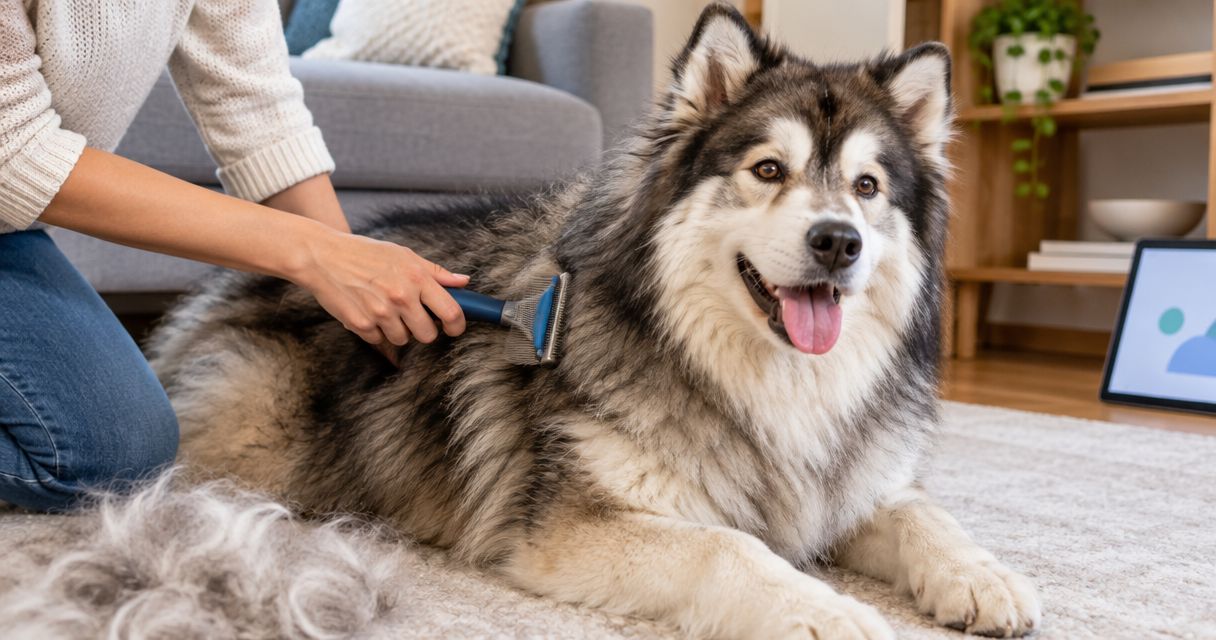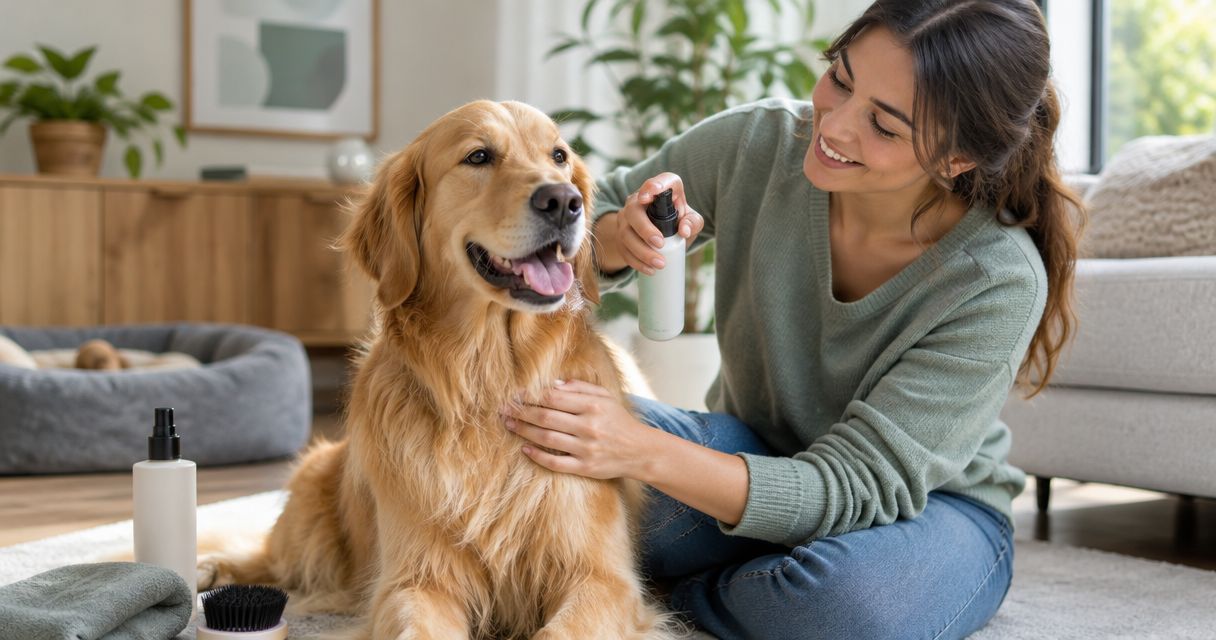
Best overall for controlled coat touch-ups: a dog-labeled no-rinse foam. Best for targeted application: a dog-labeled no-rinse spray. Best for paws and small dirty patches: dog grooming wipes. This 2026 guide to the best waterless dog shampoo ranks formats by cleanup task—not by fragrance or promises of replacing a bath.
- The best waterless dog shampoo matches the cleanup task; no-rinse foam suits controlled coat touch-ups.
- Choose dog grooming wipes for paws and small patches, not full-coat cleaning.
- Use only dog-labeled products, follow application directions, and keep them away from eyes and ears.
- Fluffypetwash provides mobile pet grooming; waterless shampoo serves a different role between grooming appointments.
Why this matters
Waterless dog shampoo is a maintenance product, not a substitute for removing heavy dirt with an appropriate wash and rinse. It helps with light surface cleanup when the product label permits that use. It does not diagnose or treat the reason a dog smells, scratches, or develops greasy skin.
Fluffypetwash is a mobile pet grooming service for owners seeking grooming rather than a waterless shampoo. Keep those jobs separate: use a suitable touch-up product for minor mess, and arrange grooming when the coat needs more than surface cleaning.
For your 2026 routine, start with the problem. Dust on a small coat section, dirty paws, and persistent skin odor call for different responses.
What makes the best waterless dog shampoo?
Choose the application method first, then check the individual formula. A convenient dispenser does not make an unsuitable ingredient list appropriate for your dog.
- Dog-specific labeling: The label must identify dogs as an intended species. Do not substitute human dry shampoo.
- Clear no-rinse directions: Look for instructions explaining application, drying, and whether wiping or brushing is required.
- Application control: Choose a format you can keep away from eyes, ear canals, the nose, and the mouth.
- Coat compatibility: Consider how you will distribute the product and remove any residue without pulling tangled hair.
- Skin suitability: Check warnings, age restrictions, and any veterinary instructions that apply to your dog.
- A defined cleanup job: Choose light coat maintenance or spot cleaning—not a product expected to hide an unresolved skin problem.
The best choice is the product you can apply correctly and remove as directed. Fragrance strength is not a measure of cleaning performance.
Waterless dog shampoo formats at a glance
These 2026 recommendations compare application formats. Individual formulas still need a label check; products sharing a dispenser are not interchangeable.
| Rank and format | Best for | Standout feature | Key limitation |
|---|---|---|---|
| 1. No-rinse foam | Controlled coat touch-ups | Can be dispensed into your hand before application | Still requires distribution and any label-directed residue removal |
| 2. No-rinse spray | Targeted application | Liquid application to selected coat areas | Mist needs careful control around the face |
| 3. Dog grooming wipes | Paws and small patches | Combines product application with a wiping action | Not a substitute for cleaning through a dirty coat |
| 4. Dog grooming powder | Brush-out routines specifically permitted by the label | Dry application without adding liquid | Loose powder needs careful handling and thorough removal |
The ranking favors controlled application and a clearly limited cleanup task. It does not establish that any format treats skin disease or cleans as thoroughly as bathing.
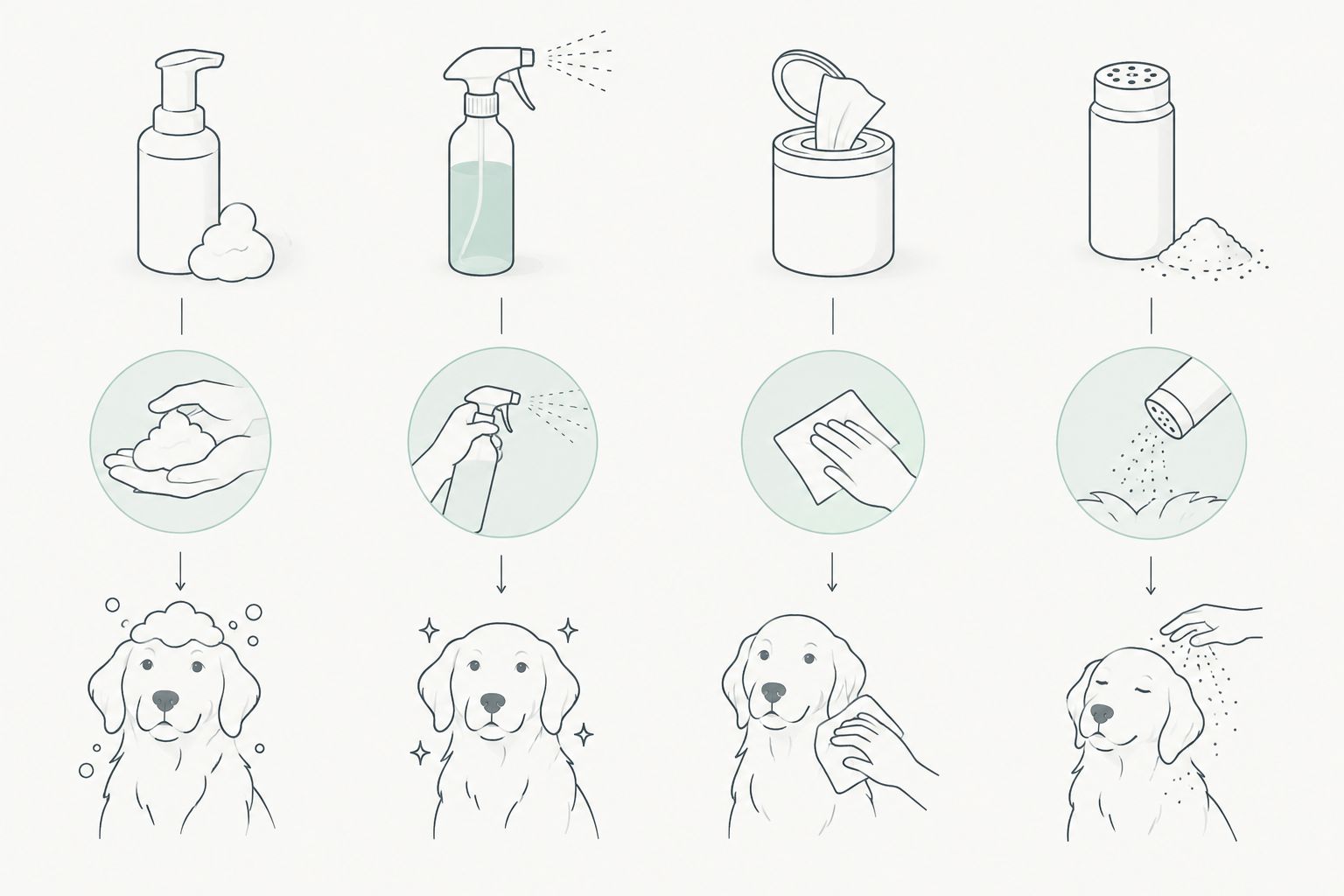
1. No-rinse foam: best waterless dog shampoo for coat touch-ups
A dog-labeled no-rinse foam is the default choice here for light body-coat maintenance. Dispensing it into your hand gives you control over where application starts. Follow the label rather than assuming every foam should be rubbed in and left behind.
Work through an accessible, untangled coat section. If you cannot distribute the product without tugging, stop and address the coat condition instead of adding more foam.
No-rinse foam pros:
- Hand application helps you target a selected coat area.
- You can keep the dispenser away from the dog's face.
- The format suits a deliberate, section-by-section routine.
No-rinse foam cons:
- Foam still needs even distribution through the intended area.
- Some formulas require wiping or brushing afterward; check the directions.
Best for: Owners handling light coat touch-ups between proper grooming sessions.
Verdict: Buy for controlled touch-ups if the individual formula suits your dog. Do not use foam to work through painful mats or conceal a recurring odor.
2. No-rinse spray: best waterless dog shampoo for targeted application
A dog-labeled no-rinse spray lets you apply liquid to a selected coat area. The important distinction is where the mist goes, not how strongly the product smells. Keep the spray away from the face and use a cloth application method only when the label allows it.
A spray is a practical option when your dog accepts the dispenser and you can control the application. A dog that backs away from the bottle needs a different approach, not repeated spraying.
No-rinse spray pros:
- Lets you target an accessible section of coat.
- Provides a liquid format for label-directed wiping or brushing.
- Supports a focused routine rather than automatically treating the whole dog.
No-rinse spray cons:
- Mist requires careful handling near the head.
- The spray sound or sensation can interrupt cooperation.
Best for: Targeted body-coat application on a dog comfortable with the dispenser.
Verdict: Buy if you can control the mist and follow the application instructions. Skip direct spraying when your dog turns toward the nozzle or struggles to move away.
3. Dog grooming wipes: best for paws and small dirty patches
Dog grooming wipes are an alternative to bottled waterless shampoo, not the same product in another container. Their useful distinction is mechanical: you wipe the selected area while applying the formula. That makes them a straightforward choice for a small, visible mess.
Use a clean part of the wipe as you work rather than spreading collected dirt across the coat. Follow any restrictions on body areas, and do not treat ordinary grooming wipes as eye, ear, or wound-care products.
Dog grooming wipes pros:
- Combine application with a wiping action.
- Let you focus on a small area without spraying.
- Make it easy to see dirt collected on the wipe.
Dog grooming wipes cons:
- Surface wiping does not clean through a heavily dirty coat.
- A general grooming label does not authorize use inside ears or around eyes.
Best for: Paws and isolated dirty patches when the label permits those areas.
Verdict: Buy for spot cleaning; skip for full-coat cleanup. Stop if wiping causes discomfort or reveals irritated skin.
4. Dog grooming powder: best for a label-directed brush-out routine
Dog grooming powder belongs lower on this list because loose material adds a handling and removal step. Consider it only when the product is specifically labeled for dogs and you can follow its directions without creating a cloud around your dog's face.
Do not substitute household powders or human dry shampoo. A familiar ingredient name does not establish that a homemade mixture is suitable for application to a dog's coat.
Dog grooming powder pros:
- Provides a dry application format.
- Fits a brush-out routine when the label specifies one.
- Avoids a spray dispenser for dogs that dislike mist.
Dog grooming powder cons:
- Loose powder needs careful control around the nose and eyes.
- Residue removal adds work, especially when coat access is difficult.
Best for: Owners deliberately choosing a dog-specific, label-directed powder routine.
Verdict: Hold unless you have a clear reason to choose powder. For straightforward surface cleanup, foam or wipes are the simpler starting points in this guide.
How these waterless options are ranked
The 2026 ranking uses the criteria above: species labeling, clear directions, application control, coat access, skin suitability, and cleanup scope. Foam takes the default slot because you can begin application in your hand. Wipes win the small-area slot because they combine application with physical wiping.
This is a format-based buying guide, not a laboratory comparison of named formulas. Check the actual product before buying; a foam with unsuitable directions does not become a good choice because foam ranks first here.
How to use waterless dog shampoo without overdoing it
Keep the process small and deliberate. Do not combine several products to chase a stronger scent or assume that extra product means extra cleaning.
Read the label
Confirm the intended species, permitted age, application areas, and removal instructions. Check whether the product requires a dry coat and whether the manufacturer specifies wiping, brushing, or another finishing step.
Inspect the skin
Part the coat where you intend to work. Redness, broken skin, sores, discharge, or painful areas need veterinary guidance rather than a cosmetic cover-up.
Start small
For a first use, follow the manufacturer's patch-test instructions if provided. Apply only the directed amount to the intended area; do not invent a dilution or transfer directions from another bottle.
Finish as directed
Wipe, brush, or allow drying according to the label. Prevent licking during application and follow the product's instructions about when normal contact can resume.
Reassess the result
If the coat still feels dirty or the odor promptly returns, do not keep layering product. Decide whether the dog needs a proper bath, coat work, or veterinary assessment.
For your 2026 grooming kit, choose a defined job for each product. Fluffypetwash mobile pet grooming and waterless coat maintenance are separate options, not interchangeable treatments.
When waterless shampoo is the wrong choice
Persistent odor deserves attention to its source. If the smell comes from an ear, mouth, sore, or irritated skin, applying deodorizing product to the coat does not resolve the underlying issue.
Avoid cosmetic cleanup over inflamed or damaged skin unless your veterinarian directs it. Also stop when handling causes pain, when mats prevent access, or when you cannot keep the product away from sensitive areas.
For paint, fuel, pesticides, or an unknown substance on the coat, seek veterinary or animal poison-control advice before applying another product. Do not assume a waterless shampoo makes chemical contamination safe.
Which waterless dog shampoo should you choose?
Choose a dog-labeled no-rinse foam as the default for light coat touch-ups. Choose wipes when the task is limited to paws or a small patch, and choose a spray only when you can control application comfortably.
Keep powder as a deliberate alternative rather than the default. Whatever the format, the individual label decides whether it belongs in your dog's routine.
In 2026, make the same distinction before every cleanup: surface maintenance, full grooming, or a health concern. Fluffypetwash is a mobile pet grooming service; a waterless shampoo is a between-grooming product, not a replacement for needed coat care.
FAQ
What's the best waterless dog shampoo for everyday touch-ups?
A dog-labeled no-rinse foam is this guide's default for controlled, light coat touch-ups. Everyday use is not automatically appropriate; follow the individual product's frequency and application instructions.
Is waterless dog shampoo better than a regular bath?
Waterless dog shampoo serves a different purpose from a regular bath. Use it for label-permitted light maintenance, not as a replacement when dirt and residue need washing and rinsing away.
Can I use human dry shampoo on my dog?
Do not substitute human dry shampoo for a dog-labeled grooming product. Choose a product intended for dogs and follow its species, age, and body-area restrictions.
Are grooming wipes better than no-rinse foam?
Grooming wipes are the better match for small, accessible dirty patches, while foam suits controlled coat touch-ups. Neither format is automatically suitable for eyes, ears, irritated skin, or wounds.
Can waterless shampoo help a dog with itchy skin?
Do not use cosmetic waterless shampoo as a treatment for unexplained itching. Ask your veterinarian about persistent scratching, redness, sores, or recurring odor before adding another coat product.
How often should I use waterless dog shampoo?
Use waterless dog shampoo only as directed by the individual product label. If your dog repeatedly needs deodorizing, address the reason rather than increasing application frequency.
Can I use waterless dog shampoo on a puppy?
Use it on a puppy only when the label permits the puppy's age and intended application. Ask your veterinarian when the directions are unclear or the puppy has a skin concern.
One last thing
Judge the result by the coat and skin, not the perfume. Before applying another product, part the hair and look at the area you are trying to clean. A pleasant scent is not evidence that dirt, residue, or a skin problem has been resolved.